
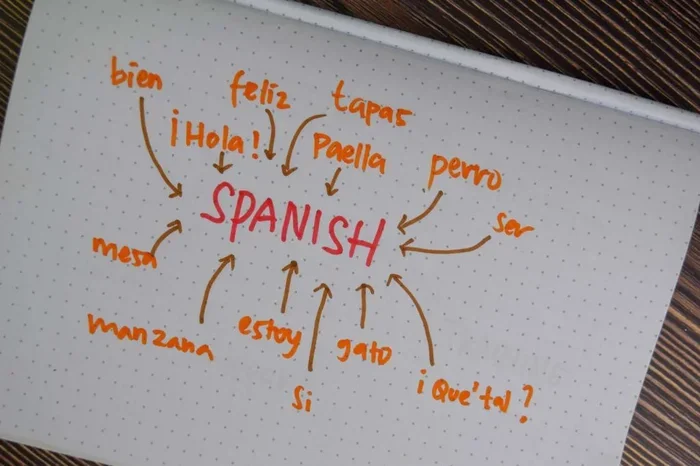

Learning how to say maybe in Spanish is easier than you think. From tal vez to quizás, this guide covers every way to express uncertainty in Spanish so you can speak with confidence.
Have you ever been in a Spanish conversation and needed to say “maybe” — but completely frozen? You are not alone. Many Spanish learners struggle with how to say maybe in Spanish because there is no single perfect match. The English word “maybe” is simple enough on its own, but when you dive into real Spanish dialogue, things get interesting fast.
The truth is, Spanish offers several ways to express uncertainty, and each one carries its own tone, formality level, and regional flavor. Whether you are ordering food, planning a trip, or chatting with new friends, knowing the right phrase at the right time makes a huge difference. In this guide, you will learn every practical way to say “maybe” in Spanish, along with examples, tips, and common mistakes to avoid.
Key Takeaways
- Tal vez and quizás are the most common and direct translations for “maybe” in Spanish.
- Context matters — the way you say “maybe” changes depending on formality and region.
- A ver is a casual, conversational way to express “maybe” in everyday speech.
- Puede ser and más o menos add variety and nuance to your responses.
- Avoid direct translation traps — English “maybe” doesn’t always map neatly onto one Spanish word.
- Practice with real dialogues to build natural-sounding fluency with these phrases.
📑 Table of Contents
What Does “Maybe” Mean in Spanish?
Before we jump into translations, let us talk about what “maybe” actually means. In English, “maybe” expresses uncertainty, hesitation, or a conditional answer. You use it when you are not sure about something but do not want to say a firm yes or no.
Spanish handles this concept differently. Depending on the situation, you might use a phrase that leans toward “perhaps,” “possibly,” or even “let us see.” That is why understanding how to say maybe in Spanish requires more than just a word-for-word translation. Context is everything. The meaning shifts based on tone, region, and who you are talking to.
For those learning Spanish vocabulary in context, it helps to understand how words change meaning in situ — that is, within their specific setting. The same principle applies here. A “maybe” in a business meeting sounds very different from a “maybe” while chatting at a café.
The Challenge of Translating “Maybe” Directly
Here is the problem. If you type “maybe” into a translator, you might get “tal vez” — and that is correct. But it is not the only correct answer. Spanish speakers use a whole toolkit of expressions depending on mood and situation. Using just one phrase can make your speech sound flat or repetitive. Let us explore the full range of options available to you.
Top Ways to Say Maybe in Spanish
Now let us get into the good stuff. Below are the most common and natural ways to express “maybe” in Spanish. Each one has a slightly different feel, so you can pick the right one for any moment.
Tal Vez — The Classic “Perhaps”
Tal vez is the most standard and widely recognized way to say “maybe” in Spanish. It translates closely to “perhaps” or “maybe” and works in almost every situation. It is polite, neutral, and easy to use.
You can place it at the beginning of a sentence or right before the verb:
- Tal vez vaya. — Maybe I will go.
- Tal vez no tenga tiempo. — Maybe I will not have time.
Tal vez works in both formal and informal settings. It is your safest bet when you are unsure which version of “maybe” to use. Think of it as your everyday workhorse phrase.
Quizás — The Friendly Cousin
Quizás means almost the same thing as tal vez and is used just as often. In fact, many native speakers swap them interchangeably. However, quizás sometimes carries a slightly more doubtful or cautious tone.
- Quizás llueva mañana. — Maybe it will rain tomorrow.
- Quizás sí, quizá no. — Maybe yes, maybe no.
Some people remember this trick: tal vez leans toward “perhaps” (more positive), while quizás leans toward “possibly” (slightly more uncertain). In practice, the difference is subtle. Both are perfectly natural choices. If you want to sound confident while still expressing doubt, quizás is a great option.Spanish phrases you may already know.
A Ver — The Casual “Let Us See”
A ver is a very common informal expression that means “let us see” or “we will see.” It is not a direct translation of “maybe,” but it serves the same purpose in everyday conversation. When a native speaker shrugs and says a ver, they are saying “I am not sure, let us wait and see.”
- A ver si puedo. — Maybe I can (let us see).
- A ver qué pasa. — Let us see what happens.
A ver is relaxed, friendly, and perfect for casual chats. You will hear it constantly in Spain and across Latin America. It is the kind of phrase that makes you sound natural, not like a textbook. If you want to master Spanish conversation, this one is essential.
Puede Ser — “It Could Be”
Puede ser literally means “it can be” or “it could be.” It is a slightly longer way to express uncertainty, but it sounds very conversational and approachable. Use it when you are genuinely weighing options.
- ¿Nos vemos a las ocho? — Puede ser. — See you at eight? Maybe.
- Puede ser que tenga que trabajar. — Maybe I have to work.
This phrase works well in both casual and semi-formal situations. It gives your speech variety and sounds very human. It also helps you avoid sounding robotic when you keep repeating tal vez or quizás.
Más o Menos — “More or Less”
Más o menos means “more or less” and is used when you are giving a non-committal, lukewarm answer. It is less about strict uncertainty and more about approximation. Think of it as “it is up in the air.”
- ¿Terminas el proyecto hoy? — Más o menos. — Will you finish the project today? More or less.
- Llegamos más o menos a las diez. — We arrive at about ten.
Más o menos is incredibly useful in daily life. It shows you understand that not every answer needs to be a hard yes or no. This kind of expressing doubt in Spanish is what separates beginners from more fluent speakers.
Comparative Table: All “Maybe” Options at a Glance
| Spanish Phrase | Literal Meaning | Tone | Best Used In |
|---|---|---|---|
| Tal vez | Perhaps | Neutral, polite | All situations |
| Quizás | Perhaps | Slightly doubtful | All situations |
| A ver | Let us see | Casual, informal | Everyday speech |
| Puede ser | It could be | Conversational | Casual and semi-formal |
| Más o menos | More or less | Non-committal | Approximations |
Formal vs. Informal Maybe in Spanish
Spanish has a built-in formality system through tú (informal you) and usted (formal you). This affects how you frame “maybe” sentences. Let us look at both registers.
Formal “Maybe” (Usted)
When speaking formally — to an elder, a boss, or someone you respect — you conjugate verbs in the third-person form. Tal vez and quizás stay the same, but the verb changes.
- Tal vez usted tenga razón. — Perhaps you are right.
- Quizás no pueda asistir. — Maybe I cannot attend.
This structure shows respect and keeps your tone professional. It is common in business emails, official letters, and polite conversation. Using the right Spanish grammar here signals that you understand cultural norms, not just vocabulary.
Informal “Maybe” (Tú)
With friends and people your own age, keep things relaxed. Use tú verb forms and casual phrases like a ver.
- ¿Vamos al cine? — A ver, no sé. — Shall we go to the movies? Well, maybe, I do not know.
- Tal vez puedo. — Maybe I can.
Informal speech is where you will use the widest variety of expressions. Native speakers mix and match constantly. Do not be afraid to experiment. If you are ever unsure, listening to how others around you speak is one of the best Spanish language tips you can follow.
Quick Tip: When in Doubt, Match Your Audience
Quick Tips:
- Use tal vez and quizás when you are unsure about formality. They work everywhere.
- Switch to a ver and puede ser with close friends.
- Always consider your verb conjugation. Maybe changes the whole sentence structure depending on who you address.
Common Mistakes When Saying Maybe in Spanish
Even advanced learners make mistakes with “maybe.” Here are the most common pitfalls and how to avoid them.
Mistake 1: Translating “Maybe” as a Noun
In English, “maybe” can act as a noun (“Maybe is a possibility”). In Spanish, there is no direct noun equivalent. You must rephrase the sentence. Instead of saying el maybe (which does not exist), say something like es posible (it is possible).
Mistake 2: Overusing One Phrase
Saying tal vez ten times in one conversation sounds robotic. Variety is key. Mix in quizás, a ver, and puede ser to keep your speech interesting and natural. This is one of the most important Spanish language tips for sounding fluent.
Mistake 3: Forgetting to Conjugate Verbs
Tal vez and quizás do not change verb forms by themselves. You still need correct conjugation. For example:
- Tal vez yo voy. (correct) — Maybe I go.
- Tal vez voy yo. (awkward) — awkward word order.
Keep the subject clear and the verb properly conjugated. This matters for Spanish grammar accuracy.
Mistake 4: Using “A Ver” in Formal Settings
A ver is very casual. Do not use it in a job interview or a formal presentation. Stick with tal vez or quizás in those situations. Knowing when to use informal Spanish phrases is a skill that takes practice.
How to Use “Maybe” in Real Spanish Conversations
Theoretical knowledge is great, but real practice is what builds fluency. Let us look at some everyday scenarios where you will need how to say maybe in Spanish.
Scenario 1: Making Plans with Friends
- ¿Vamos al parque el sábado? — Shall we go to the park on Saturday?
- A ver, tal vez. — Well, maybe.
- Puede ser. Ya vemos. — Maybe. We will see.
Notice how the speakers switch between phrases naturally. That is exactly what you should aim for.
Scenario 2: Responding to a Question at Work
- ¿Entregará el informe hoy el equipo? — Will the team deliver the report today?
- Quizás. Puede ser que tengamos retrasos. — Maybe. There might be delays.
- Tal vez, pero aún no estoy seguro. — Perhaps, but I am not sure yet.
In professional settings, tal vez and quizás dominate. They sound composed and respectful. Using a ver here would feel too relaxed.
Scenario 3: Talking About Food or Preferences
- ¿Quieres pizza o sushi? — ¡A ver, no sé! Quizás pizza. — Want pizza or sushi? Well, I do not know! Maybe pizza.
This is casual, fun, and totally natural. You will hear versions of this exchange in every Spanish-speaking country.
Expert Insight: Listening Is Your Best Teacher
Expert Insight: The best way to learn how to say maybe in Spanish naturally is to listen to real speakers. Podcasts, YouTube vlogs, and TV shows expose you to the rhythm and timing of these phrases. Pay attention to when native speakers choose tal vez over quizás or say a ver instead of anything else. You will start to internalize the patterns without even trying. Active listening builds intuition faster than any textbook.
Regional Differences in Saying Maybe
Spanish is not one monolithic language. It varies across regions, and that includes how people say “maybe.”
Spain vs. Latin America
In Spain, a ver is extremely common in daily speech. You will hear it in almost every informal exchange. In Latin America, speakers also use a ver, but tal vez and quizás may appear more frequently in formal contexts.
For example, in Mexico, you might hear ay, no sé, a ver vemos (oh, I do not know, let us see). In Argentina, quizás tends to pop up more in written and semi-formal Spanish. These regional differences are small but meaningful.
Caribbean and Coastal Variations
In Caribbean Spanish (Cuba, Puerto Rico, Dominican Republic), speech tends to be faster and more fluid. Phrases like puede ser and más o menos flow naturally into conversation without much emphasis. In the Andean regions (Peru, Bolivia, Ecuador), tal vez is very standard and widely preferred.
The beauty is that all of these versions are correct. There is no single “right” way — only the way that fits the community you are speaking with. This is similar to how naming traditions differ by region, much like how Spanish cat names or Spanish rabbit names can vary from one country to another while still being perfectly authentic.
Quick Tips for Mastering “Maybe” in Spanish
Here is a summary of actionable advice to help you lock in what you have learned:
- Start with tal vez. It is the safest, most universal option. Use it until you feel comfortable branching out.
- Add quizás next. It gives you variety and a slightly different shade of meaning.
- Practice a ver in real conversations. The more casual you get, the more natural you will sound.
- Watch your verb conjugation. “Maybe” does not change the verb — you still need correct tense and person.
- Listen to native speakers regularly. Immersion builds intuition faster than memorization.
- Do not fear mistakes. Every misstep is a step toward fluency. Native speakers appreciate the effort.
Conclusion
Learning how to say maybe in Spanish opens a door to more natural, confident communication. You now know five distinct ways to express uncertainty — from the classic tal vez to the casual a ver. You understand how formality, region, and context shape the message. You also know the most common mistakes to avoid.
The key is to practice actively. Use these phrases in real conversations, listen to how native speakers respond, and do not be afraid to mix and match. Every time you choose the right “maybe” at the right moment, your Spanish gets one step closer to fluent. So go ahead — say tal vez, try quizás, throw in an a ver — and watch your confidence grow. You have everything you need. Now go speak.
Frequently Asked Questions
What is the most common way to say maybe in Spanish?
The most common way is tal vez. It works in almost every situation, both formal and informal. Quizás is equally popular and can be used interchangeably in most cases. Both are standard across all Spanish-speaking regions.
Is there a direct translation of “maybe” in Spanish?
Not exactly. Tal vez and quizás are the closest direct translations, but Spanish also uses phrases like a ver, puede ser, and más o menos to express similar ideas. Each carries a slightly different nuance depending on context.
Can I use “tal vez” and “quizás” interchangeably?
Yes, in most cases you can. Tal vez sometimes sounds slightly more positive (“perhaps”), while quizás can lean a bit more doubtful (“possibly”). In everyday conversation, most native speakers do not distinguish between them at all.
Is “a ver” the same as “maybe”?
Not exactly. A ver literally means “let us see,” but in casual conversation, it functions like “maybe.” It is informal and best used with friends or in relaxed settings. Avoid it in formal writing or professional meetings.
How do I say “maybe” in Spanish formally?
Use tal vez or quizás with properly conjugated formal verbs. For example: Tal vez usted desee reconsiderar (Perhaps you wish to reconsider). These phrases are appropriate for business, academic, and respectful settings.
Why does my “maybe” sound wrong even when I use the right word?
This usually happens because of verb conjugation or word order. Tal vez and quizás do not change the verb — you still conjugate it correctly. Also, placing the phrase at the beginning of the sentence is the most natural order. Small adjustments make a big difference.



