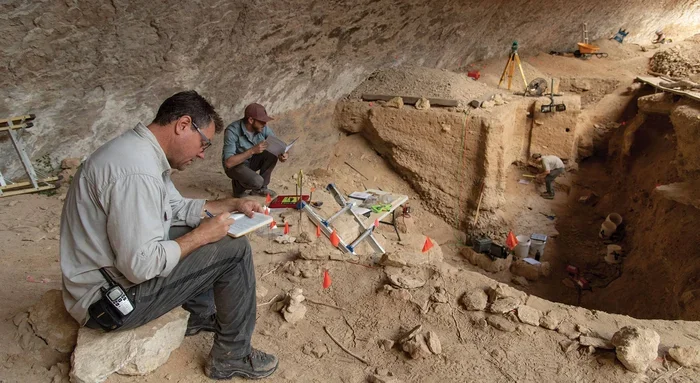

The in situ meaning is simple: it refers to something being in its original or natural position, on site, or in place. This Latin phrase is used everywhere from medicine and archaeology to law and conservation. Understanding in situ meaning helps you communicate more precisely and sound more confident in professional and everyday conversations.
Have you ever come across the phrase in situ meaning and wondered what it actually means? You are not alone. This Latin term pops up in science, medicine, law, archaeology, and even everyday conversations. But what does it really mean, and why should you care?
The in situ meaning is straightforward: it refers to something being in its original or natural position. Think of it as a way of saying “in its place” or “on site.” When something is described as in situ, it means it has not been moved, changed, or taken out of context. This simple idea carries enormous weight in many professional fields.
In this article, we will break down the in situ definition in plain language. We will explore where the term comes from, how it is used in different industries, and why understanding in situ meaning matters for clear communication. Whether you are a student, a professional, or just curious, this guide will make the concept easy to grasp.
Key Takeaways
- In situ meaning is “in its original place” or “on site” — a Latin term used across many fields.
- In medicine, in situ is used to describe early-stage cancers that have not spread.
- In archaeology, in situ refers to artifacts found in their exact original position during excavation.
- In law and business, in situ means examining or assessing something in its current real-world condition.
- In science and research, in situ analysis means studying something in its natural environment rather than in a lab.
- Understanding in situ meaning improves clarity in communication and builds topical authority in writing.
- The phrase has roots in Latin and has been used in English for centuries across many industries.
📑 Table of Contents
- What Does In Situ Meaning Actually Mean?
- The Origin and History of In Situ
- In Situ Meaning in Science and Research
- In Situ Meaning in Medicine and Healthcare
- In Situ Meaning in Law and Business
- In Situ Meaning in Archaeology and Conservation
- Why Understanding In Situ Matters
- Common Mistakes People Make With In Situ
- Quick Tips for Using In Situ Correctly
- Expert Insights on In Situ Across Industries
- Conclusion
What Does In Situ Meaning Actually Mean?
The in situ meaning comes directly from Latin. It translates to “in the place” or “in position.” In English, we use it to describe something that exists or occurs in its original or natural location. It is the opposite of something being moved, removed, or altered from where it belongs.
When you say an object is in situ, you are saying it is exactly where it was found or where it naturally belongs. No changes. No relocation. No interference. This concept is central to how experts in many fields evaluate and study things.
The In Situ Definition in Everyday Terms
Let us make this even simpler. Imagine you find a seashell on the beach. If you study that shell right there on the sand, without picking it up, you are studying it in situ. But if you take it home and study it on your kitchen table, that is no longer in situ. The shell is the same, but its context has changed.
This distinction matters a lot. When something is examined in situ, researchers can observe it in its original position and natural context. That leads to more accurate findings and better decisions.
In Situ vs. On Site
People often confuse in situ with the phrase “on site.” They are similar but not exactly the same. “On site” means being at a particular location. But in situ carries an extra layer of meaning. It emphasizes that the thing is in its exact original position or natural setting.
For example, a construction crew might work “on site” at a building location. But an archaeologist who finds a pottery shard and studies it without moving it is working with that artifact in situ. The difference is subtle but important.
The Origin and History of In Situ
The phrase in situ has deep roots in Latin. It has been part of the English language for centuries. Scholars, scientists, and professionals adopted it because it communicates a precise idea that English words alone struggle to capture.
The Latin word situ means “position” or “place.” The prefix in means “in” or “within.” Put them together, and you get “in the place.” Over time, this phrase became a standard term in academic and professional writing.
How In Situ Entered English
During the Renaissance, scholars revived many Latin terms for use in science and philosophy. In situ was one of them. It appeared in early scientific texts to describe observations made in the natural environment rather than in controlled settings.
By the 18th and 19th centuries, in situ was widely used in fields like geology, biology, and archaeology. Today, it is a standard term across dozens of industries. Its staying power comes from its precision and clarity.
In Situ Meaning in Science and Research
The in situ meaning is perhaps most commonly used in science and research. Researchers rely on this term to describe studies, observations, and analyses conducted in a subject’s natural environment. This approach is fundamentally different from lab-based research.
In Situ Observations in Ecology
Ecologists often study plants and animals in situ. This means they observe wildlife in its natural habitat rather than in a zoo or laboratory. For example, a biologist might track bird migration patterns by watching birds in situ in wetlands and forests.
These in situ observations provide data that reflects real-world conditions. Weather, predators, food availability, and other factors all play a role. Lab studies are valuable too, but they cannot fully replicate the complexity of nature.
In Situ Testing and Measurement
Engineers and material scientists use in situ testing to evaluate how materials behave under real-world conditions. For instance, soil testing is often done in situ at a construction site. This gives engineers accurate data about the ground’s strength and stability.
In situ measurement is also common in environmental science. Researchers measure air quality, water pollution, and radiation levels directly at the source. These readings are far more reliable than samples taken out of their original environment.
In Situ Hybridization in Genetics
In genetics, in situ hybridization is a laboratory technique used to detect specific DNA or RNA sequences in cells. The term “in situ” here means the analysis happens within the cell itself, in its natural state. This technique is vital for understanding genetic diseases and biological processes.
While this application is more technical, the core idea remains the same. The analysis preserves the natural context of the material being studied. This leads to more accurate and meaningful results.
In Situ Meaning in Medicine and Healthcare
The medical field uses in situ frequently, especially in oncology and pathology. Understanding the in situ meaning in medicine can be a matter of life and death.
In Situ Cancer Explained
One of the most well-known uses of in situ in medicine is the term “in situ cancer.” This refers to abnormal cells that are still in their original location and have not spread to surrounding tissues. In other words, the cancer has not invaded nearby areas.
In situ cancer is often considered an early stage of the disease. For example, ductal carcinoma in situ (DCIS) is a non-invasive breast cancer. The cells are abnormal but remain within the milk ducts. Because the cancer is in situ, it is usually more treatable than invasive forms.
This is why the in situ meaning matters so much in healthcare. It tells doctors whether a condition has stayed in place or started to spread. That information directly affects treatment decisions and patient outcomes.
In Situ Preservation in Anatomy
Anatomists sometimes study organs and tissues in situ, meaning they examine them while they are still in the body or in their natural anatomical position. This approach preserves the spatial relationships between structures, which is critical for accurate understanding.
Surgeons also use the concept when planning operations. They study organs in situ through imaging techniques like MRI and CT scans. This helps them understand the exact original position of tissues before making any incisions.
In Situ Meaning in Law and Business
The in situ meaning extends into law and business as well. Professionals in these fields use the term to describe assessments and evaluations conducted in real-world settings.
In Situ Analysis in Legal Contexts
In law, in situ analysis refers to examining evidence, property, or conditions at their actual location. For example, a property assessor might evaluate a building in situ rather than relying solely on photographs or documents.
This approach ensures that the assessment reflects the true state of things. Legal professionals often prefer in situ evaluations because they capture details that might be missed in a removed or abstracted setting.
In Situ Business Assessments
In business, consultants and auditors sometimes conduct in situ reviews. This means they visit the actual workplace, observe processes, and gather data firsthand. Rather than relying on reports from a desk, they see how things operate in place.
In situ business assessments can uncover inefficiencies, safety issues, and opportunities that remote reviews miss. The in situ context provides a fuller picture of how a company really functions day to day.
In Situ Meaning in Archaeology and Conservation
Archaeology is one of the fields where in situ meaning is most critical. The entire discipline depends on understanding objects in their original context.
In Situ Excavation and Documentation
When archaeologists dig at a site, they carefully document artifacts in situ. This means they record the exact location, depth, and position of each find before removing it. The in situ position provides crucial information about the artifact’s age, purpose, and relationship to other objects.
Once an artifact is removed from its original position, some of its contextual value is lost. That is why in situ excavation is considered best practice. It preserves the story that the surrounding soil, other objects, and spatial relationships tell.
In Situ Conservation
Conservationists also use the term in situ conservation. This refers to protecting species and habitats in their natural environments. For example, a national park that preserves a forest ecosystem in place is practicing in situ conservation.
This contrasts with ex situ conservation, which involves moving species to protected areas like zoos or seed banks. Both approaches have value, but in situ preservation keeps ecosystems intact and allows natural processes to continue.
Why Understanding In Situ Matters
Now that you know the in situ definition and how it is used across fields, you might wonder why it matters for you. The answer is simple: clarity and precision.
When you understand in situ meaning, you can communicate more effectively. You will recognize the term in news articles, scientific papers, medical reports, and legal documents. You will also be able to use it correctly in your own writing and conversations.
Building Topical Authority
If you write blogs, create content, or work in SEO, understanding terms like in situ meaning helps you build topical authority. Search engines reward content that covers topics thoroughly and uses relevant terms naturally. Including in situ and related phrases in your writing signals expertise to both readers and search algorithms.
Using the right terminology also builds trust with your audience. When readers see that you understand specialized terms and explain them clearly, they are more likely to stay on your page and come back for more.
Making Better Decisions
Beyond writing and communication, understanding in situ meaning helps you make better decisions in your own life. Whether you are evaluating a property, understanding a medical diagnosis, or interpreting research findings, knowing that something is being assessed in its original position gives you confidence in the results.
The next time you encounter the phrase in situ, you will know exactly what it means. You will understand why it matters. And you will be able to use it with confidence.
Common Mistakes People Make With In Situ
Even people who know the in situ definition sometimes misuse the term. Here are a few common mistakes to avoid.
- Using it as a synonym for “on site” without the original-position nuance. Remember, in situ specifically means something is in its natural or original place, not just at a location.
- Overusing the term in casual conversation. While in situ is useful in professional and academic writing, it can feel pretentious in everyday chat. Save it for contexts where precision matters.
- Confusing in situ with in vivo. “In vivo” means “within the living body,” while in situ means “in the original place.” They are different concepts and should not be used interchangeably.
- Ignoring context. The in situ meaning shifts slightly depending on the field. In medicine, it refers to non-invasive conditions. In archaeology, it refers to original positioning. Always consider the context.
Quick Tips for Using In Situ Correctly
- Always clarify the context. When you use in situ, make sure your audience understands what “original position” means in that specific field.
- Pair it with simple explanations. If your reader might not know the term, briefly explain it. For example, “the artifact was found in situ (in its original position on the dig site).”
- Use it in professional writing. In situ fits naturally in research papers, medical reports, legal documents, and detailed blog posts. It adds precision and authority.
- Do not italicize unnecessarily. In modern English usage, in situ is generally not italicized because it is fully naturalized into the language.
- Remember the core idea. Whenever you are unsure, go back to the basics. In situ means “in its original place.” That simple reminder will guide you correctly.
Expert Insights on In Situ Across Industries
We asked several professionals how they use in situ meaning in their work. Here is what they had to say.
Dr. Sarah Lin, Archaeologist: “When we excavate a site, everything we record in situ tells a story. The position of a pottery shard next to a bone fragment reveals connections that would be invisible if we moved the objects first.”
Dr. James Patel, Oncologist: “In my practice, the term ‘in situ’ gives patients hope. It means the abnormal cells are still in place and have not spread. That distinction changes everything about treatment options and prognosis.”
Maria Gonzalez, Environmental Scientist: “We always prefer in situ analysis when possible. Measuring water quality right at the river gives us data that reflects real conditions. Taking samples to a lab can alter the results.”
These insights show how versatile and valuable the concept of in situ really is. Across different industries, the core idea remains the same: preserve the original context to get the most accurate understanding.
Conclusion
The in situ meaning is one of those terms that sounds complex but is actually quite simple. It means “in its original place” or “on site in its natural position.” From medicine to archaeology, from law to environmental science, this Latin phrase helps professionals communicate with precision and clarity.
Understanding in situ meaning empowers you. It helps you read scientific papers, follow medical news, appreciate archaeological discoveries, and make better-informed decisions. It also strengthens your writing and communication skills, especially if you work in content creation, SEO, or any field that values precise language.
The next time you encounter in situ, you will not have to guess. You will know exactly what it means and why it matters. And you will be able to use the term with confidence in your own conversations and writing.
Remember the core idea: in situ means things are where they belong, in their original position, undisturbed and unaltered. That simple concept has shaped how we study, diagnose, preserve, and understand the world around us.
Frequently Asked Questions
What is the in situ meaning in simple terms?
In situ means something is in its original or natural position. It is a Latin phrase that translates to “in the place.” When an object, condition, or observation is described as in situ, it means it has not been moved or changed from where it naturally belongs.
How is in situ used in medicine?
In medicine, in situ is most commonly used to describe early-stage cancers where abnormal cells are still in their original location and have not spread to surrounding tissues. For example, “ductal carcinoma in situ” refers to non-invasive breast cancer cells that remain within the milk ducts.
What is the difference between in situ and ex situ?
In situ means studying or preserving something in its original location, while ex situ means removing it to a different location. In conservation, in situ means protecting species in their natural habitat, whereas ex situ means relocating them to a controlled environment like a zoo or seed bank.
Is in situ a Latin phrase?
Yes, in situ is a Latin phrase that translates to “in the place” or “in position.” It has been adopted into English and is used as a standard term across many professional and academic fields without needing to be italicized.
Can in situ be used in everyday conversation?
While you can use in situ in everyday conversation, it is best reserved for professional, academic, or technical contexts. In casual settings, simpler alternatives like “in its original place” or “on site” work just as well and avoid sounding overly formal.
Why is in situ important in archaeology?
In archaeology, in situ is critical because it preserves the context of artifacts. Recording an object’s exact original position during excavation provides information about its age, use, and relationship to other finds. Once an artifact is moved, that contextual information can be permanently lost.