
Learning how to say 17 in French is simple once you understand the French counting system. The word is dix-sept, which literally means “ten-seven.” This article breaks down the pronunciation, spelling, and usage of this number with clear examples and practical tips for beginners.
Key Takeaways
- Dix-sept is the French word for 17, formed by combining “dix” (ten) and “sept” (seven).
- The French counting system uses a base-20 structure for numbers like 70 and above, but 17 follows a straightforward pattern.
- Pronouncing dix-sept correctly requires attention to the soft “s” in dix and the silent “t” at the end of sept.
- Understanding how 17 fits into the broader French number system helps you learn other numbers faster.
- Practical usage examples make it easier to remember and apply the number in real conversations.
📑 Table of Contents
- How to Say 17 in French: A Complete Beginner’s Guide
- The French Number System: Why 17 Is Easy
- Pronouncing 17 in French Like a Pro
- Where Does 17 Fit in the French Counting System?
- Practical Ways to Use 17 in Everyday French
- Tips to Remember How to Say 17 in French
- Common Mistakes When Saying 17 in French
- Why Learning French Numbers Matters More Than You Think
- Putting It All Together: Practice Exercises
- Final Thoughts on Saying 17 in French
How to Say 17 in French: A Complete Beginner’s Guide
Have you ever wondered how to say 17 in French? It is easier than you might think. The French word for 17 is dix-sept. This two-part word combines “dix,” meaning ten, and “sept,” meaning seven. Together, they form the number seventeen.
French numbers follow a logical pattern once you get the hang of them. Unlike English, where eleven, twelve, and thirteen feel random, French builds numbers from smaller parts. This makes learning French numbers much more predictable. Once you know how to count to ten, you can build almost any number from there.
So why does this matter? Whether you are traveling to France, chatting with a French speaker, or simply expanding your language skills, knowing how to say 17 in French is a small win that builds confidence. Let us dive in and make it stick.
The French Number System: Why 17 Is Easy
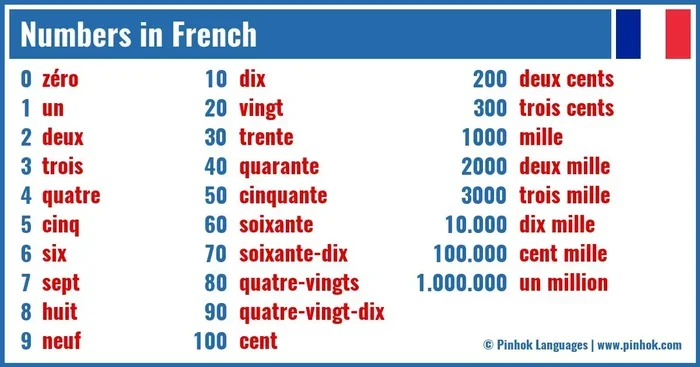
The French counting system is actually quite clever. Numbers from 1 to 16 have unique names. But starting at 17, the pattern shifts. Instead of inventing a new word, French speakers combine two smaller numbers. This is where dix-sept comes in.
Breaking Down Dix-Sept
Let us look at each part closely:
- Dix (pronounced “dees”) means ten.
- Sept (pronounced “set”) means seven.
- Together, dix-sept (pronounced “dees-set”) means seventeen.
Notice something interesting? The “t” at the end of “sept” is silent. You do not pronounce it. This is common in French and trips up many learners. Just say “dees-set” and you are spot on.
How It Compares to English
In English, we say “seventeen.” The word has no obvious connection to ten and seven. In French, the math is right there in the word. Dix-sept literally translates to “ten-seven.” This transparency is one of the reasons the French number system feels logical once you learn the basics.
If you want to explore how meaning works in different languages, you can check out our guide on in situ meaning to understand how context shapes word interpretation across languages.
Pronouncing 17 in French Like a Pro
Pronunciation is key when learning any new number. The good news is that dix-sept is straightforward once you know the rules. Let us break it down syllable by syllable.
Step-by-Step Pronunciation Guide
- Dix — Say “dees.” The “x” is silent. It sounds like the English word “days” but shorter and softer.
- Sept — Say “set.” The “e” sounds like the “e” in “bed.” The “t” at the end is not pronounced.
- Together — Say “dees-set.” Keep a small pause between the two parts. Do not rush them together.
Common Pronunciation Mistakes to Avoid
- Don’t pronounce the “t” in sept. Saying “sep-tay” is a common error among English speakers.
- Don’t stress the wrong syllable. In French, stress usually falls on the last syllable. So “dees-SET” is more natural than “DEES-set.”
- Don’t add extra vowels. Keep it clean and crisp. “Deeesss-set” is too drawn out.
A quick tip: listen to native speakers say the number. YouTube and language apps are great for this. Hearing the number in context helps your ear adjust to the rhythm of spoken French.
Where Does 17 Fit in the French Counting System?
To truly understand how to say 17 in French, you need to see it in context. Let us look at how 17 connects to the numbers around it.
The Numbers 11 Through 20
Here is a quick look at the teens in French:
- 11 — Onze
- 12 — Douze
- 13 — Treize
- 14 — Quatorze
- 15 — Quinze
- 16 — Seize
- 17 — Dix-sept
- 18 — Dix-huit
- 19 — Dix-neuf
- 20 — Vingt
See the pattern? From 17 to 19, you just add “dix” (ten) in front of the single-digit number. This pattern makes learning the teens much easier than memorizing each one as a separate word.
Quick Comparison Table
| Number | French Word | Literal Translation |
|---|---|---|
| 17 | Dix-sept | Ten-seven |
| 18 | Dix-huit | Ten-eight |
| 19 | Dix-neuf | Ten-nine |
Once you see this pattern, you can figure out 17, 18, and 19 on your own. That is a real shortcut for French language basics.
Practical Ways to Use 17 in Everyday French
Knowing the word is one thing. Using it naturally is another. Here are some real-life situations where you might need to say dix-sept.
Telling Time
In France, the 24-hour clock is common. So “17:00” is how people say 5:00 PM. If someone asks you what time it is, you might hear or say:
- Il est dix-sept heures. — It is 17:00 (5 PM).
Talking About Age
If you are introducing yourself or someone else, age comes up often:
- J’ai dix-sept ans. — I am seventeen years old.
- Elle a dix-sept ans. — She is seventeen years old.
Shopping and Numbers
Imagine you are at a market in Paris. You want to buy something that costs 17 euros:
- Ça coûte dix-sept euros. — That costs seventeen euros.
These small real-world examples help the number stick in your memory. Practice saying them out loud a few times each day.
Tips to Remember How to Say 17 in French
Memory tricks make language learning so much easier. Here are some tried-and-true methods to help you remember dix-sept.
Use Visual Association
Visualize the number. Picture a group of ten apples and seven oranges. Now say dix-sept. The image reinforces the word.
Repeat It in Context
Don’t just memorize the word in isolation. Put it into a full sentence. Saying “J’ai dix-sept ans” five times is more effective than saying “dix-sept” five times alone.
Use Flashcards
Write “17” on one side of a card and “dix-sept” on the other. Quiz yourself daily. Apps like Anki or Quizlet make this easy and fun.
Listen and Mimic
Find a French podcast or video that counts out loud. Pause and repeat after the speaker. This builds both your pronunciation and your ear for the language.
Expert Insight
Language experts agree that the best way to remember French numbers is through repetition in context. Rather than drilling numbers alone, try weaving them into daily conversations or practice sessions. Even saying the number out loud while cooking or walking can reinforce memory naturally.
Common Mistakes When Saying 17 in French
Even simple numbers can cause trouble if you are not careful. Here are the most common mistakes English speakers make with dix-sept.
Mistake 1: Pronouncing the Final “T”
The biggest error is saying “dix-sept” with a hard “t” at the end. Remember, the “t” in “sept” is silent. It is just “dees-set.”
Mistake 2: Confusing Dix-Sept with Diz-Sept
Some learners try to blend the words and say “diz-sept.” That is not correct. Keep them separate: “dix” and “sept.”
Mistake 3: Putting the Words in the Wrong Order
In French, “dix” always comes first, followed by “sept.” Saying “sept-dix” would be completely wrong. Think of it as “ten-seven,” not “seven-ten.”
Mistake 4: Forgetting the Hyphen
Always write “dix-sept” with a hyphen. Writing “dix sept” as two separate words is incorrect in standard French.
Quick Tips Section
- Say “dees-set” slowly at first, then build up speed.
- Practice saying it three times in a row to build muscle memory.
- Use it in a full sentence immediately after learning it.
- If you enjoy French culture, try learning French cat names as a fun way to expand your vocabulary.
Why Learning French Numbers Matters More Than You Think
You might wonder why we are spending so much time on a single number. The truth is, numbers are the building blocks of any language. Once you understand how French counting works, you can handle much bigger numbers with ease.
French numbers follow a beautiful logic. After 16 (seize), the system shifts to a combined structure. You take “dix” and add the single digit. This pattern continues all the way up to 19:
- Dix-sept (17)
- Dix-huit (18)
- Dix-neuf (19)
At 20, you get “vingt,” and from there the system expands further. Understanding this structure means you are not memorizing random words. You are learning a system. That makes learning French vocabulary faster and more enjoyable.
If you are interested in how names and words carry meaning in different contexts, you might enjoy reading about French cat names to see how French language patterns appear in everyday naming traditions.
Putting It All Together: Practice Exercises
The best way to lock in how to say 17 in French is through practice. Here are a few simple exercises you can do right now.
Exercise 1: Count Out Loud
Say the numbers from 11 to 20 in French. Focus on dix-sept. Say it three times slowly, then three times at normal speed.
Exercise 2: Fill in the Blank
Complete these sentences with the correct French number:
- J’ai _____ ans. (I am seventeen years old.)
- Il est _____ heures. (It is 17:00.)
- J’ai vu _____ chats aujourd’hui. (I saw seventeen cats today.)
The answers are all dix-sept. Say each one out loud after filling in the blanks.
Exercise 3: Write a Short Paragraph
Write three sentences about your day using the number 17. For example:
- “J’ai sept ans de plus que mon frère. Il a dix-sept ans.”
- “Ce matin, j’ai vu dix-sept oiseaux dans le jardin.”
Writing helps cement the word in your long-term memory.
Final Thoughts on Saying 17 in French
Learning how to say 17 in French is a small but meaningful step in your language journey. The word dix-sept is simple, logical, and easy to pronounce once you know the rules.
Remember the key points: “dix” means ten, “sept” means seven, and together they make seventeen. Avoid the common mistakes like pronouncing the final “t” or reversing the word order. Practice in context, use the number in real sentences, and you will pick it up fast.
Numbers are the foundation of any language. Once you feel comfortable with 17, move on to 18, 19, and beyond. Each number builds on the last. Before you know it, you will be counting in French with confidence and ease.
Keep practicing, stay curious, and enjoy the process. Every number you learn brings you one step closer to fluency. Dix-sept is just the beginning of a much bigger adventure in the French language.
Frequently Asked Questions
What is the French word for 17?
The French word for 17 is dix-sept. It is made up of two parts: “dix” meaning ten and “sept” meaning seven. Together, they form the number seventeen in a logical and transparent way.
How do you pronounce dix-sept correctly?
Pronounce it as “dees-set.” The “x” in dix is silent, and the “t” at the end of sept is also silent. Keep the two parts separate with a small pause between them. Practice slowly at first and gradually speed up.
Why is the French number system different from English?
The French system uses a base structure where numbers are built from smaller components. Instead of inventing unique words for every number, French combines “dix” (ten) with single-digit numbers for the teens. This makes the system predictable and easy to learn once you understand the pattern.
Is the “t” in sept pronounced?
No, the “t” in sept is silent in standard French pronunciation. You say “set,” not “sep-tay.” This is a very common mistake among English speakers, so be mindful of it when practicing.
Can I use dix-sept when telling time in France?
Yes, absolutely. In the 24-hour clock used in France, 17:00 is expressed as “dix-sept heures.” This is a very common and practical use of the number in everyday conversation.
What is the easiest way to remember how to say 17 in French?
The easiest way is to break it into two familiar parts: “dix” (ten) and “sept” (seven). Visualize ten items and seven items together. Repeat it in full sentences like “J’ai dix-sept ans” to build natural memory through context.
=== CONCLUSION ===
Learning how to say 17 in French does not have to be complicated. The word dix-sept follows a clear pattern, sounds straightforward once you know the rules, and fits naturally into everyday conversations. From telling time to sharing your age, this number shows up more often than you might expect.
Focus on getting the pronunciation right, avoiding the common mistakes, and practicing in real sentences. Each small success like mastering dix-sept builds your confidence and pushes you forward in your French learning journey. Keep going, stay consistent, and enjoy every number you conquer.