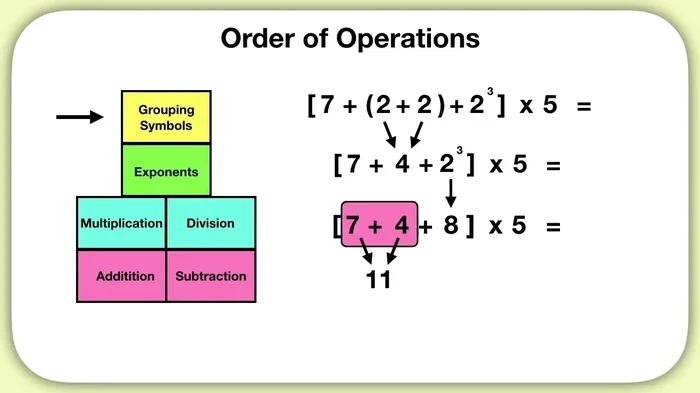

The pemdas meaning is simple: it is a math rule that tells you the exact order to solve operations in any equation. Each letter stands for Parentheses, Exponents, Multiplication, Division, Addition, and Subtraction. Following this sequence ensures you always get the right answer, no matter how complex the problem. This guide breaks down every part of the rule with clear examples and practical tips. You will walk away confident enough to tackle any math challenge.
Have you ever looked at a math problem and felt completely lost? You know the numbers and symbols are all there, but you are not sure where to start. That feeling is incredibly common, and it usually comes down to one thing: not knowing the pemdas meaning. This simple rule is the secret key that unlocks every math equation you will ever face.
PEMDAS is the order of operations in math. It tells you exactly which part of an equation to solve first, second, third, and so on. Without it, the same problem could give you ten different answers depending on who is solving it. With it, everyone arrives at the same correct result every single time. This guide will walk you through the pemdas meaning step by step so you can solve any problem with confidence.
We are going to break down each letter, look at real examples, and point out the mistakes most people make. Whether you are a student just learning arithmetic or an adult brushing up on algebra basics, this article has everything you need. By the end, you will understand mathematical operations like never before. Let us dive right in.
Key Takeaways
- PEMDAS stands for Parentheses, Exponents, Multiplication, Division, Addition, and Subtraction: this is the universal order of operations used in math.
- Always solve inside grouping symbols first: parentheses, brackets, and braces come before anything else in an equation.
- Multiplication and division share equal priority: solve them from left to right, not multiplication before division.
- Addition and subtraction also share equal priority: work through them left to right as they appear.
- Common mistakes include ignoring left-to-right rules and skipping grouping symbols: awareness prevents errors.
- PEMDAS works the same as BODMAS: different countries use different acronyms, but the rule is identical.
- Practice with real examples builds lasting confidence: the more problems you solve, the more natural the rule becomes.
📑 Table of Contents
What Does PEMDAS Mean?
The pemdas meaning is all about the sequence you follow when solving a math expression. It is a set of math rules that tells you which operations to handle first. The acronym spells out six steps that form the math hierarchy every student must learn. Let us look at what each letter stands for.
The Full Breakdown of PEMDAS
Every letter in PEMDAS represents a specific group of operations:
- P stands for Parentheses. These are the grouping symbols that wrap around parts of an equation. Anything inside them gets solved first.
- E stands for Exponents. These are the small raised numbers that show repeated multiplication, like 3² or 10³.
- M stands for Multiplication. This is when you multiply numbers together.
- D stands for Division. This is when you divide one number by another.
- A stands for Addition. This is the process of combining numbers together.
- S stands for Subtraction. This is when you take one number away from another.
Together, these six steps form the complete operation sequence for solving any math expression. The beauty of this rule is that it works for simple problems and complex equations alike.
Where Did PEMDAS Come From?
The idea of a standard calculation order has been around for centuries. As math evolved, mathematicians needed a way to make sure everyone solved expressions the same way. Over time, the PEMDAS rule became the widely accepted standard in English-speaking countries. Other regions use similar acronyms like BODMAS or BIDMAS, but the underlying math rules are exactly the same. The goal has always been consistency and clarity in solving equations.
Why the Order of Operations Matters
You might wonder why the order of operations is such a big deal. Can you not just solve a problem from left to right? The short answer is no, and here is why.
What Happens Without a Standard Order?
Imagine the expression 3 + 4 × 2. If you solve from left to right, you get 3 + 4 = 7, then 7 × 2 = 14. But the correct answer is actually 11. Why? Because multiplication comes before addition in the PEMDAS meaning. You solve 4 × 2 first to get 8, then add 3 to get 11.
Without a standard operation sequence, the same problem would have two completely different answers. That would make math unreliable and confusing. The PEMDAS rule eliminates that confusion entirely.
Real-World Examples of Calculation Order
The order of operations is not just for textbooks. It shows up in everyday life more than you might think. When you calculate a tip at a restaurant, figure out a sale discount, or split a dinner bill, you are using the same logic behind PEMDAS. Understanding mathematical operations in the right sequence helps you make accurate decisions in daily life. Whether you are balancing a checkbook or splitting costs among friends, the math hierarchy keeps your calculations correct.
Breaking Down Each Letter in PEMDAS
Now let us go deeper into each part of the pemdas meaning. We will look at what each step involves and why it comes in that specific order.
P — Parentheses and Grouping Symbols
Parentheses are the most important part of the PEMDAS rule. They act like a border that says, “Solve everything inside me first.” The grouping symbols include parentheses ( ), brackets [ ], and braces { }. They all serve the same purpose: they group numbers and operations together so those parts get solved before anything else.
For example, in the expression (5 + 3) × 2, you solve the parentheses first. That gives you 8 × 2 = 16. Without the parentheses, the expression 5 + 3 × 2 would equal 11. The parentheses completely change the calculation order and the final answer.
When you see nested parentheses, like [ (4 + 2) × 3 ], you solve the innermost group first. Work from the inside out. This is a key part of understanding grouping symbols and how they shape the math hierarchy.
E — Exponents and Powers
After you handle parentheses, the next step in the pemdas meaning is exponents. An exponent tells you how many times to multiply a number by itself. For instance, 2³ means 2 × 2 × 2, which equals 8.
Exponents come before multiplication, division, addition, and subtraction in the operation sequence. So in the expression 3 + 2², you solve the exponent first to get 3 + 4 = 7. If you did it the other way, you would get a wrong answer.
Understanding exponents is a big part of algebra basics. They appear constantly in higher-level math, so getting comfortable with them early pays off enormously.
MD — Multiplication and Division (Left to Right)
Here is where many people get confused. Multiplication and division share the same level of priority in the PEMDAS meaning. They come after parentheses and exponents, but before addition and subtraction. The key rule is that you solve them from left to right, whichever one appears first.
Take the expression 12 ÷ 3 × 2. You do not solve 3 × 2 first. Instead, you go left to right: 12 ÷ 3 = 4, then 4 × 2 = 8. This left-to-right rule is one of the most commonly misunderstood parts of the PEMDAS rule.
The same logic applies when both operations appear in a longer expression. Always scan from left to right and handle multiplication and division in the order they show up.
AS — Addition and Subtraction (Left to Right)
The final two steps in the pemdas meaning are addition and subtraction. Just like multiplication and division, these two operations share equal priority. You solve them from left to right as they appear in the expression.
Consider the problem 10 – 3 + 2. You do not solve 3 + 2 first. Instead, you go left to right: 10 – 3 = 7, then 7 + 2 = 9. Many people make the mistake of adding before subtracting because addition comes first in the acronym. Remember, PEMDAS is just an acronym, not a strict top-to-bottom instruction for M and D or A and S.
PEMDAS Examples That Build Your Confidence
The best way to truly understand the pemdas meaning is to practice with real examples. Let us walk through some problems step by step.
Simple Problems to Start With
Example 1: 8 + 2 × 5
First, look for parentheses. There are none. Next, check for exponents. None again. Now move to multiplication and division. You see 2 × 5 = 10. Then handle addition: 8 + 10 = 18. The answer is 18.
Example 2: (6 + 4)²
Start with the parentheses: 6 + 4 = 10. Then apply the exponent: 10² = 100. The answer is 100.
Example 3: 15 – 3 + 2
No parentheses or exponents here. No multiplication or division either. Just addition and subtraction, so go left to right. 15 – 3 = 12, then 12 + 2 = 14. The answer is 14.
Harder Problems to Test Yourself
Example 4: 2 × (3 + 1)² ÷ 4
Step 1: Solve inside the parentheses: 3 + 1 = 4.
Step 2: Apply the exponent: 4² = 16.
Step 3: Handle multiplication and division from left to right: 2 × 16 = 32, then 32 ÷ 4 = 8.
The final answer is 8. Notice how each step follows the PEMDAS rule precisely.
Example 5: 50 ÷ 5 × 2 + 3²
Step 1: No parentheses. Check for exponents: 3² = 9.
Step 2: Handle division and multiplication from left to right: 50 ÷ 5 = 10, then 10 × 2 = 20.
Step 3: Handle addition: 20 + 9 = 29. The answer is 29.
These examples show how the pemdas meaning guides you through every step. The more you practice, the more automatic it becomes.
Quick Tips for Solving Problems Faster
- Circle the grouping symbols first to remind yourself to solve those parts early.
- Write out each step instead of trying to do everything in your head.
- Draw an arrow left to right when you see multiplication and division side by side.
- Use a pencil and erase freely. Working cleanly reduces silly mistakes.
- Check your answer by plugging it back into the original expression.
Common Mistakes People Make with PEMDAS
Even people who know the pemdas meaning can trip up on certain details. Let us look at the most common mistakes and how to avoid them.
Forgetting the Left-to-Right Rule
The biggest mistake people make is assuming that M always comes before D and A always comes before S. That is not true. Multiplication and division have equal priority, and so do addition and subtraction. Always work left to right when two operations share the same level.
For example, in 20 ÷ 4 × 3, solving 4 × 3 first would give you 20 ÷ 12 = 1.67. But the correct approach is 20 ÷ 4 = 5, then 5 × 3 = 15. That is a huge difference caused by a small mistake.
Misunderstanding Grouping Symbols
Some people only look for parentheses and forget about brackets and braces. Others skip over fractions, which act as implicit grouping symbols. The top and bottom of a fraction are essentially wrapped in invisible parentheses. Always treat grouped expressions with extra care.
Ignoring Exponents
Another common error is jumping straight to multiplication or addition without handling exponents first. Remember, exponents come right after parentheses in the PEMDAS rule. Skipping them will always lead to the wrong answer.
Trying to Do Everything at Once
Rushing through a problem is a recipe for errors. The pemdas meaning works best when you take it one step at a time. Solve one operation, write down the result, then move to the next step. Patience pays off in math.
PEMDAS vs BODMAS and Other Acronyms Around the World
If you have ever heard of BODMAS or BIDMAS, you might wonder how they compare to PEMDAS. The truth is, they all mean the same thing. Different countries use different acronyms, but the underlying math rules are identical.
How Different Countries Teach the Same Rule
In the United States and most English-speaking countries, the acronym is PEMDAS. In the United Kingdom and India, you will often hear BODMAS, which stands for Brackets, Orders, Division, Multiplication, Addition, Subtraction. In some regions, the acronym is BIDMAS, where I stands for Indices instead of Orders. No matter which acronym you use, the operation sequence never changes.
All of these acronyms follow the same math hierarchy:
- Solve grouping symbols first (Parentheses, Brackets, or Braces).
- Handle exponents or orders (powers and roots).
- Solve multiplication and division from left to right.
- Solve addition and subtraction from left to right.
The pemdas meaning is universal. The only difference is the name of the acronym based on where you live. The rule itself is the same everywhere.
Using PEMDAS in Real-Life Math Problems
The pemdas meaning goes far beyond the classroom. You use this logic every day, even if you do not realize it. Let us look at some practical situations where PEMDAS comes in handy.
PEMDAS in Everyday Calculations
When you go grocery shopping and need to figure out the total cost of items on sale, you are using the order of operations. Say you buy three items that cost $4 each and two items that cost $3 each. The expression is (3 × 4) + (2 × 3) = 12 + 6 = 18. You solved the parentheses first, then the addition. That is PEMDAS in action.
When you split a restaurant bill among friends and need to add a tip, the same logic applies. When you calculate interest on a savings account, PEMDAS ensures your numbers are correct. The math hierarchy is woven into daily life more than most people realize.
Tips for Remembering PEMDAS Forever
Memory tricks can make the pemdas meaning stick with you for life. The most popular one is the phrase “Please Excuse My Dear Aunt Sally.” Each word’s first letter matches the order of operations perfectly. You can also create your own fun phrase. The sillier it is, the easier it is to remember.
Another great tip is to practice a little bit every day. Even five minutes of solving math problems with PEMDAS builds strong habits. Over time, you will not even need to think about the steps. They will become second nature. The more you solve equations and simplify expressions, the more confident you will feel.
Flashcards are another helpful tool. Write an expression on one side and the step-by-step solution on the other. Quiz yourself regularly. This kind of active practice is far more effective than just reading about the PEMDAS rule once.
Key Takeaways
- The pemdas meaning is the order of operations: Parentheses, Exponents, Multiplication and Division (left to right), Addition and Subtraction (left to right).
- Grouping symbols always come first: solve anything inside parentheses, brackets, or braces before moving to the next step.
- Exponents come next: handle all powers and roots before moving to multiplication and division.
- Multiplication and division are equal: solve them left to right, not multiplication before division.
- Addition and subtraction are equal: solve them left to right, not addition before subtraction.
- Common mistakes include ignoring left-to-right rules and skipping grouping symbols: stay aware to avoid errors.
- Practice makes perfect: the more you apply the PEMDAS rule, the more natural and automatic it becomes.
Frequently Asked Questions
What does PEMDAS stand for?
PEMDAS stands for Parentheses, Exponents, Multiplication, Division, Addition, and Subtraction. It is the standard acronym used to remember the order of operations in math. Each letter tells you which part of an equation to solve first, ensuring you always get the correct answer.
Can you change the order of PEMDAS?
No, the pemdas meaning follows a fixed sequence that cannot be changed. The order exists because math requires consistency. If you change the sequence, you will get different (and usually wrong) answers. The only flexibility is that multiplication and division share equal priority, as do addition and subtraction, and you solve each pair from left to right.
What happens if you don’t follow PEMDAS?
If you ignore the order of operations, you will almost certainly get the wrong answer. The same expression can produce completely different results depending on the sequence you use. For example, solving 3 + 4 × 2 from left to right gives 14, but the correct answer is 11 because multiplication comes before addition. Following PEMDAS keeps your calculations accurate and reliable.
Is PEMDAS the same as BODMAS?
Yes, PEMDAS and BODMAS represent the same math rules using different acronyms. BODMAS is used in the UK, India, Australia, and other countries, while PEMDAS is standard in the US. Both acronyms follow the same math hierarchy: grouping symbols first, then exponents, then multiplication and division (left to right), and finally addition and subtraction (left to right).
When do you learn PEMDAS in school?
Most students are introduced to the pemdas meaning in elementary school, typically around grades 3 through 5. As students advance, they apply the rule to more complex expressions involving fractions, decimals, and algebra. A strong understanding of PEMDAS early on makes higher-level math much easier to grasp later.
Does PEMDAS apply to all math problems?
The PEMDAS rule applies to any mathematical expression that involves more than one operation. Simple problems with only one operation (like 5 + 3) do not require it. But the moment an expression includes a mix of addition, subtraction, multiplication, division, exponents, or grouping symbols, PEMDAS becomes essential. It is the foundation of solving equations and simplifying expressions at every level of math.
=== CONCLUSION ===
The pemdas meaning is one of the most important concepts in all of math. It gives you a clear, reliable path through any equation. By following the sequence of Parentheses, Exponents, Multiplication and Division, and Addition and Subtraction, you will always arrive at the correct answer. The PEMDAS rule is not just a classroom trick. It is a lifelong tool that helps you solve real-world problems with confidence and accuracy.
Remember that multiplication and division share equal priority, and so do addition and subtraction. Always work left to right when operations share the same level. Avoid the common mistakes we covered, and practice regularly to build lasting skill. Whether you are working on arithmetic, algebra basics, or everyday calculations, the order of operations has your back.
Now that you understand the pemdas meaning fully, the next step is simple: practice. Grab a pencil, work through the examples in this guide, and challenge yourself with new problems. The more you use the PEMDAS rule, the more natural it will feel. You have everything you need to solve any problem that comes your way.