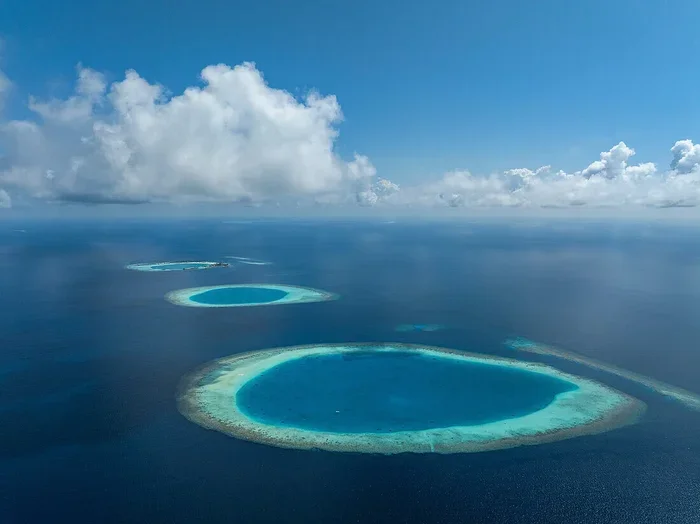

The atoll meaning is simple but fascinating: it refers to a ring-shaped coral reef, island, or chain of islands that surrounds a lagoon. Atolls form when volcanic islands sink and coral grows upward, creating some of the most unique and beautiful formations on Earth. Understanding atoll meaning helps us appreciate these fragile ecosystems, their role in marine biodiversity, and the urgent need to protect them from climate change and rising sea levels.
If you have ever looked at a picture of a tropical island surrounded by crystal-clear water and thought, “What kind of place is this?” — chances are you were looking at an atoll. The atoll meaning is more than just a fancy word for a pretty island. It describes one of the most remarkable natural formations on our planet. Let us dive deep into what an atoll really is, how it forms, and why it matters to all of us.
An atoll is a ring-shaped coral reef or island that wraps around a lagoon. Picture a donut made of coral sitting on top of the ocean. The hole in the middle is the lagoon, and the ring around it is the reef or island itself. The atoll meaning comes from the Dhivehi word “atholhu,” which is the language spoken in the Maldives. This word eventually made its way into English and became the term we use today.
Atolls are not just beautiful. They are also scientifically important. They tell us about Earth’s geological history, help us understand how coral reefs grow, and serve as home to thousands of marine species. Whether you are a traveler dreaming of a tropical getaway or a student studying geography, understanding the atoll meaning opens up a whole world of wonder.
Key Takeaways
- Atoll meaning: A ring-shaped coral island surrounding a central lagoon, formed through volcanic and coral growth processes.
- Formation process: Atolls develop when volcanic islands erode and sink while coral reefs continue growing upward toward sunlight.
- Global locations: Most atolls exist in the Pacific and Indian Oceans, with notable examples like the Maldives, Bikini Atoll, and Aldabra.
- Environmental importance: Atolls support rich marine ecosystems, protect coastlines, and house unique biodiversity found nowhere else.
- Climate threats: Rising sea levels and ocean acidification pose serious risks to atoll survival and the communities that depend on them.
- Cultural significance: Many atoll communities have deep cultural ties to their islands and rely on them for food, shelter, and identity.
📑 Table of Contents
What Is an Atoll? Understanding the Basic Atoll Meaning
The atoll meaning refers to a specific type of island formation. Unlike volcanic islands that rise high from the ocean floor, atolls are low-lying and flat. They sit just above or at sea level. The entire structure is made of coral — tiny living creatures that build hard shells over thousands of years.
When you look up the atoll definition, you will find that it describes a ring-shaped coral island enclosing or bordering a lagoon. The lagoon in the center is typically shallow and calm. The outer edge faces the open ocean and is where the most powerful waves hit. This creates a natural barrier that protects the inner waters.
Key Features of an Atoll
Every atoll shares some common features. These characteristics help scientists identify and classify them. Here is what makes an atoll an atoll:
- Ring shape: The most obvious feature. The reef or island forms a continuous loop.
- Central lagoon: The calm, shallow body of water in the middle of the ring.
- Coral composition: The entire structure is built from coral growth and carbonate deposits.
- Low elevation: Most atolls sit only a few feet above sea level.
- Tropical location: Atolls almost always form in warm, shallow tropical waters.
- Outer reef edge: The side facing the ocean takes the brunt of waves and weather.
These features are what set atolls apart from other island types. The atoll meaning is tied directly to these physical traits. Without the ring shape and the coral foundation, it is simply not an atoll.
How Are Atolls Formed? The Science Behind Reef Islands
Understanding how atolls form is one of the most fascinating parts of learning about the atoll meaning. The process takes thousands of years. It starts deep beneath the ocean surface and ends with a beautiful ring of coral barely above the water.
The Volcanic Island Stage
It all begins with a volcano. Under the ocean, a hotspot or tectonic activity creates a volcanic island. Think of places like Hawaii or the Marshall Islands. A volcanic island rises from the ocean floor. It is tall, steep, and surrounded by cool ocean water.
As the volcanic island sits in warm tropical waters, something amazing starts to happen. Coral polyps — tiny animals related to jellyfish — begin to attach themselves to the rocky shores. These polyps secrete calcium carbonate, which forms hard shells. Over time, these shells stack up and create a coral reef around the island.
The Subsidence Process
Here is where the magic happens. The volcanic island slowly starts to sink. This process is called subsidence. The tectonic plate moves the island away from the hotspot, and erosion wears it down. Meanwhile, the coral keeps growing upward, reaching toward the sunlight it needs to survive.
This is the key to the atoll meaning. The island sinks, but the coral keeps growing. Eventually, the volcanic island disappears entirely beneath the waves. All that remains is the coral reef, which now forms a perfect ring around a lagoon where the island used to be.
Darwin’s Atoll Theory
The famous scientist Charles Darwin first proposed a theory about atoll formation in 1842. His ideas were ahead of his time. Darwin suggested that volcanic islands form, coral grows around them, and then the islands sink. He was right. His theory of coral reef formation is still taught in schools today and remains one of the foundational ideas in marine geology.
Darwin’s work helped us understand the atoll meaning in a deeper way. He showed that atolls are not random formations. They are the result of a long, slow dance between volcanic activity, coral growth, and ocean changes.
Timeline of Atoll Formation
Forming an atoll is not quick. Here is a simplified timeline of the process:
- Volcanic eruption: An underwater volcano creates a new island.
- Coral colonization: Coral polyps attach to the island’s shoreline.
- Reef growth: The coral reef expands around the entire island.
- Island erosion: Waves and weather wear down the volcanic island.
- Subsidence: The island slowly sinks below the ocean surface.
- Atoll formation: The coral reef remains, forming a ring with a central lagoon.
This entire process can take anywhere from 30,000 to 100,000 years. The atoll meaning is deeply connected to this slow, patient process of creation.
Famous Atolls Around the World
Atolls exist in many parts of the world, but they are most common in two oceans. Let us explore some of the most famous atolls and see how the atoll meaning comes to life in real places.
The Maldives
The Maldives is the most well-known atoll nation on Earth. It consists of 26 atoll chains made up of over 1,000 coral islands. The country is famous for its stunning turquoise lagoons, white sandy beaches, and incredible marine ecosystem. The Maldives sits in the Indian Ocean, southwest of India and Sri Lanka.
When people search for the atoll meaning, the Maldives almost always comes up. It is the perfect example of what an atoll looks like in real life. Most of the islands are very low-lying, with an average elevation of just about 1.5 meters above sea level. This makes the Maldives one of the most vulnerable nations to rising sea levels.
Bikini Atoll
Bikini Atoll in the Marshall Islands is famous for a very different reason. It was the site of 23 nuclear tests between 1946 and 1958. The atoll meaning here takes on a more somber tone. The nuclear testing left the islands uninhabitable for decades due to radiation.
Today, Bikini Atoll is a UNESCO World Heritage Site. It serves as a powerful reminder of the impact of human activity on these fragile environments. The coral reef has shown remarkable recovery, but the area remains off-limits to most visitors.
Aldabra Atoll
Aldabra Atoll in the Seychelles is one of the largest raised coral atolls in the world. It is home to over 100,000 giant tortoises, making it one of the most important tropical island habitats on Earth. Aldabra is so remote and pristine that it has been called one of the last great wilderness areas on the planet.
The atoll meaning in the context of Aldabra is all about conservation. The atoll is protected by the Seychelles government and international organizations. It shows how atolls can serve as living laboratories for studying marine life and island ecology.
Other Notable Atolls
There are many other atolls worth mentioning. Some of the most notable include:
- Kwajalein Atoll: The largest atoll in the world by lagoon area, located in the Marshall Islands.
- Great Chagos Bank: The largest coral atoll structure in the world, in the Indian Ocean.
- Funafuti Atoll: The capital of Tuvalu, a low-lying Pacific island nation facing serious climate threats.
- Palmyra Atoll: A pristine US territory in the Pacific, known for its rich biodiversity.
- Kiritimati (Christmas Island): The world’s largest coral atoll by land area, part of Kiribati.
Each of these places demonstrates a different aspect of the atoll meaning. From tourism to history to conservation, atolls play diverse roles around the globe.
Atolls vs. Other Island Types
Not all islands are atolls. Understanding the difference helps clarify the atoll meaning even more. Let us compare atolls with other common island types.
Atolls vs. Volcanic Islands
Volcanic islands are tall and steep. They are formed by volcanic eruptions pushing land above the ocean surface. Hawaii is a great example. Volcanic islands have high elevations and often feature mountains, rainforests, and dramatic cliffs.
Atolls, on the other hand, are flat and low. They are made of coral, not lava. While volcanic islands can be found in various climates, atolls almost exclusively exist in warm tropical waters. The atoll meaning is fundamentally different from the meaning of a volcanic island.
Atolls vs. Barrier Reef Islands
Barrier reef islands are similar to atolls in that they involve coral reefs. However, there is a key difference. Barrier reefs run parallel to a mainland coast or a large island. They do not form a complete ring. The Great Barrier Reef off the coast of Australia is the most famous example.
Atolls, by definition, form a closed ring around a lagoon. They are not attached to a larger landmass. This distinction is central to the atoll definition and helps scientists classify different types of coral reef formations.
Atolls vs. Fringing Reefs
Fringing reefs are the simplest type of coral reef. They grow directly from the shoreline of an island or continent, with no lagoon between the reef and the land. The Great Barrier Reef has both fringing and barrier reef sections.
Atolls are the most evolved stage of coral reef development. They represent the final phase of the reef growth cycle after the volcanic island has fully eroded away. The atoll meaning captures this unique evolutionary stage.
Comparison Table: Island Types
| Feature | Atoll | Volcanic Island | Barrier Reef | Fringing Reef |
|---|---|---|---|---|
| Shape | Ring-shaped | Varied, often mountainous | Linear, parallel to coast | Along shoreline |
| Composition | Coral and carbonate | Volcanic rock | Coral reef | Coral reef |
| Elevation | Very low, near sea level | Can be very high | Low to moderate | Low |
| Lagoon | Central lagoon present | No lagoon | Between reef and coast | No lagoon |
| Location | Tropical oceans | Various, often Pacific/Atlantic | Tropical coasts | Tropical coasts |
| Formation | Coral growth on sinking volcanic island | Volcanic eruption | Coral growth along coast | Coral growth along shore |
This table makes it easy to see why the atoll meaning is distinct. Each island type has its own story, its own formation process, and its own place in the natural world.
Why Atolls Matter: Environmental and Cultural Significance
The atoll meaning goes beyond geography. These tiny islands carry enormous environmental and cultural weight. Understanding why they matter helps us appreciate the urgency of protecting them.
Biodiversity Hotspots
Despite their small size, atolls support incredible biodiversity. The lagoons and surrounding waters are home to thousands of species. Fish, sea turtles, sharks, rays, and countless invertebrates depend on atoll ecosystems for food and shelter. Coral reefs around atolls act as nursery grounds for many marine species.
The marine ecosystem of an atoll is incredibly interconnected. Coral provides habitat. Fish keep the coral healthy by eating algae. Predators at the top of the food chain maintain balance. Remove one piece, and the entire system can collapse.
Human Communities
Millions of people live on atolls or depend on them for their livelihoods. In the Maldives, the entire nation is made up of atoll islands. The people of these islands have developed unique cultures, traditions, and ways of life tied directly to the ocean and reef.
Fishing, tourism, and traditional practices all revolve around the atoll environment. The atoll meaning for these communities is deeply personal. It is not just a scientific term. It is home.
Climate Change Indicators
Atolls are often called the “canary in the coal mine” for climate change. Because they sit so close to sea level, even small rises in ocean levels can have devastating effects. Scientists study atolls closely to understand how climate change is affecting our oceans.
The atoll meaning in the context of climate science is powerful. These islands show us the real-world consequences of global warming. They are among the first places on Earth to feel the impact of rising seas, stronger storms, and ocean acidification.
Tourism and Economy
Atolls drive significant tourism revenue for many nations. The Maldives alone generates billions of dollars from visitors who come to see the atolls, swim in the lagoons, and experience the tropical paradise. The tropical island appeal of atolls draws millions of tourists every year.
However, this tourism also puts pressure on fragile ecosystems. Sustainable practices are essential to ensure that atolls can continue to thrive for future generations.
Threats to Atolls and What the Future Holds
The future of atolls is uncertain. Several major threats put these unique formations at risk. Understanding these challenges is essential to understanding the full atoll meaning in today’s world.
Rising Sea Levels
Climate change is causing sea levels to rise at an alarming rate. Since atolls are so low-lying, even a small increase in sea level can flood the islands. Some scientists predict that many atolls could become uninhabitable within this century.
The Maldives, Kiribati, and Tuvalu are among the nations most at risk. Entire communities may need to relocate if sea levels continue to rise. The atoll meaning takes on a tragic urgency in this context.
Ocean Acidification
As the ocean absorbs more carbon dioxide from the atmosphere, it becomes more acidic. This process, called ocean acidification, makes it harder for coral to build its calcium carbonate shells. Without healthy coral, atolls cannot grow or repair themselves.
This threat is often overlooked but is just as dangerous as rising sea levels. The reef formation process that creates atolls depends on healthy coral growth. Acidification undermines this process at its foundation.
Tropical Cyclones and Storms
Atolls sit in the path of tropical cyclones and severe storms. These powerful storms can erode the coral, destroy infrastructure, and flood the low-lying islands. As ocean temperatures rise, storms may become more intense, putting even more pressure on atoll ecosystems.
The tropical cyclone threat is a constant reality for atoll communities. They must balance the beauty of their home with the very real dangers it faces.
Conservation Efforts
Despite the challenges, there is hope. Many organizations and governments are working to protect atolls and their ecosystems. Marine protected areas, sustainable tourism practices, and coral restoration projects are all helping to preserve these unique formations.
The atoll meaning extends into conservation. Protecting atolls means protecting biodiversity, supporting vulnerable communities, and preserving one of Earth’s most extraordinary natural wonders.
What You Can Do
You might wonder what one person can do to help atolls far away. The truth is, your actions matter. Reducing your carbon footprint, supporting sustainable tourism, and learning about these ecosystems all contribute to the fight to save atolls. Every effort counts.
Here are some quick tips to make a difference:
- Reduce your use of single-use plastics to keep oceans clean.
- Support organizations that work on coral reef conservation.
- Choose eco-friendly travel options when visiting tropical destinations.
- Share what you learn about atolls with friends and family.
- Stay informed about climate policy and advocate for change.
Conclusion
The atoll meaning is a story of patience, resilience, and natural wonder. From the slow subsidence of volcanic islands to the tireless growth of coral, atolls represent millions of years of Earth’s history compressed into a single, breathtaking ring of land and water.
These formations are more than just pretty islands. They are biodiversity hotspots, cultural homes, climate indicators, and economic engines for many nations. The atoll meaning touches every aspect of our world — from the deepest ocean trenches to the highest levels of international policy.
As we face the challenges of climate change and environmental degradation, understanding and protecting atolls has never been more important. Whether you are planning your next tropical vacation or simply want to learn more about our planet, the atoll meaning offers a window into the incredible complexity and beauty of the natural world.
Take what you have learned here and share it. The more people understand what atolls are and why they matter, the better equipped we all are to protect them. These ring-shaped wonders deserve our attention, our respect, and our action.
Frequently Asked Questions
What is the literal meaning of the word atoll?
The word “atoll” comes from the Dhivehi language, spoken in the Maldives. The original word “atholhu” means a ring-shaped coral island. The term was adopted into English in the 19th century and has been used to describe these unique formations ever since.
How are atolls different from regular islands?
Regular islands can be volcanic, continental, or coral-based. Atolls are specifically ring-shaped coral formations that surround a lagoon. They are typically very low-lying, unlike volcanic islands which can be tall and mountainous. The atoll meaning is distinct from other island types because of this unique ring shape and coral composition.
Can atolls disappear?
Yes, atolls can and do disappear. Rising sea levels, erosion, and ocean acidification all threaten atoll survival. Some atolls have already been lost to these forces. Scientists believe that without significant action on climate change, many more atolls could vanish within the next few decades.
Where are most atolls located?
Most atolls are found in the tropical Pacific and Indian Oceans. The Maldives, Marshall Islands, Kiribati, Tuvalu, and the Seychelles are among the countries with the largest numbers of atolls. They rarely form outside of tropical waters because coral needs warm temperatures to survive.
Are atolls habitable?
Many atolls are inhabited, but living on them comes with challenges. Fresh water is often scarce, and the land is very small and low-lying. Communities on atolls have adapted over centuries, but rising sea levels and stronger storms are making life increasingly difficult for these populations.
What role do atolls play in the marine ecosystem?
Atolls serve as critical habitats for marine life. The coral reefs around atolls provide food and shelter for thousands of species. The lagoons offer calm nursery grounds for young fish and other creatures. Protecting atolls means protecting the entire marine ecosystem that depends on them.