
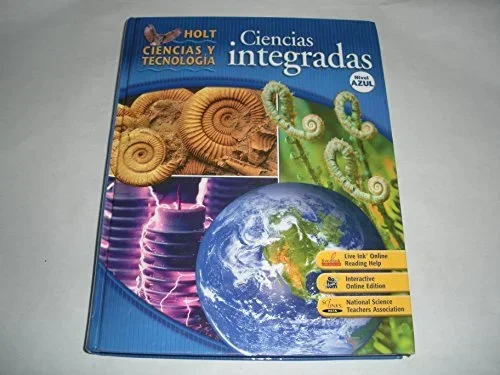

Learning how to say science in Spanish is easier than you think. The main word is ciencia, and it opens the door to a whole world of scientific terms and phrases. Whether you are a student, a professional, or just curious, this guide walks you through everything you need to know about the spanish translation of science with simple, clear steps.
Have you ever wondered how to say science in spanish? Maybe you are studying for a test, preparing for a trip, or just trying to impress a friend. Whatever the reason, knowing the spanish translation of science is a great place to start. The word itself is short, simple, and easy to remember. Once you learn it, a whole world of scientific vocabulary opens up to you.
This guide breaks everything down into easy steps. You will learn the basic word, how to pronounce it, different types of science in Spanish, and how to use science terms in real sentences. By the end, you will feel confident saying ciencia and related words out loud. Let us dive right in.
Key Takeaways
- Point 1: The Spanish word for science is ciencia, and it works for both singular and general use.
- Point 2: There are different types of science in Spanish, including ciencias naturales, ciencias sociales, and ciencias exactas.
- Point 3: Pronouncing science-related words in Spanish follows consistent rules that are easy to master.
- Point 4: Using science vocabulary in Spanish daily helps you retain new terms faster.
- Point 5: Avoiding common mistakes like gender confusion and false cognates keeps your Spanish sounding natural.
- Point 6: Fun methods like flashcards, apps, and conversation practice make learning science terms enjoyable.
- Point 7: Knowing how to say science in Spanish boosts your academic and career opportunities in Spanish-speaking regions.
📑 Table of Contents
- What Does Science Mean in Spanish?
- The Word Ciencia and Its Everyday Use
- Different Types of Science in Spanish
- How to Use Science Vocabulary in Spanish
- Pronouncing Science-Related Words in Spanish
- Fun Ways to Practice Science Vocabulary in Spanish
- Common Mistakes When Saying Science in Spanish
- Why Knowing How to Say Science in Spanish Matters
- Quick Tips for Remembering Science Words in Spanish
- Conclusion
What Does Science Mean in Spanish?
The direct spanish translation of science is ciencia. It is a feminine noun, which means you will use it with articles like “la” or “una.” For example, you would say “la ciencia” instead of “el ciencia.” This is one of the first things to remember when you start building your science vocabulary in spanish.
Ciencia works just like the English word “science.” You can use it to talk about the field as a whole, or to refer to a specific area of study. The word comes from the Latin “scientia,” which means knowledge. This connects to the broader idea of ciencia del conocimiento, or the science of knowledge, which is a concept you will encounter often in academic settings.
When you learn how to say science in spanish, you are not just memorizing one word. You are unlocking a key that helps you understand how Spanish speakers talk about the world around them. From biology to physics, every field has its own ciencia name in Spanish.
The Word Ciencia and Its Everyday Use
In everyday conversation, ciencia shows up more often than you might think. People talk about ciencia y tecnología, or science and technology, all the time. You might hear someone say “me gusta la ciencia” which means “I like science.” It is a simple, friendly way to express interest in the subject.
Here are some common phrases you will hear or use:
- “La ciencia es fascinante” — Science is fascinating.
- “Estudio ciencias en la universidad” — I study sciences at the university.
- “La ciencia moderna ha cambiado el mundo” — Modern science has changed the world.
- “¿Te gusta la ciencia?”** — Do you like science?
Notice how ciencia stays the same in all these examples. It does not change form, which makes it easy to use right away. This consistency is one of the reasons aprender ciencia en español is a manageable first step for any language learner.
Different Types of Science in Spanish
Just like in English, Spanish has specific words for different branches of science. Each one follows a simple pattern. Once you know the base word ciencia, you can build many related terms. Let us look at the most common ones.
Ciencias Naturales
Ciencias naturales refers to natural sciences. This includes biology, chemistry, geology, and ecology. In a Spanish-speaking school, you might take a class called “ciencias naturales” that covers all of these topics together. It is similar to how some schools group these subjects under one umbrella in English.
If you love animals and nature, knowing ciencias naturales vocabulary is especially useful. For example, when studying animal behavior or ecosystems, you will often hear this term in research papers and textbooks.
Ciencias Sociales
Ciencias sociales covers social sciences. This includes sociology, psychology, anthropology, and economics. These fields study human behavior and societies. In Spanish-speaking countries, ciencias sociales is a major subject area in both schools and universities.
When you are discussing ciencia y conocimiento in a social context, ciencias sociales is the term you need. It helps you talk about research on human societies, cultures, and relationships.
Ciencias Exactas
Ciencias exactas means exact sciences. This covers mathematics, physics, and astronomy. These are the sciences that rely on precise measurements and calculations. If you are studying ciencia física, you are diving into the exact sciences.
Ciencias exactas is a term you will see often in university catalogs and academic programs across Spain and Latin America. It is a powerful word to add to your science vocabulary in spanish toolkit.
Ciencias Aplicadas y Ciencias de la Salud
Ciencias aplicadas refers to applied sciences. These are fields that use scientific knowledge for practical purposes, like engineering and medicine. Ciencias de la salud, or health sciences, focuses specifically on medicine, nursing, and public health.
If you are interested in healthcare or medical fields, ciencias de la salud is one of the most important phrases to know. It applies to everything from hospital settings to public health research.
Ciencias Experimentales y Ciencias Básicas
Ciencias experimentales are experimental sciences. These fields rely on experiments and observation, like chemistry and physics. Ciencias básicas, or basic sciences, refers to foundational subjects like math and physics that form the groundwork for all other scientific study.
Both terms are common in academic settings. When you read research papers or attend lectures in Spanish, you will often see ciencias experimentales and ciencias básicas used to categorize subjects.
How to Use Science Vocabulary in Spanish
Now that you know the different types of ciencia, let us look at how to actually use them in sentences. Building science vocabulary in spanish is all about practice and repetition.
Start with simple sentences. For example:
- “La biología es una rama de las ciencias naturales.” — Biology is a branch of the natural sciences.
- “Las ciencias sociales estudian la sociedad humana.” — Social sciences study human society.
- “Me encanta la ciencia física.” — I love physical science.
One quick tip: always pay attention to gender. Ciencia is feminine, so use “la” not “el.” This applies to most ciencias words, though there are exceptions. When in doubt, check the article that comes with the word.
Another helpful habit is to group your science vocabulary in spanish by category. Learn all your natural science terms together, then move to social sciences, then exact sciences. This method helps your brain make connections and remember words faster.
Pronouncing Science-Related Words in Spanish
Pronunciation is a big part of speaking Spanish well. The good news is that Spanish is a phonetic language, which means words are pronounced exactly as they are spelled. This makes how to say science in spanish much simpler than you might expect.
Here are some pronunciation tips for key terms:
- Ciencia — pronounced “see-EN-see-ah.” The “c” before “i” sounds like an “s.”
- Ciencias naturales — “see-EN-see-ahs nah-too-RAH-nays.”
- Ciencias sociales — “see-EN-see-ahs soh-SYAH-les.”
- Ciencia física — “see-EN-see-ah FEE-zee-kah.”
The stress in most of these words falls on the second-to-last syllable, which is a standard rule in Spanish. Once you get the hang of this rhythm, pronouncing any science vocabulary in spanish becomes much easier.
Try practicing out loud. Say each word five times slowly, then speed up. Recording yourself and listening back is also a great way to spot areas where you can improve. Consistent practice is the fastest path to sounding natural.
Fun Ways to Practice Science Vocabulary in Spanish
Learning how to say science in spanish does not have to be boring. There are many fun and effective ways to practice. Here are some ideas that actually work.
Flashcards are a classic for a reason. Write the English word on one side and the Spanish term on the other. Review them for ten minutes each day. Apps like Anki and Quizlet make this even easier with spaced repetition systems that help you remember words long-term.
Watch science videos in Spanish. YouTube has many channels that cover topics like ciencias naturales and ciencia moderna in Spanish. Listening to native speakers talk about science helps you pick up natural pronunciation and phrasing.
Label objects in your home. Put Spanish sticky notes on things related to science. Label your microscope “microscopio,” your calculator “calculadora,” and your lab notebook “cuaderno de laboratorio.” This simple trick reinforces science vocabulary in spanish every time you see the object.
Find a language exchange partner. Talk about science topics in Spanish with a native speaker. You can discuss ciencia y tecnología, share interesting facts, or even debate topics like ciencia del conocimiento. Real conversation is one of the best ways to solidify what you have learned.
Read simple science articles in Spanish. Start with children’s science books or beginner-level articles. This builds your reading confidence while expanding your vocabulary. As you improve, you can move on to more advanced materials.
You can also get creative with naming things. For instance, if you have a pet cat, you might look up Spanish cat names that relate to science or nature. Similarly, if you have a pet rabbit, you can explore Spanish rabbit names inspired by scientific concepts or nature. These small touches make learning feel personal and fun.
Another interesting angle is exploring the context behind scientific terms. When researchers work in situ, meaning “in the original place,” they use a term that connects directly to field science. Learning about the in situ meaning can deepen your understanding of how scientific methods are described in Spanish. This kind of contextual learning helps you remember terms better and use them more naturally.
Common Mistakes When Saying Science in Spanish
Even motivated learners make mistakes. Here are the most common ones to watch out for when learning how to say science in spanish.
Mistake 1: Using the wrong gender. Since ciencia is feminine, always pair it with “la,” not “el.” Saying “el ciencia” is a frequent error among beginners. Remember: “la ciencia” is correct.
Mistake 2: Confusing ciencias with ciencia. “Ciencia” is singular (one science or the field as a whole). “Ciencias” is plural (multiple sciences). Make sure you use the right form based on context.
Mistake 3: Translating too literally. Some English science terms do not have direct one-word translations in Spanish. For example, “hard sciences” does not simply translate word for word. Learning the accepted Spanish phrases for these terms is important.
Mistake 4: Ignoring pronunciation rules. Spanish pronunciation is consistent. Do not try to apply English pronunciation rules to Spanish words. Trust the spelling and follow the phonetic patterns.
Mistake 5: Not practicing regularly. Like any language skill, science vocabulary in spanish fades without regular use. Even five minutes of daily practice makes a big difference over time.
Avoiding these mistakes will keep your Spanish sounding natural and confident. When you catch yourself making an error, just correct it and move on. Every mistake is a learning opportunity.
Why Knowing How to Say Science in Spanish Matters
Understanding how to say science in spanish is more than just a language exercise. It has real-world benefits that can shape your personal and professional life.
In the academic world, many universities in Spain and Latin America offer programs in ciencias exactas, ciencias naturales, and ciencias de la salud. Being able to read syllabi, attend lectures, and write papers in Spanish gives you access to a wider range of educational opportunities.
Professionally, ciencia y tecnología is a growing field across Spanish-speaking countries. Whether you work in research, healthcare, engineering, or environmental science, knowing the Spanish terminology helps you collaborate with international teams and access job markets in Spain, Mexico, Argentina, Colombia, and beyond.
On a personal level, being able to discuss ciencia moderna and ciencia del conocimiento with Spanish-speaking friends or colleagues builds deeper connections. It shows respect for their language and culture, and it opens doors to richer conversations.
So take the time to learn how to say science in spanish properly. The effort pays off in ways you might not expect.
Quick Tips for Remembering Science Words in Spanish
Here are some quick tips to help you lock in your science vocabulary in spanish:
- Use mnemonics. Create a silly sentence that links the English and Spanish words together.
- Group words by theme. Learn all your biology terms in one session, then chemistry, then physics.
- Review daily. Even five minutes of review strengthens your memory.
- Teach someone else. Explaining a word to a friend helps you remember it.
- Use new words in real sentences. Writing or speaking a sentence with a new term makes it stick.
- Watch for cognates. Many science words in Spanish look and sound similar to English words, like “física” for “physics” and “química” for “chemistry.”
Conclusion
Learning how to say science in spanish is a rewarding journey that starts with one simple word: ciencia. From there, you can explore ciencias naturales, ciencias sociales, ciencias exactas, and many more branches of knowledge. Each new term you learn builds your confidence and expands your ability to communicate in Spanish.
Remember to practice regularly, avoid common mistakes, and make the process fun. Use flashcards, watch videos, read articles, and talk with native speakers. The more you immerse yourself in science vocabulary in spanish, the more natural it will feel.
Whether you are a student, a professional, or a curious learner, mastering the spanish translation of science opens doors. You gain access to new academic programs, career paths, and meaningful conversations. So start today, be patient with yourself, and enjoy the process of learning ciencia in Spanish. You have got this.
Frequently Asked Questions
What is the Spanish word for science?
The Spanish word for science is ciencia. It is a feminine noun, so you use it with “la” or “una.” It covers the entire field of science, just like in English.
How do you pronounce ciencia in Spanish?
Ciencia is pronounced “see-EN-see-ah.” The “c” before “i” makes an “s” sound, and the stress falls on the second-to-last syllable. It is straightforward because Spanish is a phonetic language.
What are the different types of science in Spanish?
The main types include ciencias naturales (natural sciences), ciencias sociales (social sciences), ciencias exactas (exact sciences), and ciencias de la salud (health sciences). Each one covers a specific area of scientific study.
Is ciencia masculine or feminine in Spanish?
Ciencia is feminine. Always use “la ciencia” or “una ciencia.” This is important because using the wrong gender is one of the most common mistakes learners make.
How can I practice science vocabulary in Spanish daily?
You can use flashcards, watch Spanish science videos, label objects around your home, read simple science articles, and practice with a language exchange partner. Even five minutes a day builds strong habits.
Why is it important to learn how to say science in Spanish?
Knowing how to say science in spanish helps you access academic programs, career opportunities, and research in Spanish-speaking countries. It also allows you to connect more deeply with Spanish-speaking colleagues and communities in scientific fields.
=== CONCLUSION ===
Learning how to say science in spanish is a simple but powerful step in your language journey. The word ciencia is your foundation, and from there, you can explore a rich world of scientific terms and phrases. Whether you are focusing on ciencias naturales, ciencias sociales, or ciencias exactas, each new word brings you closer to fluency. Use the tips in this guide, practice consistently, and enjoy the process. Your effort will open new doors in education, career, and personal growth. Start saying ciencia out loud today and watch your Spanish skills grow.



