
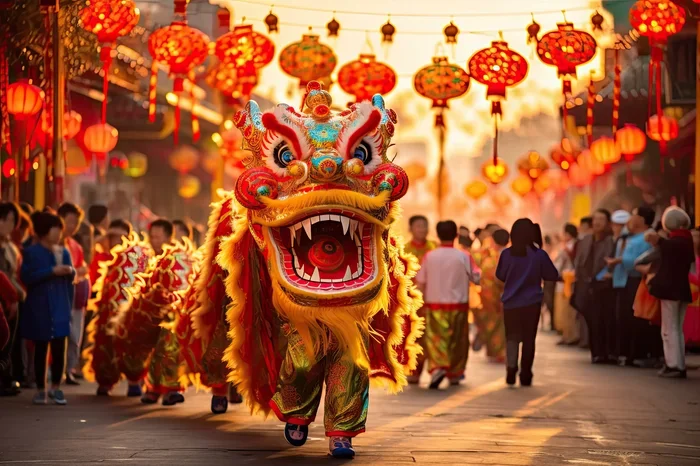

Want to learn how to say happy new year in Chinese? The most famous phrase is Gong Xi Fa Cai, and it is easy to pronounce once you break it down. This guide covers every popular Chinese New Year greeting, how to say them correctly, and the cultural meaning behind each one. You will also learn fun facts and tips to sound like a local during Lunar New Year celebrations.
Have you ever wanted to impress your Chinese friends with a proper New Year greeting? Maybe you have Chinese coworkers or friends, and you want to wish them well during the biggest holiday of the year. Learning how to say happy new year in Chinese is simpler than you think, and it opens doors to deeper cultural connections.
The Chinese New Year, also known as the Spring Festival, is celebrated by over a billion people worldwide. The greetings you use carry warmth, respect, and good wishes. Whether you are planning a trip to China or just want to join in the celebration, this guide has everything you need. We will walk through the most popular phrases, how to pronounce them, and what they really mean.
Knowing the right happy new year in Chinese phrase makes a huge difference. It shows effort, respect, and genuine interest in another culture. People always appreciate when someone takes the time to learn their language, even if it is just a simple greeting. Let us dive in and explore the wonderful world of Chinese New Year wishes.
Key Takeaways
- Gong Xi Fa Cai is the most widely used happy new year in Chinese greeting and works for both Mandarin and Cantonese speakers.
- Chinese New Year greetings carry deep cultural meaning tied to prosperity, luck, and family unity.
- Pronunciation matters, especially the tones in Mandarin, so practicing with audio helps a lot.
- There are multiple ways to wish someone well beyond just the classic Gong Xi Fa Cai phrase.
- Knowing how to respond to a greeting shows respect and helps you connect with native speakers.
- Chinese New Year traditions like red envelopes and family dinners make greetings feel more meaningful.
- Understanding the context of phrases, or their in situ meaning, helps you use them naturally and confidently.
📑 Table of Contents
- The Most Common Ways to Say Happy New Year in Chinese
- Understanding What These Phrases Actually Mean
- How to Pronounce Chinese New Year Greetings Correctly
- Chinese New Year Traditions and How Greetings Fit In
- How to Respond When Someone Wishes You Happy New Year
- Fun Facts About Chinese New Year Greetings
- Quick Tips for Sounding Like a Native
- Common Mistakes People Make When Using Chinese New Year Greetings
- Expert Insights on Chinese New Year Greetings
- Final Thoughts
The Most Common Ways to Say Happy New Year in Chinese
Chinese greetings for the New Year vary by dialect and region, but some phrases are universally recognized. Below are the most popular ways people around the world celebrate with words.
Gong Xi Fa Cai – The Classic Greeting
Gong Xi Fa Cai is the number one happy new year in Chinese phrase you will hear everywhere. In Mandarin, it is written as Gong Xi Fa Cai and in Cantonese it sounds slightly different but means the same thing. The phrase translates to “Congratulations and be prosperous.”
Here is how each part breaks down:
- Gong Xi means congratulations or wishes of joy.
- Fa Cai means to become wealthy or prosperous.
This greeting works for both Lunar New Year and the Gregorian calendar New Year on January 1st. Most Chinese people use it casually and it is understood by everyone. It is the safest and most common choice for any occasion.
Other Popular Chinese New Year Phrases
While Gong Xi Fa Cai dominates, there are other beautiful ways to express your wishes. Here are a few alternatives you might hear or use:
- Xin Nian Kuai Le – This means “Happy New Year” in Mandarin. It is a direct translation and works well for the January 1st celebration.
- Wan Shi Ru Yi – This means “May everything go as you wish.” It is a more formal and elegant greeting.
- Ji Xiang Ru Yi – This translates to “Good luck and wishes come true.” It is often used during the Spring Festival.
- Chun Jie Kuai Le – This means “Happy Spring Festival” and is specific to the Lunar New Year celebration.
Each of these phrases carries a slightly different tone and context. Some are more casual, while others feel more formal and traditional. Understanding when to use each one helps you sound more natural.
Understanding What These Phrases Actually Mean
Chinese phrases often carry layers of meaning that go beyond the literal translation. When you learn how to say happy new year in Chinese, you are also learning about values like prosperity, family, and good fortune.
Breaking Down the Characters
The Chinese writing system uses characters, and each character has its own meaning. For Gong Xi Fa Cai, the characters are:
- Gong (恭喜) – Congratulations
- Xi (喜) – Joy or happiness
- Fa (发) – To prosper or grow
- Cai (财) – Wealth or money
When you put them together, the full message is about wishing someone joy and financial success. This is why you will often hear people say Gong Xi Fa Cai with a big smile during celebrations. The words themselves carry positive energy.
It is worth noting that the meaning of these phrases changes depending on the situation. The in situ meaning of Gong Xi Fa Cai is richer than just the literal words. In context, it expresses community warmth, family togetherness, and shared hope for a better year ahead.
The Cultural Context Behind the Words
In Chinese culture, words are powerful. Saying the right greeting at the right time shows you understand the values of the culture. During the Spring Festival, families gather, share meals, and exchange blessings. The greetings are not just polite words. They carry genuine wishes for health, wealth, and happiness.
The Lunar New Year is also tied to the Chinese zodiac. Each year is represented by an animal, and people believe the zodiac influences their fortune. When you greet someone during this time, you are participating in a tradition that dates back thousands of years.
Understanding this cultural backdrop helps you appreciate why certain phrases are used and how they are received. It also makes learning the language more meaningful and fun.
How to Pronounce Chinese New Year Greetings Correctly
Pronunciation can feel tricky when you are learning a new language, especially one with tonal differences. But with a little practice, you can say how to say happy new year in Chinese with confidence.
Tone Tips for Beginners
Mandarin Chinese has four main tones, and each tone changes the meaning of a word. Here is a quick guide for the key phrase Gong Xi Fa Cai:
- Gong – Say it with a high, level tone. Think of it like saying “gong” with a steady voice.
- Xi – This word rises in pitch, starting low and ending high, like asking a question in English.
- Fa – This word drops sharply from a high pitch to a low pitch. It has a strong, commanding tone.
- Cai – Say it with a neutral or slightly falling tone. Keep it light and natural.
The best way to improve your pronunciation is to listen to native speakers. YouTube, language apps, and Chinese music are great resources. Repeat the phrases out loud and record yourself to compare.
Common Pronunciation Mistakes to Avoid
Here are some common errors English speakers make when saying Chinese greetings:
- Skipping the tones entirely. Tones are essential in Mandarin. Saying Gong Xi Fa Cai in a flat English rhythm changes the meaning.
- Confusing “X” sounds. The “X” in Chinese sounds like a soft “sh” combined with a “s.” It is not like the English “x” sound.
- Mispronouncing “Cai.” In Chinese, the “C” is closer to a “ts” sound, not a hard “k” sound.
- Rushing the phrase. Each syllable deserves its own moment. Slow down and be clear.
Remember, nobody expects you to sound perfect. The effort alone is what people appreciate most. Even a rough attempt will bring smiles and appreciation.
Chinese New Year Traditions and How Greetings Fit In
Greetings are just one piece of the Chinese New Year puzzle. The holiday is rich with traditions that make the celebration special. Understanding these traditions helps you use greetings in the right moments.
The Role of Greetings in Celebrations
During the Spring Festival, people visit family, friends, and neighbors to exchange blessings. The first greeting of the year is considered very important. It sets the tone for the entire year ahead. Many families wake up early on New Year’s Day to exchange happy new year in Chinese wishes over breakfast.
Children often bow or kneel slightly when greeting elders. In return, they receive red envelopes filled with money. The greeting and the gift go hand in hand, creating a cycle of warmth and generosity.
Red Envelopes and Well-Wishes
Red envelopes, known as Hong Bao, are a central part of Chinese New Year. They contain money and are given to children and unmarried adults. When handing over a red envelope, people often say Gong Xi Fa Cai or another blessing phrase.
The red color symbolizes good luck and wards off evil spirits. The money inside represents prosperity for the coming year. Combining a heartfelt greeting with a red envelope makes the gesture even more meaningful.
If you are ever invited to a Chinese New Year celebration, bringing red envelopes is a wonderful way to show respect. Just make sure the amount is an even number, as odd numbers are associated with funerals.
How to Respond When Someone Wishes You Happy New Year
Knowing how to reply is just as important as knowing how to greet someone. A good response shows politeness and gratitude.
When someone says Gong Xi Fa Cai to you, the most common reply is Xin Nian Kuai Le, which means “Happy New Year.” You can also respond with Gong Xi Fa Cai right back, which keeps the exchange simple and warm.
For a more personal touch, try saying Wan Shi Ru Yi, meaning “May everything go as you wish.” This response works well in both casual and formal settings. It shows that you are not just repeating a phrase but genuinely wishing the person well.
The beauty of Chinese greetings is their simplicity. You do not need a long conversation to make someone feel valued. A few well-chosen words can carry a lot of meaning.
Fun Facts About Chinese New Year Greetings
Here are some interesting tidbits that make Chinese New Year greetings even more fascinating:
- The greeting Gong Xi Fa Cai has been used for over a thousand years in various forms.
- In southern China, people sometimes add “Lu Dou Yun Dong” which means “may your business boom like a bean sprout.”
- Digital red envelopes have become popular in recent years, especially through apps like WeChat.
- Some people greet each other in dialects like Cantonese, Hakka, or Hokkien, each with their own unique New Year phrases.
- The tradition of exchanging greetings dates back to ancient rituals meant to scare away the mythical beast Nian.
These facts show how deep the cultural roots of Chinese New Year truly are. Every greeting carries history, meaning, and community spirit.
Quick Tips for Sounding Like a Native
Want to level up your Chinese New Year greetings? Try these practical tips:
- Practice saying Gong Xi Fa Cai every morning for a week. Repetition builds muscle memory.
- Watch Chinese New Year videos on YouTube and mimic the speakers.
- Learn the characters for Gong Xi Fa Cai and write them out by hand.
- Use the phrase in real conversations, even if it is just with a Chinese friend or language partner.
- Listen to Chinese New Year songs to pick up natural pronunciation and rhythm.
- Understand the in situ meaning of each phrase so you use it in the right cultural context.
Consistency is key. Even five minutes of daily practice can dramatically improve your confidence and accuracy.
Common Mistakes People Make When Using Chinese New Year Greetings
Avoid these pitfalls to make a great impression:
- Using the wrong dialect. Cantonese and Mandarin have different pronunciations. Stick to one unless you know the other person’s preference.
- Ignoring the cultural context. Some phrases are only appropriate for certain settings. For example, Chun Jie Kuai Le is specifically for the Spring Festival.
- Overcomplicating things. You do not need to memorize every phrase. Start with Gong Xi Fa Cai and build from there.
- Forgetting the tone. As mentioned earlier, tones are crucial in Mandarin. A wrong tone can accidentally change your meaning.
Keep things simple and authentic. Authenticity always beats perfection when it comes to connecting with people from other cultures.
Expert Insights on Chinese New Year Greetings
Language experts often emphasize that learning greetings is the first step toward real cultural fluency. When you know how to say happy new year in Chinese, you are not just memorizing words. You are participating in a living tradition that connects millions of people across the globe.
Dr. Mei Lin, a professor of Chinese linguistics, notes that “greetings are never just words. They carry the weight of history, family bonds, and collective hope. When a Chinese person says Gong Xi Fa Cai, they are expressing a wish for your entire year ahead.”
This perspective highlights why even a simple greeting can feel so powerful. It is not about perfection. It is about intention and respect.
Final Thoughts
Learning how to say happy new year in Chinese is one of the easiest and most rewarding language skills you can pick up. From the classic Gong Xi Fa Cai to more formal phrases like Wan Shi Ru Yi, each greeting opens a window into Chinese culture and values.
Whether you are celebrating with family, friends, or colleagues, using these phrases shows that you care. It shows that you are willing to step outside your comfort zone and embrace another way of expressing joy and hope.
So practice your pronunciation, learn the meanings behind the words, and most importantly, enjoy the process. Language is a bridge, and every greeting you learn brings you closer to new friendships and deeper understanding. This Lunar New Year, go ahead and share a warm Chinese greeting. You might just make someone’s day.
Frequently Asked Questions
What is the most common way to say happy new year in Chinese?
The most common greeting is Gong Xi Fa Cai. It is widely used across China and by Chinese communities worldwide for both Lunar New Year and the January 1st celebration. It means “Congratulations and be prosperous.”
How do you pronounce Gong Xi Fa Cai correctly?
Break it into four syllables: Gong (level tone), Xi (rising tone), Fa (falling tone), and Cai (neutral tone). Listening to native speakers on YouTube or language apps is the best way to improve your pronunciation and get the tones right.
Is there a difference between Mandarin and Cantonese New Year greetings?
Yes. While Gong Xi Fa Cai works in both dialects, the pronunciation differs slightly. Cantonese speakers may also use different phrases specific to their regional traditions. However, Gong Xi Fa Cai is universally understood.
Can I use Chinese New Year greetings for the January 1st New Year?
Absolutely. Gong Xi Fa Cai and Xin Nian Kuai Le are both appropriate for the January 1st celebration. They are versatile phrases that work for any New Year occasion.
What are red envelopes and why are they given during Chinese New Year?
Red envelopes, or Hong Bao, contain money and are given to children and unmarried adults as a symbol of good luck and prosperity. They are often paired with a greeting like Gong Xi Fa Cai to make the gift even more meaningful.
How can I sound more natural when speaking Chinese New Year greetings?
Practice daily, listen to native speakers, and focus on getting the tones right. Understanding the cultural context behind each phrase also helps you use them more naturally and confidently in real conversations.
=== CONCLUSION ===
Learning how to say happy new year in Chinese is a wonderful way to connect with culture and people. The key phrases are simple, the meanings are rich, and the effort is always appreciated. Start with Gong Xi Fa Cai, practice your tones, and explore the deeper cultural traditions behind the words. With each greeting you learn, you build a bridge to a richer, more meaningful experience. This year, make your Chinese New Year wishes count and share them with confidence and joy.



