
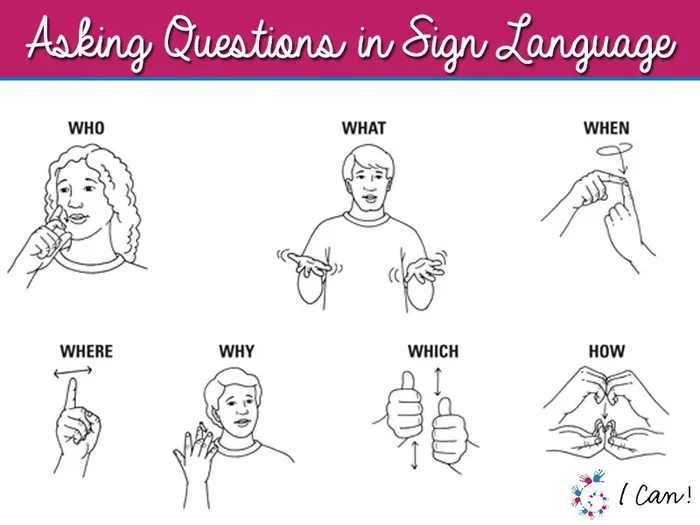

Learning how to say ask in ASL is easier than you think. This guide walks you through the exact hand movements, facial expressions, and grammar rules for signing ask in American Sign Language. You will also discover common mistakes, pro tips, and answers to frequently asked questions about this essential sign.
Have you ever wondered how to say ask in ASL? Maybe you are just starting your journey into American Sign Language, or perhaps you need this sign for a real conversation. Either way, you have come to the right place. This guide breaks down every detail in a way that is easy to follow and fun to practice.
The sign for ask in ASL is one of the most useful gestures you will learn. It comes up in everyday conversations, classroom settings, and even in professional environments. Once you nail this sign, you will feel more confident reaching out to the deaf community and practicing basic sign language.
In this article, we cover the step by step process for signing ask. We also explore related topics like facial expressions, grammar rules, and common errors. By the end, you will know exactly how to sign ask and use it naturally in real conversations.
Key Takeaways
- Basic Hand Movement: The sign for ask involves an open hand moving toward your body with your palm facing up.
- Facial Expressions Matter: Non-manual markers like raised eyebrows are essential when asking questions in ASL.
- ASL Grammar Differs from English: The word order in sign language is often different, so structure matters.
- Practice Makes Perfect: Consistent daily practice helps you retain and refine your signing skills.
- Context Changes the Sign: Different types of questions may use slight variations of the ask sign.
📑 Table of Contents
- What Does Ask Look Like in ASL?
- Step by Step Guide to Signing Ask
- Why Facial Expressions Are Critical in ASL
- ASL Grammar and How It Differs from English
- Common Mistakes When Learning How to Say Ask in ASL
- Practice Exercises to Master the Ask Sign
- How the Ask Sign Fits into Everyday ASL Conversations
- Resources to Continue Your ASL Learning Journey
- Final Thoughts on How to Say Ask in ASL
What Does Ask Look Like in ASL?
Before you dive into the steps, let us paint a clear picture. When you sign ask in ASL, you use one hand. The palm faces upward, and the fingers are slightly spread. You then move your hand forward and slightly upward toward your body. The motion is smooth and deliberate.
Think of it like you are pulling a question toward yourself. That mental image helps a lot of learners remember the sign quickly. The movement is not large or dramatic. It is gentle and controlled, which makes it easy to practice anywhere.
One thing that sets ASL apart from spoken English is that the sign does not stand alone. The non-manual markers you use alongside the sign carry just as much weight. In fact, many beginners focus only on the hand shape and forget about the face. That is a mistake we will help you avoid.
Hand Shape and Position
Start with your dominant hand. Keep your fingers together but not tightly closed. Your thumb should rest gently against your side fingers. The palm faces up, and the hand sits at about chest level. From there, you push the hand forward and slightly up in a small arc.
Some sign language dictionaries show a slight variation where the fingers curl inward at the end of the motion. However, the most common and widely accepted version keeps the fingers extended throughout. Stick with the extended finger version for clarity.
Step by Step Guide to Signing Ask
Now let us get into the nitty gritty. Follow these steps slowly at first. Once you feel comfortable, speed up naturally.
- Step 1: Stand or sit in a comfortable position. Face your conversation partner directly.
- Step 2: Raise your dominant hand to chest level with the palm facing up.
- Step 3: Keep your fingers together and extended. Relax your hand.
- Step 4: Move your hand forward and slightly upward in a smooth motion.
- Step 5: Add a questioning facial expression at the same time. Raise your eyebrows slightly.
- Step 6: Hold the final position for a brief moment to emphasize the question.
That is it. Six simple steps. The key is to combine the hand movement with the correct facial expression. Without the expression, the sign loses its questioning tone. In ASL, grammar and body language work hand in hand to convey meaning.
When practicing, try saying the word ask out loud at first. This helps your brain connect the spoken word with the gesture. Over time, you can drop the spoken word and rely purely on the sign.
Why Facial Expressions Are Critical in ASL
Here is something many newcomers overlook. In American Sign Language, your face acts as a verb modifier, a question marker, and an emotional signal all at once. When you are asking a question, your eyebrows go up. This is called a non-manual marker, and it is non-negotiable in proper ASL grammar.
If you sign ask without raising your eyebrows, a deaf signer might read it as a statement rather than a question. That can lead to confusion. So yes, the face matters just as much as the hands.
Eyebrow Positions for Different Questions
Not all questions use the same eyebrow position. Here is a quick breakdown:
- Yes or No Questions: Raise your eyebrows high. This signals that you expect a yes or no answer.
- Who What Where When Why Questions: Furrow your eyebrows slightly. This signals that you expect a detailed answer.
- Rhetorical Questions: Raise your eyebrows briefly and then return to a neutral expression.
When you sign ask in ASL, the type of question you are asking determines your eyebrow position. Pay close attention to this detail. It separates a beginner signer from someone who truly understands the language.
ASL Grammar and How It Differs from English
One of the biggest surprises for new learners is that ASL grammar does not follow English word order. In English, we say I ask a question. In ASL, you might sign QUESTION I ASK. The topic comes first, and the comment comes second.
This is called topic-comment structure. It might feel backwards at first, but once you get used to it, it actually makes a lot of sense. The most important information leads the sentence.
Also, ASL does not use helping verbs the way English does. You will not sign do you ask. You simply sign ASK with the appropriate facial expression. This makes the language more efficient and visually expressive.
Word Order Examples
Let us look at a few examples to make this crystal clear.
- English: I ask you a question. ASL: QUESTION I YOU ASK.
- English: She asks him. ASL: HE SHE ASK.
- English: What do you ask? ASL: ASK YOU WHAT.
See the pattern? The verb often comes before the object. And there is no need for extra words like do or did. This compact structure is one of the reasons ASL is so elegant and efficient.
Common Mistakes When Learning How to Say Ask in ASL
Every learner makes mistakes. That is completely normal. But some errors pop up so often that they are worth addressing right away.
Mistake 1: Forgetting the Facial Expression
We touched on this above, but it deserves repeating. Signing ask without the questioning face makes the gesture look like a statement. Always pair the hand sign with the right eyebrow position.
Mistake 2: Using Two Hands
Some learners instinctively use both hands to sign ask. In ASL, this sign is performed with one hand only. Using two hands can confuse the meaning and make you look unsure of yourself.
Mistake 3: Overcomplicating the Movement
The ask sign is simple. Do not add extra flourishes or big sweeping motions. Keep it small, smooth, and controlled. Simplicity is your friend in sign language.
Mistake 4: Ignoring Context
ASL is a visual language that relies heavily on context. The same sign can mean different things depending on the situation. Always consider the conversation around you when choosing your signs and expressions.
Quick Tips to Avoid These Mistakes
- Practice in front of a mirror to check your facial expressions.
- Record yourself signing and review the footage.
- Sign with a fluent ASL user who can give you real time feedback.
- Focus on one sign at a time before moving to the next.
Practice Exercises to Master the Ask Sign
Knowing the steps is one thing. Performing them smoothly is another. Here are some exercises to help you build muscle memory and confidence.
Exercise 1: The Slow Motion Drill
Sign ask in extreme slow motion. Focus on every tiny detail. Is your palm really facing up? Are your fingers fully extended? Is your eyebrow raise timed correctly? Slowing down helps you catch errors you would otherwise miss.
Exercise 2: The Conversation Partner
Find a friend or family member who also wants to learn ASL. Take turns signing simple questions using the ask sign. This real world practice builds fluency faster than any solo drill.
Exercise 3: The Daily Sign Journal
Keep a small notebook where you write down one new sign each day. Include ask. Next to it, jot down the hand shape, the movement, and the facial expression. Review this journal weekly to reinforce your memory.
Exercise 4: Video Self Review
Record yourself signing a short conversation that includes the ask sign. Watch the video back and compare your hand shape and facial expression to a trusted ASL dictionary or tutorial video. Adjust as needed.
Consistency beats intensity. Ten minutes of daily practice will do more for your ASL skills than a two hour session once a week. Make the ask sign part of your daily routine, and you will see steady progress.
How the Ask Sign Fits into Everyday ASL Conversations
Now that you know how to sign ask, let us talk about how it fits into real life. In everyday ASL conversations, you use the ask sign when you want to know something. It is a building block for more complex sentences and questions.
For example, you might sign ASK followed by the topic you are curious about. If you want to ask someone about their name, you would sign NAME ASK. If you want to ask about someone’s day, you would sign DAY ASK.
The beauty of ASL is that it is visual and spatial. You can point to objects, people, or locations to add context. The ask sign becomes even more powerful when combined with pointing and facial expressions.
As you grow more comfortable, you will start using ask naturally in flowing conversations. It becomes second nature. And that is the goal. Whether you are learning ASL for personal growth, to communicate with a deaf friend, or as part of a professional goal, mastering the ask sign is a fantastic first step.
Remember that every fluent signer started exactly where you are now. They practiced the same basic signs, made the same mistakes, and kept going. You can do the same. The deaf community welcomes learners who make the effort to communicate in their language.
Resources to Continue Your ASL Learning Journey
One great resource is an ASL dictionary where you can look up signs and see slow motion videos of each gesture. Many online platforms offer free tutorials that cover beginner signs like ask. Some community colleges and local organizations also offer ASL classes that provide hands on instruction and real time feedback.
Another valuable tool is connecting with the deaf community directly. Attend local deaf events, join online ASL groups, or find a language exchange partner. Immersing yourself in the culture and the language accelerates your learning in ways that textbooks simply cannot match.
If you want to dive deeper into how signs are positioned and performed in their proper context, you might explore what the term in situ means, as it relates to understanding how signs are made in their natural position and space.
Final Thoughts on How to Say Ask in ASL
Learning how to say ask in ASL is a rewarding experience. You now know the hand shape, the movement, the facial expression, and the grammar rules that make this sign accurate and natural. You also know the common mistakes to avoid and the exercises to build your skills.
The key is to practice regularly and stay patient with yourself. Sign language is a beautiful, expressive language that opens doors to new friendships, career opportunities, and cultural understanding. Every sign you learn brings you closer to fluency and deeper connection with the deaf community.
So go ahead. Practice the ask sign today. Raise your hand, shape your fingers, move with purpose, and let your eyebrows do their job. With time and dedication, you will sign ask with confidence and ease.
Frequently Asked Questions
What is the ASL sign for ask?
The ASL sign for ask involves an open hand with the palm facing up. You move your hand forward and slightly upward toward your body while raising your eyebrows. It is a simple, one-handed gesture that conveys the meaning of asking a question.
Can I use both hands to sign ask in ASL?
No, the standard ask sign in ASL uses only one hand. Using both hands can change or confuse the meaning. Stick with the dominant hand and keep the movement smooth and controlled for clarity.
Do I need to change my facial expression when signing ask?
Yes, absolutely. Facial expressions are a core part of ASL grammar. When asking a yes or no question, raise your eyebrows. When asking a wh question like what or why, furrow your eyebrows slightly. The face carries grammatical weight in sign language.
How long does it take to learn the ask sign in ASL?
Most learners can pick up the ask sign within a few practice sessions. The key is consistent daily practice. If you spend just ten to fifteen minutes a day reviewing and signing, you will build confidence quickly.
Is ASL grammar the same as English grammar?
No, ASL grammar is quite different. ASL uses a topic comment structure, and the word order often differs from English. There are no helping verbs like do or did. Learning ASL grammar is a separate but exciting journey that becomes easier with practice.
Where can I find more ASL signs to learn?
You can find more signs in online ASL dictionaries, YouTube tutorial channels, and local community classes. Many deaf organizations also offer free resources and events where you can practice with fluent signers in a supportive environment.
=== CONCLUSION ===
Mastering how to say ask in ASL is a milestone every sign language learner should celebrate. The sign is straightforward, the facial expression adds clarity, and the grammar rules make it even more powerful when used in real conversations. You now have a complete roadmap from hand shape to daily practice routines.
Remember that every expert was once a beginner. The ask sign is your gateway to richer, more meaningful conversations in American Sign Language. Keep practicing, stay curious, and enjoy the journey into deaf culture and sign language communication.



