
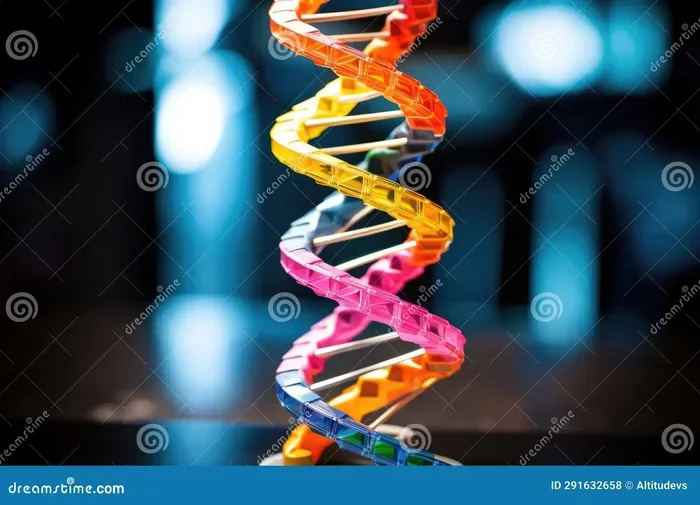

The DNA meaning refers to deoxyribonucleic acid, the molecule that carries all the biological instructions needed to build and maintain every living organism. Your DNA sequence determines everything from your eye color to your risk for certain health conditions. Understanding what DNA is and how it works helps you make sense of genetics, heredity, and modern DNA testing options.
Have you ever wondered what makes you, you? Why do you have your mother’s eyes or your father’s smile? The answer lies deep inside nearly every cell in your body. DNA meaning is simpler than most people think, yet the science behind it is absolutely fascinating.
DNA stands for deoxyribonucleic acid. It is a long, complex molecule that holds the instructions your body needs to grow, develop, and function. Think of it as a master instruction manual written in a very specific chemical language. Every living thing, from bacteria to blue whales, relies on DNA to pass down traits from one generation to the next.
In this article, we will break down the DNA meaning in plain language. You will learn what DNA is made of, how it shapes who you are, and why modern DNA testing has become so popular. Whether you are curious about genetic heredity or want to understand your own genetic code, this guide has you covered.
Key Takeaways
- DNA stands for deoxyribonucleic acid: It is the fundamental molecule that stores all genetic instructions in your cells.
- The double helix structure is key: DNA looks like a twisted ladder made of nucleotides, base pairs, and sugar-phosphate backbones.
- Your genome holds about 3 billion base pairs: These encode roughly 20,000 to 25,000 genes that control your traits and functions.
- DNA testing can reveal ancestry, health risks, and traits: Modern tests make genetic information more accessible than ever before.
- Genes are not destiny: Environment and lifestyle also play a huge role in how your genetic code expresses itself.
- Understanding DNA helps you take charge of your health: Knowledge of your genetic blueprint empowers smarter health decisions.
📑 Table of Contents
- What Does DNA Stand For?
- The Structure of DNA: The Double Helix
- What Is the DNA Meaning in Simple Terms?
- How DNA Works: Replication and Protein Production
- DNA Testing and What It Can Reveal
- DNA and Health: What Your Genes Tell You
- Common Myths About DNA
- Why Understanding DNA Matters Today
- Key Takeaways
- Conclusion
What Does DNA Stand For?
The full name of DNA gives you a clue about what it does. Deoxyribonucleic acid is a nucleic acid that contains the genetic instructions used in the development and functioning of all known living organisms. Let us break that name down piece by piece.
Deoxy refers to a type of sugar found in the DNA molecule. This sugar is called deoxyribose, and it forms part of the backbone of the DNA strand. Without this sugar, the molecule would not hold its shape.
Ribo relates to ribose, a similar sugar found in RNA, which is a cousin molecule to DNA. The difference between DNA and RNA is important. DNA stores information long-term, while RNA helps carry out the instructions DNA provides.
Nucleic tells us this molecule is found in the nucleus of cells. The nucleus is the control center of your cells, and DNA lives inside it, neatly packed into structures called chromosomes.
Acid comes from the fact that DNA is a phosphoric acid compound. This gives DNA its acidic properties at a chemical level.
So when you hear someone say DNA meaning, they are talking about the molecule that stores life’s instructions. It is not just a fancy science term. It is the very blueprint of you.
A Brief History of DNA Discovery
The story of DNA discovery is full of drama and teamwork. In 1869, a Swiss chemist named Friedrich Miescher first isolated a substance he called “nuclein” from white blood cells. He did not know it yet, but he had found DNA.
Then in 1953, James Watson and Francis Crick proposed the double helix model of DNA structure. They were aided enormously by the X-ray crystallography work of Rosalind Franklin. This discovery changed biology forever. It showed the world that DNA has a twisted ladder shape, and that shape is critical to how it stores information.
Today, scientists continue to uncover new details about the genetic code. The Human Genome Project, completed in 2003, mapped all 3 billion base pairs in human DNA. That was a massive milestone for genetic research and opened the door to personalized medicine and ancestry tracing.
The Structure of DNA: The Double Helix
One of the most famous images in science is the double helix. It looks like a twisted ladder, and that image perfectly captures the DNA structure. Understanding this structure helps you grasp the DNA meaning on a deeper level.
The “rails” of the ladder are made of sugar and phosphate molecules. These form what scientists call the sugar-phosphate backbone. The “rungs” of the ladder are pairs of chemical units called bases. There are four types of bases in DNA:
- Adenine (A) always pairs with Thymine (T)
- Guanine (G) always pairs with Cytosine (C)
These base pairs are the real magic of DNA. The order in which these bases appear along the strand determines the genetic instructions. Think of it like letters forming words. The sequence of A, T, G, and C spells out the code for building proteins and regulating bodily functions.
Nucleotides and Base Pairs Explained
A single unit of DNA is called a nucleotide. Each nucleotide has three parts: a phosphate group, a sugar molecule, and one of the four bases. Nucleotides link together in long chains to form the DNA strand.
Base pairs are formed when two nucleotides on opposite strands connect through hydrogen bonds. In humans, there are about 3 billion base pairs in total. That is a staggering number, and yet the entire genome fits inside a microscopic cell nucleus.
The human genome contains roughly 20,000 to 25,000 genes. A gene is a specific sequence of base pairs that codes for a particular protein or function. Not all DNA codes for genes, though. Some regions are regulatory, controlling when and where genes turn on or off. Other regions were once called “junk DNA,” but scientists now know much of it has important roles we are still learning about.
What Is the DNA Meaning in Simple Terms?
Let us cut through the science talk. The DNA meaning in the simplest terms is this: DNA is your body’s instruction manual. It tells your cells how to build proteins, how to divide, and how to carry out every function needed to keep you alive.
Your genetic blueprint is passed down from your parents. You inherit half of your DNA from your mother and half from your father. This is why you might share your mom’s nose or your dad’s sense of humor. Genetic heredity is the process by which traits are passed from parents to children through DNA.
But DNA does more than just determine physical traits. It also influences your metabolism, your immune system, and even aspects of your behavior. Your genetic code is not a fixed destiny, though. It interacts with your environment, your diet, your lifestyle, and your experiences every single day.
DNA as Your Biological Blueprint
Think of your DNA as a massive library. Every book in that library contains instructions for building and maintaining a specific part of your body. Some books tell your cells how to make hemoglobin, the protein in red blood cells that carries oxygen. Others guide the development of your brain, your bones, or your skin.
This library is called the genome. The human genome is incredibly complex, but it follows a few basic rules. The four bases, A, T, G, and C, combine in different sequences to create different instructions. Just 20,000 genes may sound like a lot, but the way they interact with each other and with environmental factors creates the incredible diversity of human life.
When people ask about DNA meaning, they often want to know what it means for them personally. The truth is, your DNA affects more than you might think. From the color of your hair to how your body processes food, your genetic code plays a role in nearly every aspect of your health and identity.
How DNA Works: Replication and Protein Production
Now that you understand what DNA is, let us look at how it actually works. The DNA meaning becomes much clearer when you see it in action. Two key processes make DNA essential to life: replication and protein synthesis.
DNA Replication
When cells divide, they need to copy their DNA so each new cell gets a complete set of instructions. This process is called DNA replication. It is remarkably precise, though not perfect. Sometimes errors occur, and these errors are called mutations.
Most mutations are harmless. Some are even beneficial, driving evolution and adaptation over time. But certain mutations can lead to health problems, including genetic disorders and increased cancer risk. This is why understanding your genetic information matters.
From Genes to Proteins
The central dogma of molecular biology describes how DNA leads to proteins. First, the DNA sequence is copied into a messenger molecule called RNA. This process is called transcription. Then, the RNA message is read by cellular machinery to build a protein. This step is called translation.
Proteins do almost everything in your body. They build muscles, fight infections, speed up chemical reactions, and send signals between cells. So when your DNA sequence changes, even slightly, it can affect which proteins are made and how well they work.
This is also why genetic traits vary so much between people. A small change in a single base pair can sometimes lead to a noticeable difference in a trait. Other times, many genes work together to shape a single characteristic, making the picture much more complex.
DNA Testing and What It Can Reveal
In recent years, DNA testing has exploded in popularity. Companies like AncestryDNA, 23andMe, and others have made it possible for anyone to learn about their genetic makeup from the comfort of home. But what can these tests actually tell you?
Types of DNA Tests
There are several main types of genetic tests available today. Each one looks at a different aspect of your genetic code.
- Ancestry DNA tests: These analyze markers across your genome to estimate your ethnic background and find genetic relatives. They compare your DNA to large databases of other users.
- Health risk tests: These look for specific genetic variants linked to conditions like heart disease, diabetes, or certain cancers. They can give you insight into potential health risks.
- Carrier screening: This type of test checks whether you carry genes for certain inherited conditions that could be passed to your children.
- Paternity and relationship testing: These tests compare DNA profiles to establish biological relationships with high accuracy.
- Forensic DNA analysis: Used in law enforcement, this type matches DNA from crime scenes to suspects or missing persons.
Each test provides a different window into your genetic information. Ancestry tests are fun and educational, while health-related tests can offer genuinely useful insights for proactive care.
What to Expect from a DNA Test
Most consumer DNA tests use a simple saliva sample. You spit into a tube, mail it back, and wait a few weeks for results. The process is painless and straightforward.
Results typically include an ethnic breakdown, a list of genetic relatives, and sometimes health-related insights. It is important to remember that these tests look at specific markers, not your entire genome. They give you a snapshot, not the complete picture.
If you are considering a test, choose a reputable company. Look for clear privacy policies and understand how your data will be used. Your genetic information is deeply personal, and you should feel comfortable with how it is handled.
DNA and Health: What Your Genes Tell You
One of the most powerful applications of DNA meaning is in the field of health and medicine. Your genes can provide valuable clues about your risk for certain conditions, how you might respond to medications, and what lifestyle choices could benefit you most.
Genetic Predispositions and Risk Factors
Some health conditions have a strong genetic component. For example, certain variants in the BRCA1 and BRCA2 genes are linked to higher risks of breast and ovarian cancer. Other genes influence your likelihood of developing heart disease, type 2 diabetes, or Alzheimer’s disease.
Having a genetic risk factor does not mean you will definitely develop the condition. It means your risk may be higher than average. Genetic predisposition is just one piece of the puzzle. Your environment, diet, exercise habits, and access to healthcare all play huge roles too.
This is where genomic medicine comes in. Doctors can now use genetic information to tailor treatments to individual patients. This approach, called precision medicine, leads to better outcomes and fewer side effects.
Pharmacogenomics: How Your DNA Affects Medications
Did you know your DNA can affect how you respond to drugs? This field is called pharmacogenomics. Some people metabolize certain medications faster or slower than others based on their genetic makeup.
This means a drug that works well for one person might not work for another, or could cause side effects. By understanding your genetic code, doctors can choose medications and dosages that are more likely to work for you specifically.
This is a game-changer for personalized healthcare. It moves medicine away from the one-size-fits-all approach and toward treatments that are truly tailored to the individual.
Common Myths About DNA
There is a lot of misinformation about DNA floating around. Let us clear up some of the most common myths so you have an accurate picture of your genetic code.
Myth vs Reality
Myth 1: Your DNA determines everything about you. Reality: Genes are just one factor. Your environment, experiences, and choices shape who you are just as much as your genetic code does.
Myth 2: Identical twins have identical DNA. Reality: While identical twins start with the same DNA, mutations and epigenetic changes over time can make their genetic expression differ. They are not perfectly identical at the molecular level.
Myth 3: DNA testing can tell you everything about your health. Reality: Most consumer tests only look at specific markers. They do not cover all genetic factors, and many health outcomes involve complex interactions between multiple genes and environmental factors.
Myth 4: Junk DNA is useless. Reality: Scientists have discovered that much of the non-coding DNA has regulatory functions. It controls when genes are turned on and off, and it plays a role in evolution and development.
Myth 5: You can change your DNA easily. Reality: Your base pair sequence is largely fixed from conception. However, epigenetic changes, which affect how genes are expressed, can be influenced by lifestyle factors like diet, stress, and exercise.
Why Understanding DNA Matters Today
The DNA meaning goes far beyond a science class lesson. In today’s world, understanding genetics has real practical value. From making informed health decisions to connecting with your roots, knowledge of your genetic blueprint empowers you in meaningful ways.
DNA testing has become more affordable and accessible than ever. This means more people can explore their ancestry, understand their health risks, and make proactive choices about their well-being. The field of genetic research continues to advance rapidly, bringing new insights every year.
At the same time, it is important to approach genetic information with care. Your DNA data is deeply personal. It can reveal family secrets, health vulnerabilities, and ancestry details you might not expect. Handle it thoughtfully and choose services that respect your privacy.
The future of genetics holds incredible promise. Gene therapy, CRISPR technology, and personalized medicine are all evolving quickly. Understanding the basics of DNA meaning now will help you make sense of these advances and participate in conversations about the future of healthcare.
Key Takeaways
- DNA stands for deoxyribonucleic acid: It is the molecule that carries all genetic instructions for building and maintaining living organisms.
- The double helix structure is fundamental: DNA’s twisted ladder shape, made of nucleotides and base pairs, allows it to store and replicate genetic information with remarkable accuracy.
- Your genome contains billions of base pairs: These encode approximately 20,000 to 25,000 genes that influence everything from physical traits to disease risk.
- DNA testing offers valuable insights: From ancestry tracing to health risk assessment, modern genetic tests provide accessible windows into your genetic code.
- Genes interact with environment: Your genetic traits are shaped by both your inherited DNA sequence and your lifestyle, diet, and surroundings.
- Understanding DNA empowers better decisions: Knowledge of your genetic information can guide smarter health choices and proactive care strategies.
Conclusion
The DNA meaning is profound and far-reaching. It is the molecule that makes you uniquely you. From the color of your eyes to how your body fights off illness, your genetic code plays a central role in nearly every aspect of your life.
Understanding what DNA is and how it works gives you a deeper appreciation for the complexity of life. It also equips you to make better decisions about your health, your family planning, and even your personal identity. Whether you explore your ancestry through testing or simply want to understand a doctor’s explanation of a genetic condition, knowing the basics of DNA meaning puts you at a real advantage.
Science is constantly uncovering new layers of what our genome can teach us. The next decade will bring even more breakthroughs in genetic research and personalized medicine. By staying curious and informed, you can take full advantage of what this exciting field has to offer. Your genetic blueprint is a powerful tool, and understanding it is the first step toward using it wisely.
Frequently Asked Questions
What does DNA stand for?
DNA stands for deoxyribonucleic acid. It is a molecule found in nearly every cell that carries the genetic instructions for building and maintaining living organisms. The DNA meaning is rooted in its chemical composition and its role as the blueprint of life.
How is DNA structured?
DNA has a double helix shape, often described as a twisted ladder. The “rails” are made of sugar and phosphate molecules, while the “rungs” are pairs of chemical bases: adenine, thymine, guanine, and cytosine. This structure allows DNA to store and replicate genetic information efficiently.
Can DNA testing tell me about my health?
Yes, certain DNA tests can reveal genetic risk factors for specific health conditions. However, they do not provide a complete health picture. Genetic predisposition is only one factor, and lifestyle and environment also play significant roles in your overall health.
How much of DNA is the same between humans?
Any two humans share about 99.9% of their DNA sequence. The remaining 0.1% is what makes each person unique. These small differences contribute to variations in traits like eye color, height, and susceptibility to certain conditions.
Is junk DNA really useless?
No, the term “junk DNA” is outdated. Scientists now know that much of the non-coding DNA has important regulatory functions. It helps control when genes are turned on or off and plays a role in evolution and development. Understanding the full DNA meaning includes recognizing the value of these regions.
Can you change your DNA?
Your base pair sequence is largely fixed from the moment of conception. However, epigenetic changes can alter how your genes are expressed without changing the sequence itself. Diet, exercise, stress, and environment all influence these epigenetic markers, meaning lifestyle choices can affect how your genetic code is read by your cells.



