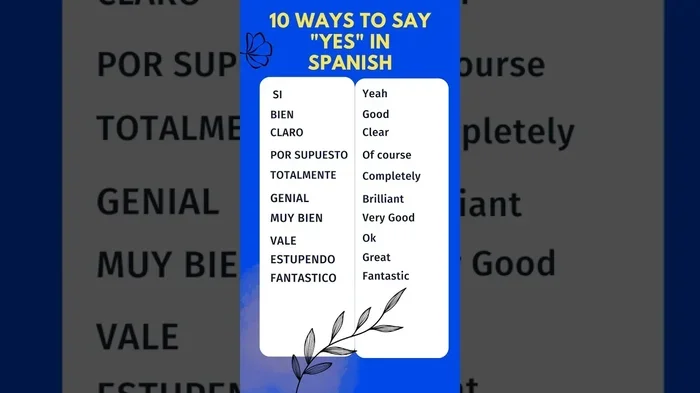

Knowing how to say yes in Spanish goes far beyond just using the word “sí.” Spanish speakers use a wide range of expressions depending on the situation, formality, and region. This guide covers every way to say yes in Spanish, from the simplest reply to the most casual slang, so you can speak with confidence in any setting.
Whether you are planning a trip to a Spanish-speaking country or just want to expand your language skills, learning how to say yes in Spanish is one of the first steps every learner should take. The word sí might seem simple, but Spanish offers a rich variety of ways to express agreement. Each option fits a different tone, setting, and level of formality.
In this guide, we walk you through every common and useful way to say yes in Spanish. You will learn formal phrases for work or school, casual responses for friends, and even regional expressions that vary from country to country. By the end, you will feel confident using the right yes in any conversation.
Understanding affirmative responses in Spanish is not just about vocabulary. It is about knowing when and how to use each phrase. Context plays a big role, and getting this right makes your Spanish sound much more natural and fluent.
Key Takeaways
- Sí is the most common word for yes in Spanish: It works in almost every situation, but context changes how it sounds.
- Formal and informal yeses differ greatly: Using the right tone shows respect and builds trust with native speakers.
- Regional variations add flavor: Spanish speakers in Spain, Mexico, Argentina, and other countries use unique expressions for agreement.
- Body language matters just as much as words: A nod or smile can reinforce your yes in Spanish conversations.
- Slang and casual phrases make you sound natural: Learning informal yes responses helps you connect with friends and peers.
- Practice with real examples: The dialogues and tips in this guide give you actionable ways to improve fast.
📑 Table of Contents
- The Simple Answer: Sí
- Formal Ways to Say Yes in Spanish
- Casual and Informal Ways to Say Yes in Spanish
- Regional Variations in How to Say Yes in Spanish
- Ways to Say Yes Beyond Just “Sí”
- Quick Tips for Using Yes in Real Conversations
- Common Mistakes to Avoid
- Expert Insights on Mastering Affirmative Responses
- Conclusion
The Simple Answer: Sí
The word sí is the most basic and widely used way to say yes in Spanish. You will hear it in every Spanish-speaking country, in every age group, and in almost every situation. It is the go-to word that every learner should master first.
But here is the thing many beginners miss. The meaning of sí can shift depending on how you say it. A quick sí might mean a simple agreement. A drawn-out sí-yess can show excitement or emphasis. And a soft, gentle sí might signal polite acknowledgment.
When to Use Sí
You can use sí in nearly every context. Here are some common situations where it fits perfectly:
- Answering a direct question, like “¿Quieres agua?” (Do you want water?)
- Agreeing with a statement, like “Es una buena idea” (It is a good idea)
- Confirming information, like “¿Vienes a la fiesta?” (Are you coming to the party?)
- Showing understanding, like “Sí, ya entiendo” (Yes, I understand now)
The beauty of sí is its simplicity. You do not need to worry about gender, number, or conjugation. It stays the same no matter who is speaking or what the topic is. This makes it the perfect starting point for anyone learning how to say yes in Spanish.
Pronunciation Tips for Sí
Sí is pronounced like “see” in English. The accent mark on the i tells you to stress that syllable. Do not skip the accent, because sin (without the accent) means “without,” which is a completely different word. This is a great example of how context shapes meaning in Spanish.
Quick tip: Keep your vowel short and crisp. Do not add an extra syllable. A clean, single-syllable sí sounds the most natural.
Formal Ways to Say Yes in Spanish
In professional or respectful settings, you might want to use a more polished way to say yes in Spanish. Formal yes responses show courtesy and are essential in business meetings, academic settings, or when speaking with someone older or in a position of authority.
Claro Que Sí
This phrase means “of course yes” and is one of the most common formal affirmations. It sounds warm and confident. Use it when you want to show strong agreement in a respectful way.
Example: “¿Puedes ayudar con el proyecto?” — “Claro que sí, con gusto.” (Can you help with the project? — Of course yes, with pleasure.)
Desde Luego
Meaning “of course” or “certainly,” desde luego is a polished and professional way to agree. It works well in emails, formal conversations, and customer service interactions.
Example: “¿Está disponible el servicio hoy?” — “Desde luego, estamos a su disposición.” (Is the service available today? — Of course, we are at your disposal.)
Por Supuesto
This phrase translates to “of course” or “naturally.” It carries a tone of certainty and assurance. Por supuesto is a safe and respectful choice in almost any formal situation.
Example: “¿Aceptan tarjetas de crédito?” — “Por supuesto, aceptamos todas las formas de pago.” (Do you accept credit cards? — Of course, we accept all forms of payment.)
Comparative Table: Formal Yes Phrases
| Phrase | Translation | Best Used In |
|---|---|---|
| Claro que sí | Of course yes | Workplace, polite conversations |
| Desde luego | Certainly, of course | Formal emails, professional settings |
| Por supuesto | Of course, naturally | Customer service, academic settings |
| Con mucho gusto | With much pleasure | Hospitality, service interactions |
Casual and Informal Ways to Say Yes in Spanish
When you are chatting with friends or family, you can drop the formality and use more relaxed expressions. Informal yes responses make your Spanish sound natural and help you connect with native speakers on a personal level.
Va Bien
This casual phrase means “it works” or “sounds good.” It is perfect for everyday conversations when someone makes a suggestion. It is quick, easy, and widely understood across all Spanish-speaking regions.
Example: “¿Vamos al cine después?” — “Va bien, me parece genial.” (Shall we go to the movies after? — Sounds good, I think that is great.)
A Ver
A ver literally means “let see,” but in casual conversation, it functions as a loose yes or an expression of willingness. It has a laid-back feel that works great among friends.
Example: “¿Me ayudas con esto?” — “A ver, dime qué necesitas.” (Can you help me with this? — Sure, tell me what you need.)
Dale
Popular in Latin American countries, dale is a super casual way to say yes, okay, or go ahead. It is one of the most recognizable informal expressions in everyday Spanish. You will hear it constantly in Argentina, Uruguay, and other parts of South America.
Example: “¿Nos vemos a las ocho?” — “Dale, ¡ahí estoy!” (See you at eight? — Sure, I will be there!)
Eso Es
Meaning “that is it” or “exactly,” eso es works as an enthusiastic yes. It shows strong agreement and is commonly used in informal conversations among friends and peers.
Example: “Creo que debemos viajar más.” — “Eso es, la vida es corta.” (I think we should travel more. — Exactly, life is short.)
Regional Variations in How to Say Yes in Spanish
One of the most exciting things about the Spanish language is how it changes from region to region. Different countries have their own favorite expressions for saying yes. Understanding these variations helps you appreciate the richness of the language and sound more authentic when you travel.
Spain vs. Latin America
In Spain, you might hear “vale” as a common way to say yes or okay. It is short, clear, and used by people of all ages. In Latin America, expressions like “dale,” “va,” and “cierto” are more common. Each region adds its own flavor to basic affirmative responses.
Interestingly, the word “sí” itself is pronounced slightly differently across regions. In Spain, the double L in words like “llamar” has a unique “ye” sound, while in Latin America it sounds more like a “y.” These small differences add up to a big part of the regional character.
Mexico and Central America
In Mexico, you will often hear “órale” as an enthusiastic yes or agreement. It is energetic and expressive. In Guatemala and Honduras, “bueno” is frequently used as a casual yes, meaning “alright” or “okay.”
These expressions reflect the warm and vibrant culture of Mexico and Central America. Using them in the right moment shows that you understand the local vibe and respect the culture.
Argentina and Uruguay
In Argentina and Uruguay, the informal “dale” is king. It is used in almost every casual conversation. Another popular expression is “obvio,” short for “obviamente” (obviously), which serves as a confident yes.
The Rioplatense Spanish dialect spoken in this region has its own unique charm. Learning a few local expressions will make your conversations feel much more genuine and engaging.
Colombia and Peru
In Colombia, “parce” or “parcero” is used among friends as a casual yes or acknowledgment. It comes from the word “pariente” (relative) and shows close friendship. In Peru, “yá” or “ya” is a common informal yes that sounds relaxed and friendly.
Each of these expressions tells a story about the local culture and history. When you learn them, you are not just memorizing words. You are gaining insight into how people live and connect in different parts of the Spanish-speaking world.
Ways to Say Yes Beyond Just “Sí”
Sometimes, you do not need to say yes at all. A nod, a smile, or a simple “mm-hmm” can work just as well. Non-verbal agreement is a powerful part of communication, and it works the same way across cultures.
However, there are also verbal alternatives that go beyond sí. These expressions show agreement in creative and nuanced ways that make your Spanish sound more advanced and natural.
Entendido
Meaning “understood,” entendido works as a firm yes that confirms you have received and accepted information. It is commonly used in both formal and informal settings.
Exacto
This word means “exactly” and is used to strongly agree with someone. It is a great alternative to sí when you want to emphasize that you fully share the same opinion.
Totalmente
Meaning “totally” or “completely,” totalmente adds enthusiasm to your agreement. It works well in casual conversations and shows that you are fully on board with what someone is saying.
Sin Duda
Translating to “without a doubt,” this phrase is a strong and confident way to agree. It works especially well when someone asks you to commit to something or make a decision.
Quick Tips for Using Yes in Real Conversations
Now that you know the many ways to say yes in Spanish, here are some practical tips to help you use them confidently in real life.
- Match the formality to the setting. Use formal phrases at work or with elders, and casual ones with friends.
- Listen to how native speakers respond. Pay attention to the tone, speed, and word choice in everyday conversations.
- Do not be afraid to make mistakes. Native speakers appreciate the effort, and most will gently correct you if needed.
- Practice with real dialogues. Role-play different scenarios with a language partner or tutor to build muscle memory.
- Learn the cultural context. Understanding why people use certain expressions helps you choose the right one naturally.
Remember, every time you practice, you get better. The goal is not perfection. It is progress and connection. Even a simple sí spoken with confidence can open doors and build friendships.
Common Mistakes to Avoid
As you learn how to say yes in Spanish, watch out for these common pitfalls:
- Using sí too formally: Saying sí in a stiff, overly serious tone can make casual conversations feel awkward. Keep it light and natural.
- Ignoring regional differences: What works in Spain might sound unusual in Mexico. Be aware of where you are and who you are speaking with.
- Overusing slang: While slang is fun, using too much of it in formal settings can come across as disrespectful or unprofessional.
- Forgetting non-verbal cues: A smile or nod goes a long way. Words alone do not carry the full meaning of your agreement.
Avoiding these mistakes will help you communicate more effectively and build stronger connections with Spanish speakers.
Expert Insights on Mastering Affirmative Responses
Language experts agree that the key to sounding natural in any language is context. According to polyglots and Spanish instructors, the best approach is to learn phrases in clusters rather than in isolation. Instead of memorizing sí by itself, learn it alongside common question-answer pairs.
Another expert tip is to immerse yourself in real Spanish media. Watch shows, listen to podcasts, and chat with native speakers. You will naturally pick up which yes expressions fit which situations over time. The contextual meaning of agreement phrases becomes clear only through repeated exposure and practice.
Many learners also benefit from understanding the cultural weight behind certain expressions. For example, in some Latin American cultures, saying “dale” is not just agreement. It is a social signal that shows trust and closeness. These cultural layers add depth to your language learning journey.
Conclusion
Learning how to say yes in Spanish opens up a world of possibilities. From the simple and universal sí to the casual dale and the formal claro que sí, each expression has its own place and purpose. The variety of options is what makes Spanish such a rich and expressive language.
By mastering both formal and informal yes responses, understanding regional variations, and practicing in real conversations, you will quickly build confidence. You will not just know the words. You will know when and how to use them. That is the real key to fluency.
So start practicing today. Pick one or two new expressions from this guide and use them in your next Spanish conversation. Every yes you speak brings you one step closer to connecting with Spanish speakers around the world. The journey of a thousand conversations starts with a single sí.
Frequently Asked Questions
What is the most common way to say yes in Spanish?
The word sí is the most common and universal way to say yes in Spanish. It is used in every Spanish-speaking country and works in almost every situation, from casual chats to formal meetings. It is simple, short, and easy to remember, making it the perfect starting point for any learner.
Is there a difference between formal and informal yes in Spanish?
Yes, there is a clear difference. Formal yes expressions like “claro que sí” and “desde luego” are used in professional or respectful settings. Informal ones like “dale” and “va bien” are best for casual conversations with friends. Choosing the right level of formality shows cultural awareness and respect.
Do Spanish speakers from different countries say yes differently?
Absolutely. Regional variations are a big part of the Spanish language. In Spain, “vale” is very common. In Mexico, “órale” shows enthusiasm. In Argentina, “dale” is the go-to informal yes. These differences reflect the diverse cultures and histories of the Spanish-speaking world.
Can I just nod instead of saying yes in Spanish?
Yes, non-verbal cues like nodding and smiling work well in most situations. However, combining a nod with a verbal yes like sí or “va bien” makes your communication clearer and more effective. It shows that you are actively engaged in the conversation.
How can I practice saying yes in Spanish naturally?
The best way to practice is through real conversations with native speakers. You can also immerse yourself in Spanish media like shows, music, and podcasts. Pay attention to how native speakers respond in different situations. Repeating common yes phrases out loud helps build natural fluency over time.
Are there any yes expressions that work in all Spanish-speaking countries?
Sí is the one expression that works universally across all Spanish-speaking countries. Other phrases like “por supuesto” and “claro que sí” are also widely understood. However, for the most natural experience, it helps to learn the local favorites of the specific region you are visiting or talking to.