
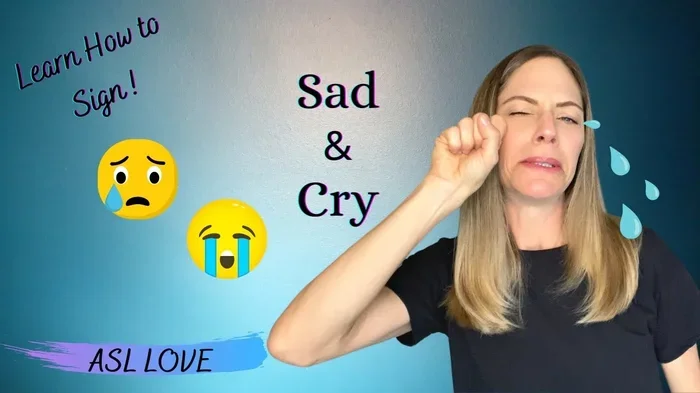

Learning how to say sad in ASL is easier than you think. This guide walks you through the exact hand shape, movement, and facial expression needed to convey sadness in American Sign Language. You will also learn common mistakes, related emotion signs, and tips to practice like a pro.
Have you ever wanted to express sadness in American Sign Language but did not know where to start? You are not alone. Many people curious about sign language want to learn how to convey basic emotions first. And signing sad is one of the most important ones to master.
American Sign Language is a rich and expressive language. It does not rely only on hand shapes. Your face, body, and even the space around you all play a role. This guide will break down everything you need to know about how to say sad in ASL. By the end, you will feel confident signing this emotion clearly and naturally.
Key Takeaways
- Core Sign: The ASL sign for sad uses a flat hand moving from the chest downward with a furrowed brow.
- Facial Expression Matters: Your face carries as much weight as your hands in ASL.
- Context Changes Everything: The same sign can shift in meaning depending on how and where it is used, much like understanding in situ meaning in language.
- Common Mistakes Are Fixable: Most beginners overthink hand placement and forget their face.
- Practice Makes Perfect: Daily repetition with real conversations builds fluency fast.
- Related Signs Build Vocabulary: Learning sad opens the door to other emotion signs like upset, crying, and disappointed.
📑 Table of Contents
What Does Sad Look Like in ASL?
The basic ASL sign for sad is straightforward. You start with one or both hands near your chest. Your hand should be flat with fingers together. Then you move your hand or hands slowly downward while making a sad face.
The Hand Movement
Here is how you do it step by step:
- Start with your dominant hand flat, fingers together, palm facing inward.
- Place your hand near the center of your chest.
- Slowly drag or pull your hand downward a few inches.
- Keep the motion smooth and controlled. Do not rush it.
Some signers use both hands for extra emphasis. If you do, mirror the same motion on both sides. The movement represents something heavy dropping from your heart. It is a beautiful visual metaphor that makes the sign easy to remember.
The Facial Expression
This is where most beginners get stuck. In nonverbal communication, your face does half the work. When signing sad in ASL, you need to:
- Furrow your eyebrows slightly.
- Let your eyes look downward or soften.
- Slightly tilt your head forward.
- Keep your mouth relaxed, not exaggerated.
Remember, ASL is not just about the hands. The facial expression gives the sign its emotional weight. Without it, the sign looks incomplete or confusing to native deaf culture users.
Why Facial Expressions Are So Important in ASL
Unlike spoken English, American Sign Language uses what is called grammatical facial expressions. These are not optional. They are part of the sentence structure itself. Think of them as the punctuation marks of sign language.
When you sign sad, the facial expression tells the receiver how intense the feeling is. A slight frown might mean mild disappointment. A deeper furrowed brow with teary eyes shows deep sorrow. Both use the same hand motion but communicate very different levels of sadness.
This concept is similar to how words can change meaning based on context. Just as in situ meaning changes depending on where and how a word is used, an ASL sign changes meaning with the expression attached to it. Understanding this will level up your signing fast.
Facial Grammar in Practice
Here are quick tips to improve your facial grammar:
- Practice in front of a mirror to check your expressions.
- Watch native Deaf signers on video to pick up subtle cues.
- Do not be afraid to exaggerate at first. You can tone it down later.
- Record yourself signing and review the playback.
Related Emotion Signs You Should Learn
Once you know how to sign sad, you can build on that foundation. ASL emotion signs often share similar hand shapes and movements. Learning them together helps your brain group the vocabulary naturally.
Sad vs Upset vs Crying
These three signs are related but distinct:
- Sad: Flat hand moving down from the chest with a soft frown.
- Upset: Hands move in small circular motions near the chest with a more intense expression.
- Crying: Fingers tap the corners of your eyes while pulling downward, mimicking tears.
Disappointed and Lonely
Two more signs that expand your emotional vocabulary:
- Disappointed: Both hands start open near the face and move outward and down, palms turning away, with a sigh-like expression.
- Lonely: One hand taps the chest repeatedly with a hollow, longing look on the face.
Building a bank of emotion signs makes you a much more expressive signer. It also helps you follow conversations in the deaf community with greater ease.
Common Mistakes Beginners Make When Signing Sad
Everyone makes mistakes when learning a new language. The good news is that most common errors in basic ASL are easy to fix. Here are the top mistakes to watch out for.
Overusing the Hands and Forgetting the Face
This is the number one error. Many beginners focus entirely on the hand movement and ignore their facial expression. The result is a sign that looks robotic and incomplete. Always remember that in expressive signing, your face is a required part of the sign.
Moving Too Fast
Sad is a slow, heavy emotion. If you rush the hand movement, it loses its meaning. Take your time. Let the motion drag gently downward. Speed kills clarity in nonverbal communication.
Using the Wrong Hand Shape
Some beginners curve their fingers or make a fist. The correct hand shape is flat with fingers together. A curved hand changes the sign entirely and might make it look like a different word in ASL vocabulary.
Signing Only with One Hand When Two Is Better
While one hand works, using both hands adds emphasis and looks more natural. If you are signing to someone across a room or in a group setting, two-handed signing helps them see the emotion more clearly.
How to Practice Signing Sad Every Day
Consistency is the secret to mastering any sign language skill. You do not need hours of practice. Just a few focused minutes each day will build muscle memory and confidence.
Quick Tips for Daily Practice
- Mirror practice: Stand in front of a mirror and sign sad slowly. Check your hand shape, movement, and face.
- Video recording: Record yourself on your phone and watch it back. You will notice things you miss in real time.
- Partner practice: Find a friend or online community to sign with. Real conversations are the best teacher.
- Emotion journaling in ASL: Each day, sign how you feel using different emotion signs including sad, happy, and angry.
- Watch Deaf content: Follow Deaf creators on social media. Watching natural signing helps you pick up rhythm and expression.
Building a Routine
Set a timer for five minutes each morning. During that time, practice signing sad and two or three related emotions. Over time, you will notice your signs becoming smoother and more natural. The deaf culture values effort and authenticity, so do not worry about being perfect. Just keep showing up.
The Cultural Context of Emotion in the Deaf Community
Understanding deaf culture adds depth to your signing. In the Deaf community, expressing emotions openly is valued and encouraged. Signing sad is not seen as weak. It is a form of honest and authentic communication.
When you sign with genuine emotion, people notice. It shows respect for the language and for the person you are communicating with. This cultural awareness sets great signers apart from those who just memorize hand shapes without understanding the deeper meaning behind them.
Nonverbal communication carries a lot of weight in Deaf culture. Your body language, eye gaze, and facial expressions all send messages before your hands even move. Embracing this holistic approach will make you a better and more empathetic signer.
Key Takeaways
- The core sign for sad uses a flat hand moving downward from the chest with a sad facial expression.
- Facial expressions are not optional in ASL. They are a required part of grammatical structure.
- Context and expression change the intensity and meaning of the sign, similar to how context shapes meaning in spoken language.
- Related emotion signs like upset, crying, disappointed, and lonely expand your vocabulary quickly.
- Common mistakes include rushing, wrong hand shape, and ignoring facial grammar.
- Daily practice with mirrors, videos, and real partners builds fluency over time.
- Cultural awareness helps you sign with authenticity and respect for the Deaf community.
Final Thoughts
Learning how to say sad in ASL is more than just memorizing a hand motion. It is about connecting with emotion, expression, and a rich cultural tradition. When you sign sad with the right hand shape, the right movement, and the right face, you are doing more than communicating. You are participating in a beautiful language that spans the globe.
Start with the basics. Practice the core sign every day. Add related emotion signs to your repertoire. And most importantly, sign with your whole self. Your face, your body, and your heart all play a role. Sad in ASL is not just a sign. It is an expression of human experience, and now you have the tools to share it authentically.
Whether you are learning for personal growth, to communicate with a Deaf friend, or out of pure curiosity, every step you take matters. Keep practicing, stay patient with yourself, and enjoy the journey into the world of American Sign Language.
Frequently Asked Questions
Is the ASL sign for sad the same across all regions?
Generally, yes. The core hand shape and downward motion are consistent in standard American Sign Language. However, some regional variations may exist. Facial expressions remain the most important consistent element across all regions.
Can children learn to sign sad easily?
Absolutely. Children often pick up emotion signs faster than adults because they are naturally expressive. The simple hand motion and the connection to real feelings make it one of the easiest signs for young learners to remember.
Do I need to use both hands when signing sad?
No, one hand works perfectly fine. Using both hands adds emphasis and looks more polished, but it is not required. Start with one hand and add the second hand as you grow more comfortable.
How is sad different from upset in ASL?
Sad uses a slow, downward hand motion with a soft expression. Upset uses small circular hand movements near the chest with a more intense facial expression. The two signs share some similarities but convey different levels and types of emotional distress.
Can I learn ASL sad signs from online videos?
Yes, online videos are a great starting point. Watching native Deaf signers helps you pick up the correct hand shape, movement speed, and facial expression. Just make sure to practice in front of a mirror to check your own form.
Why does my face feel weird when I first start signing emotions?
It is completely normal. Most hearing people are not used to using their face expressively in communication. With practice, it becomes second nature. Start by exaggerating your expressions and gradually tone them down to a natural level.



