
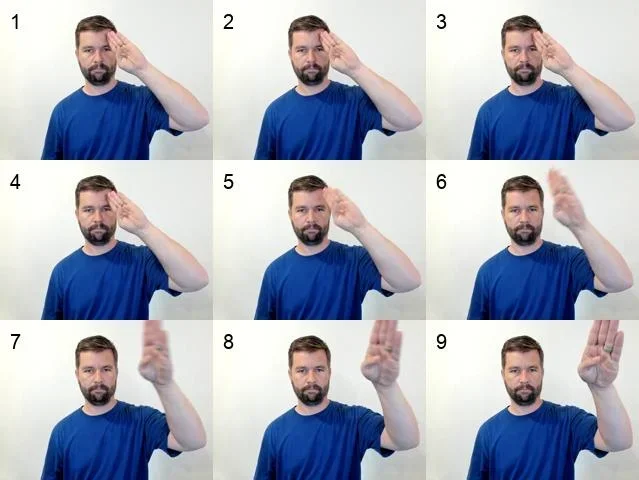

Learning how to say hello in American Sign Language is a great first step into deaf culture and nonverbal communication. The basic ASL greeting involves a simple wave-like hand motion near your forehead. This guide covers the standard sign, common variations, and essential tips so beginners can greet Deaf friends with confidence and respect.
Have you ever wondered how to say hello in American Sign Language? Maybe you met someone who is Deaf and wanted to make a great first impression. Or perhaps you are curious about ASL and want to start with the basics. Either way, you are in the right place.
American Sign Language, often called ASL, is a rich and complete language used by hundreds of thousands of people across the United States and parts of Canada. It uses hand shapes, movements, facial expressions, and body language to communicate meaning. Unlike spoken English, ASL has its own grammar and structure that makes it truly unique.
In this guide, we will walk you through the most common way to sign hello in ASL. We will also explore variations, cultural tips, and practice advice that will help you feel confident. Whether you are learning for personal growth, to connect with a friend, or out of curiosity, this article has you covered.
Key Takeaways
- The standard ASL hello: A gentle wave with an open hand near your forehead, moving outward slightly.
- Facial expressions matter: Your face carries meaning in ASL, so always pair greetings with a warm smile.
- Multiple ways to greet: Beyond the basic sign, you can use waves, nods, and informal variations depending on the setting.
- Context shapes meaning: Just like in situ meaning in language, ASL signs shift based on the situation and relationship.
- Practice makes natural: Repeating the hand motion daily helps build muscle memory and signing fluency.
- Respect Deaf culture: Understanding greetings shows genuine care for the Deaf community and its traditions.
📑 Table of Contents
- What Is American Sign Language?
- How to Say Hello in American Sign Language
- Other ASL Greetings Beyond Hello
- Facial Expressions and Body Language in ASL
- Tips for Beginners Learning ASL Greetings
- Common Mistakes to Avoid When Signing Hello
- Why Greetings Matter in Deaf Culture
- Resources to Continue Your ASL Journey
- Final Thoughts
What Is American Sign Language?
ASL is not just a simplified version of English. It is a full, complex language with its own rules. Native ASL users rely on visual-gestural communication rather than sound. This makes it a beautiful and expressive way to connect with others.
Why Learn ASL Greetings?
Greetings are the doorway to any conversation. In Deaf culture, a friendly greeting sets the tone for everything that follows. When you learn how to say hello in ASL, you show respect for the community. You also open the door to deeper connections with Deaf individuals.
Many people underestimate how much a simple greeting matters. In face-to-face communication, your first interaction shapes the entire conversation. The same principle applies in nonverbal communication through sign language. A warm and correct hello can make someone feel welcomed and valued.
How to Say Hello in American Sign Language
Now let us get to the core of this guide. The standard ASL greeting for hello is simple, elegant, and easy to learn. Here is how you do it step by step.
- Start with your hand near your forehead. Keep your palm facing outward. Your fingers should be together and extended.
- Move your hand outward and slightly down. Think of it as a gentle wave. The motion should be smooth and relaxed.
- Add a friendly facial expression. Smile naturally and make eye contact. This is just as important as the hand movement.
That is it. The basic hello sign in ASL looks like a small wave right next to your head. It is quick, natural, and easy to remember.
Common Mistakes Beginners Make
When people first learn this sign, they tend to overdo it. Here are a few common errors to avoid:
- Waving too far from the head. The sign should stay close to your forehead. A wave that drifts too far out looks unnatural.
- Using a stiff hand. Your fingers should be relaxed and slightly curved. A rigid hand can look tense or uncomfortable.
- Forgetting facial expressions. In ASL, your face does a lot of the work. A blank expression can make your greeting feel cold.
- Signing too fast. Take your time. Smooth and deliberate movements always look better than rushed ones.
Remember, context matters a lot in sign language. The way you greet a close friend differs from how you greet someone you have just met. This idea connects to how meaning shifts in any language depending on the situation, much like in situ meaning shows us that words and gestures take on different significance based on their setting.
Other ASL Greetings Beyond Hello
The basic hello sign is just the beginning. ASL offers several other greetings that you can use in different situations. Let us explore some of the most common ones.
The Informal Wave
For casual settings, a simple open-hand wave works well. Hold your hand up at chest level and move it side to side. This is similar to a spoken “hey” or “hi” in English. It works great between friends or in relaxed environments.
The Nod Greeting
A slight head nod paired with eye contact is another common ASL greeting. This is especially common in everyday Deaf community interactions. It is subtle, respectful, and very natural. Many experienced signers use this as their go-to greeting.
Fingerspelling “Hello”
You can also fingerspell the English word hello in ASL. This involves spelling out H-E-L-L-O using the manual alphabet. While this is not the standard ASL greeting, it can be helpful in mixed settings where hearing and Deaf people communicate together.
Here is a quick comparison of the three greetings:
- Standard ASL Hello: Hand wave near forehead with a smile. Best for most situations.
- Informal Wave: Chest-level side-to-side wave. Great for casual and friendly settings.
- Fingerspelled Hello: Spelling H-E-L-L-O manually. Useful in mixed communication environments.
Facial Expressions and Body Language in ASL
One of the most important things to understand about ASL is that it is not just about your hands. Your face, eyes, eyebrows, and even your body posture all play a role. This is what makes sign language so expressive and full of nuance.
The Role of Facial Expressions
In spoken language, your tone of voice adds emotion and meaning. In ASL, your face takes over that role. When you greet someone, a genuine smile goes a long way. Raised eyebrows can signal friendliness, while a neutral expression might feel too formal or even cold.
Practice this at home. Stand in front of a mirror and sign hello with different facial expressions. Notice how the same hand motion feels completely different when paired with a big smile versus a flat expression. This exercise will help you develop a natural and warm signing style.
Body Language Tips
Keep your upper body relaxed and facing the person you are greeting. Avoid crossing your arms or turning away. Open posture signals warmth and willingness to communicate. These small details make a huge difference in how your greeting is received.
Good receptive signing means not only producing signs correctly but also reading the other person’s expressions and body cues. As you practice greetings, pay attention to how Deaf individuals respond. You will pick up subtle cues that help you adjust your own signing style over time.
Tips for Beginners Learning ASL Greetings
Starting a new language can feel overwhelming. But with the right approach, learning ASL greetings becomes fun and rewarding. Here are some practical tips to help you along the way.
Practice Every Day
Consistency beats intensity. Spending just five to ten minutes a day practicing your hello sign will build muscle memory faster than long, infrequent sessions. Try signing hello every time you see someone, even if it is just a family member or pet.
Watch and Learn
YouTube channels and ASL learning apps are excellent resources. Watching native signers helps you pick up natural rhythm and flow. Pay close attention to how they position their hands and faces during greetings.
Find a Practice Partner
Nothing replaces real conversation. If you know someone who uses ASL, ask them to practice greetings with you. Deaf individuals are often happy to help beginners and appreciate the effort. This kind of expressive signing practice builds your confidence quickly.
Join Online Communities
Social media groups and forums dedicated to ASL learning can be incredibly helpful. You can ask questions, share your progress, and get feedback from more experienced signers. Many of these communities are welcoming and supportive of newcomers.
Be Patient with Yourself
Every signer starts somewhere. Your first attempts might feel awkward, and that is completely normal. The key is to keep going. Over time, your hand movements will become smoother and more natural. Celebrate small wins along the way.
Common Mistakes to Avoid When Signing Hello
Even with the best intentions, beginners sometimes make errors that can change the meaning of their greeting. Being aware of these pitfalls helps you avoid them.
- Confusing hello with goodbye. The hello sign moves outward from the forehead. The goodbye sign moves downward. Keep the direction consistent with greeting, not parting.
- Using the wrong hand shape. Your hand should be open with fingers together. A closed fist or pointing finger changes the sign entirely.
- Ignoring eye contact. In Deaf culture, eye contact is essential. Looking away while signing can seem rude or disinterested.
- Copying too fast. Imitation is great, but rushing through the motion can make your sign unclear. Slow down and focus on accuracy first.
These mistakes are common and completely fixable. The more you practice with attention to detail, the more natural your greetings will become.
Why Greetings Matter in Deaf Culture
Understanding the cultural significance of greetings in the Deaf community adds depth to your learning experience. Greetings are not just a formality. They reflect respect, belonging, and connection.
Deaf culture places a strong value on visual communication and shared experiences. When you greet someone in ASL, you are participating in a tradition that has been passed down through generations. It is a way of saying, “I see you, I respect you, and I am glad you are here.”
Many people in the Deaf community view their identity as something deeply personal and meaningful. Learning to greet someone properly in their language is a sign of genuine respect. It shows that you care enough to learn, practice, and improve.
Just as in situ meaning teaches us that words carry different weight depending on context, ASL greetings carry cultural significance that goes beyond the physical sign itself. The warmth, intention, and authenticity behind your greeting matter just as much as the hand motion.
Resources to Continue Your ASL Journey
Once you have mastered the basic hello, you will want to keep building your skills. Here are some excellent resources to explore next:
- ASL dictionaries online: Websites like ASLPro and Signing Savvy offer video demonstrations of thousands of signs.
- Free ASL courses: Many universities and platforms offer introductory ASL classes at no cost.
- Deaf community events: Local Deaf clubs and meetups provide real-world practice opportunities.
- ASL apps: Apps like SignSchool and The ASL App make daily practice convenient and interactive.
- Books on ASL: Titles like “Learning to See” provide deep insights into ASL grammar and Deaf culture.
Each of these resources can accelerate your progress and deepen your understanding of American Sign Language. Start with one or two and build from there.
Final Thoughts
Learning how to say hello in American Sign Language is a meaningful and rewarding experience. It connects you to a vibrant community, a rich language, and a culture full of history and pride. The basic hello sign is your gateway into this world, and with practice, it will become second nature.
Remember to focus on smooth hand movements, genuine facial expressions, and consistent daily practice. Avoid the common mistakes we covered, and lean into the cultural understanding that makes ASL so much more than a set of gestures. Every time you sign hello, you are building a bridge of connection and respect.
Start today. Practice in front of a mirror. Reach out to someone in the Deaf community. And most importantly, enjoy the journey. Every sign you learn brings you closer to fluency, confidence, and meaningful communication.
Frequently Asked Questions
What is the easiest way to remember the ASL hello sign?
Think of it as a small wave right next to your forehead. Visualize greeting a friend from across a room. The image of a gentle, friendly wave near your head makes the sign easy to recall whenever you need it.
Is ASL the same as signing English words?
No, ASL is a completely separate language with its own grammar and structure. It does not follow English word order or rules. Learning ASL means learning a new visual language, not just translating English into hand signs.
Can hearing people learn ASL effectively?
Absolutely. Many hearing individuals become fluent in ASL through practice, courses, and community involvement. Your hearing ability does not limit your capacity to learn and use sign language beautifully.
Do I need to make facial expressions when signing hello?
Yes, facial expressions are essential in ASL. They carry grammatical and emotional meaning. A smile paired with your hello sign makes the greeting feel warm, natural, and culturally appropriate.
How long does it take to learn basic ASL greetings?
Most beginners can learn the basic hello sign within a few days of regular practice. However, becoming comfortable and natural in conversations takes more time and consistent effort over weeks and months.
Where can I practice ASL greetings with native signers?
Local Deaf clubs, community centers, and online ASL learning groups are great places to practice. Many cities also host Deaf events where beginners are welcome to observe and participate in conversations.



