
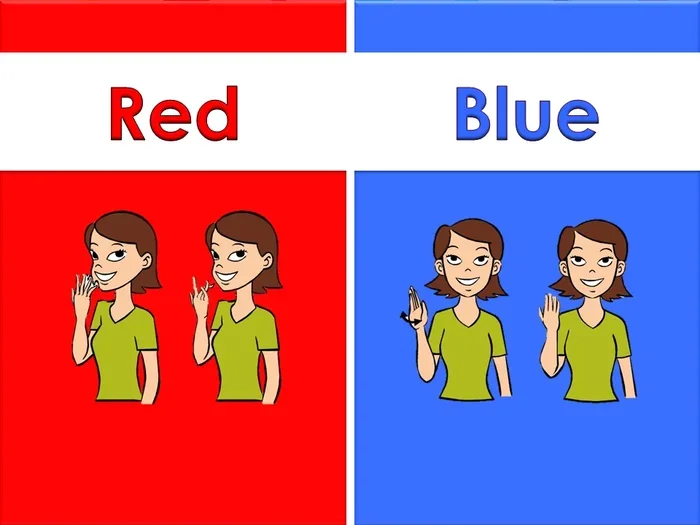

Learning how to say color in sign language is a fun and rewarding step for any beginner. This guide covers ASL color signs for red, blue, green, yellow, and more. You will discover simple hand gestures, memory tricks, and expert tips to build your color vocabulary fast.
Learning how to say color in sign language is one of the most exciting steps you can take as a beginner. Colors are everywhere in daily life, and being able to sign them opens doors to richer conversations. Whether you are talking about your favorite shirt or describing a sunset, sign language colors make communication vivid and expressive.
ASL color signs are simple, visual, and easy to remember. Unlike spoken words, hand gestures for colors rely on movement and placement. This makes them perfect for visual learners and anyone interested in nonverbal communication. In this guide, we walk you through each color sign, share proven tips, and help you avoid the mistakes that trip up most beginners.
By the time you finish reading, you will have a solid foundation in color signs for beginners. You will know how to sign the most common colors with confidence. More importantly, you will understand the logic behind each gesture, which makes learning new signs much easier later on.
So grab a pen, find a quiet spot, and get ready to explore the world of sign language colors. This is your starting point for a skill that will serve you for life.
Key Takeaways
- Point 1: Each color in ASL has a unique hand gesture, movement, and location that makes it visually memorable and easy to distinguish.
- Point 2: Practice with real objects and daily activities dramatically improves retention and makes learning color signs feel natural.
- Point 3: Common mistakes like wrong hand placement and rushing through practice can slow progress, but they are easy to avoid with awareness.
- Point 4: Consistency matters more than speed. Five minutes of daily practice beats one long session per week for long-term memory.
- Point 5: Learning in context and connecting with the deaf community accelerates fluency and builds confidence faster than isolated drills.
- Point 6: Facial expressions and body language are essential parts of signing colors and make your communication more expressive and clear.
📑 Table of Contents
Understanding Colors in Sign Language
What Are Sign Language Colors?
In American Sign Language, colors are signed using specific hand shapes, movements, and locations. Each color has its own unique gesture that represents the concept visually. For example, the sign for red involves tapping your index finger on your lips. The sign for blue uses an open hand moving along the side of your face.
Color signs for beginners follow a logical pattern. Most color signs use the same basic hand shape but change the movement or location. This consistency makes it easier to learn multiple colors at once. When you understand the pattern, you can quickly expand your color vocabulary without memorizing each sign from scratch.
It is also worth noting that visual communication in sign language goes beyond just hand movements. Your facial expressions and body language play a big role. When you sign colors, your face should show the emotion or context of what you are describing. A bright smile when signing yellow, for instance, adds meaning to your gesture.
Many people in the deaf community use color signs every day in casual conversation. Learning these signs helps you connect more naturally with deaf individuals. It also shows respect for their language and culture. When you practice sign language colors regularly, you build confidence and fluency over time.
Why Learning Color Signs Matters
Colors are among the first words children learn in any language. The same is true in sign language basics. Teaching color signs to young learners or to someone new to ASL creates a strong foundation. It gives them a practical set of words they can use right away in everyday situations.
Beyond basic communication, knowing color signs helps in many real-world settings. Teachers use them in classrooms. Artists use them to discuss their work. Parents use them to describe objects to babies. The ability to sign colors makes you more versatile in any environment where visual communication is key.
Also, learning sign language has been shown to improve cognitive skills and memory. When you practice color signs, you are training your brain to think visually. This benefit extends far beyond just naming colors. It strengthens your overall ability to process and retain information.
How to Sign Common Colors in ASL
Now let us get into the hands-on part. Below, we break down the most common color signs in ASL. Each section explains the hand shape, movement, and a helpful tip to remember the sign.
How to Sign Red
To sign red, extend your index finger and gently tap it against your lips. The motion is quick and light. Think of it as if you are touching your mouth after eating something red, like a strawberry.
This is one of the easiest ASL color signs to learn. The connection between the finger and the mouth creates a strong visual memory. Practice this sign a few times a day, and it will become second nature fast.
How to Sign Blue
For blue, hold your hand open with fingers together. Place your hand near your cheek and move it slightly downward along the side of your face. The motion mimics the shape of a blue item, like a blueberry near your cheek.
The key to signing blue correctly is the location and direction of the movement. Many beginners place their hand too far from the face. Keep it close and the movement smooth. This small adjustment makes a big difference in clarity.
How to Sign Green
The sign for green starts with your thumb and index finger forming a hook shape. Place this hand near your shoulder and twist it slightly forward. Imagine you are picking a leaf from a tree and showing it off.
Green is a fun sign because the hook shape looks like a small plant or leaf. This visual connection helps you remember the sign. When you practice how to sign green, focus on the twisting motion at the shoulder. It should feel natural and relaxed.
How to Sign Yellow
To sign yellow, hold your hand open with fingers extended. Place it near your chin and flick your fingers upward slightly. The motion is like a small burst of sunshine coming from your chin.
The flicking motion is what makes yellow distinct from other warm colors. Keep your fingers loose and the movement quick. If you make the motion too slow or too large, the sign may look like a different color. Precision matters in color signs for beginners.
How to Sign Other Colors
Beyond the four main colors, there are many other sign language colors worth learning. Here is a quick look at a few more:
- Black: Drag your index finger down the center of your forehead. The slow, deliberate motion represents darkness.
- White: Open your hand and move it away from your chest with fingers spread. The spreading motion suggests openness and light.
- Orange: Make a fist and place it near your chin, then open your fingers slightly. The shape resembles an orange fruit.
- Purple: Extend your pinky and ring finger while keeping the others folded. Tap the two extended fingers against your chin.
Each of these hand gestures for colors follows the same principle: use a visual cue to link the sign to the color. Once you understand this pattern, you can guess or learn new color signs more easily.
Comparison: Color Signs Across Different Approaches
Not all color signs are the same across every sign language system. While ASL is the most widely used in the United States, other countries have their own versions. Here is a simple comparison:
| Color | ASL Sign | Key Feature |
|---|---|---|
| Red | Finger taps lips | Simple and memorable |
| Blue | Hand moves along cheek | Location-based |
| Green | Hook hand at shoulder | Twisting motion |
| Yellow | Fingers flick from chin | Burst-like movement |
| Black | Finger drags down forehead | Slow and deliberate |
This table shows that each ASL color sign has a distinct location and movement. Memorizing these differences helps you avoid confusion. When you practice regularly, the signs start to feel intuitive rather than forced.
How to Say Color in Sign Language: Tips and Techniques
Practice with Real Objects
One of the best ways to learn how to say color in sign language is to practice with real objects. Hold up a red apple, a blue pen, or a green leaf. Sign the color while looking at the object. This creates a strong mental link between the gesture and the meaning.
Try this exercise: gather five objects of different colors. Sign each color as you hold up the object. Repeat this three times a day. Within a week, you will notice a big improvement in your recall. The combination of visual and physical practice is powerful for color recognition.
Use Visual Cues and Memory Tricks
Memory tricks work wonders when you are learning sign language basics. For red, picture yourself eating a red strawberry. For blue, imagine holding a blueberry near your cheek. These silly mental images stick in your mind and make recall easier.
You can also use facial expressions in sign language to reinforce your signs. When you sign yellow, smile brightly to match the sunny feeling. When you sign black, furrow your brow slightly. These small additions make your signing more expressive and memorable.
Quick Tips for Faster Learning
- Sign colors out loud while saying the word. This engages both visual and auditory learning.
- Practice in short bursts of five to ten minutes rather than one long session.
- Watch videos of native signers to see the correct hand placement and speed.
- Use a mirror to check your hand shape and movement as you practice.
- Sign colors during daily activities like getting dressed or cooking.
Consistency beats intensity. Five minutes of daily practice will always beat one long session per week. Build the habit, and your sign language colors will become second nature.
Learning in Context
One of the most effective ways to build fluency is to learn colors in their natural context. Rather than memorizing signs in isolation, practice them during real conversations. When you describe your surroundings, point out colors and sign them naturally. This approach mirrors how children learn their first language, absorbing words through repeated, meaningful use.
Many learners find that studying how to say color in sign language in context helps them retain the signs much better. When you see and use color signs in real situations, your brain connects the gesture to the experience. This is similar to the idea of learning something in situ, which means absorbing knowledge in its natural setting rather than in a detached, artificial environment.
Try going for a walk and signing the colors of things you see. Trees are green, the sky is blue, flowers might be red or yellow. This simple habit turns everyday moments into valuable practice sessions and builds your confidence with color vocabulary in a fun, low-pressure way.
Common Mistakes Beginners Make
Every learner makes mistakes, and that is perfectly fine. But knowing the common pitfalls helps you avoid them from the start. Here are the most frequent errors beginners make when learning sign language colors:
- Wrong hand placement: Placing your hand too far from the correct location is the number one mistake. Each color sign has a specific spot on or near your face. Pay close attention to where your hand should be.
- Too much movement: Color signs are small and precise. Big, sweeping motions make the signs unclear. Keep movements small and controlled.
- Ignoring facial expressions: In sign language, your face is part of the message. Flat expressions make your signing feel robotic and can change the meaning of what you are conveying.
- Rushing through practice: Speed comes with time. Focus on accuracy first. Once the correct form is locked in, speed will follow naturally.
- Practicing alone without feedback: Signing in front of a mirror helps, but getting feedback from a native signer or teacher is even better. They can spot errors you cannot see yourself.
Avoiding these mistakes will save you a lot of frustration. Remember, learning sign language is a journey. Every small correction you make now pays off later.
Expert Insights and Quick Tips
We spoke with experienced sign language instructors to gather their top advice for mastering color signs. Here is what they had to say:
Start with the primary colors first. Red, blue, and yellow are the foundation. Once you are confident with these, add green, orange, purple, and the others. This staged approach prevents overwhelm and builds momentum.
Use the deaf community as your resource. Many deaf individuals are happy to help learners practice. Join local meetups or online groups where you can sign with native users. Real conversation is the fastest path to fluency in nonverbal communication.
Make it playful. Turn practice into a game. Have a friend hold up colored cards, and you sign the color. Or play color scavenger hunts where you must sign each color you find. When learning feels fun, you practice more naturally.
Review regularly. Spaced repetition is one of the most proven techniques for long-term memory. Review your color signs every few days. Each review session strengthens the neural pathways that make recall effortless.
One instructor shared a great insight about practicing in context: “The best way to learn is to surround yourself with the language in its natural environment,” she said. “When you practice sign language colors in real situations, you absorb not just the signs but the culture and rhythm of visual communication. This is what learning in situ truly means, and it transforms a beginner into a confident signer.”
Another expert recommended using an ASL dictionary app alongside physical practice. “Apps are great for quick reference, but they cannot replace the feel of real hand movements,” she explained. “Use digital tools to supplement your practice, not replace it.”
Also, consider practicing with a partner who is learning alongside you. Working with a study buddy adds accountability and makes sessions more enjoyable. You can quiz each other on how to say color in sign language during lunch breaks or commutes. This social approach reinforces what you learn and keeps you motivated through the ups and downs of learning sign language.
Bringing It All Together
Mastering how to say color in sign language is a journey that combines observation, practice, and patience. You now know the hand gestures for red, blue, green, yellow, black, white, orange, and purple. You understand the patterns that connect these signs. You are aware of common mistakes and how to avoid them. And you have expert-backed tips to accelerate your progress.
The most important thing is to practice consistently. Even five minutes a day builds lasting skill. Use real objects, practice with friends, and challenge yourself to sign colors in everyday conversations. Each signed color is a step toward fluency in visual communication and a deeper connection with the deaf community.
Remember, every expert was once a beginner. The fact that you are taking the time to learn color signs for beginners shows real dedication. Keep going, stay curious, and enjoy the process of mastering sign language colors. Your effort will open doors to richer, more expressive communication that lasts a lifetime.
Frequently Asked Questions
Is sign language for colors the same in every country?
No, different countries use different sign languages. ASL is used in the United States, while British Sign Language (BSL) has its own set of color signs. Always learn the version used in your region or country to ensure clear communication.
How long does it take to learn all the color signs?
Most beginners can learn the basic color signs within one to two weeks of daily practice. However, becoming fluent and natural takes longer. Consistent practice is the key to retention and building real confidence in your signing.
Can children learn color signs easily?
Yes, children are excellent at learning sign language colors. Their brains are highly adaptable, and visual learning comes naturally to them. Many parents introduce color signs to toddlers as part of early communication development.
Do I need to learn finger spelling to sign colors?
No, color signs in ASL are standalone gestures. You do not need to finger spell the word. However, learning finger spelling can be helpful for other words and names in sign language as you advance.
Are there apps that can help me practice color signs?
Yes, several ASL dictionary apps include color signs with video demonstrations. These apps are great for quick reference and review. Just remember to pair app practice with real hand movement for the best and most effective results.
Can I use color signs in professional settings?
Absolutely. Color signs are useful in classrooms, art studios, design meetings, and any setting where describing visual details is important. Clear and accurate signing shows professionalism and respect for the language and its community.



