
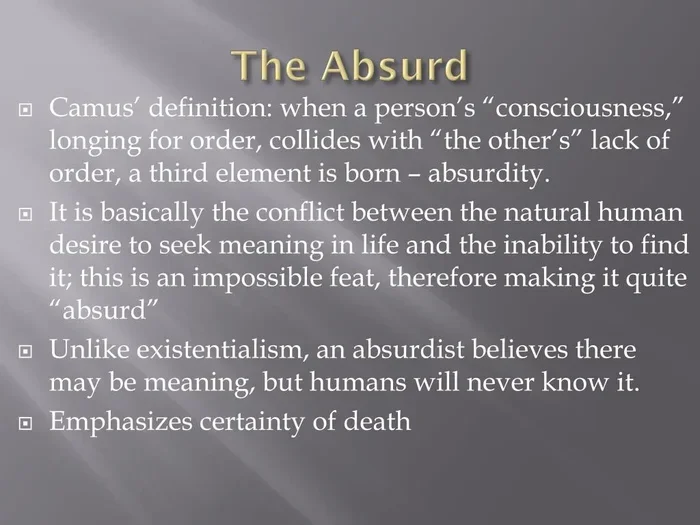

The absurd meaning describes the clash between humans’ need for purpose and the universe’s silence. Understanding this concept can change how you handle life’s challenges, humor, and uncertainties. It is a powerful philosophical idea rooted in the works of thinkers like Albert Camus.
The absurd meaning refers to one of the most fascinating ideas in philosophy and culture. At its core, it describes the tension between two things: humans’ deep need to find purpose and the universe’s complete silence on the matter. This idea has shaped art, literature, and even how people cope with hard times. In this article, you will learn what absurd meaning really means, where it comes from, and why it matters more than ever.
Many people hear the word “absurd” and think it means silly or ridiculous. But the philosophical sense of absurd meaning is much deeper. It is about the honest confrontation with a world that does not hand us easy answers. Once you grasp this idea, you start seeing it everywhere — in movies, books, jokes, and even your own daily struggles. Let us dive into what makes absurd meaning such a powerful and enduring concept.
Key Takeaways
- Absurd meaning is the conflict between human desire for purpose and the universe’s lack of inherent meaning.
- The concept was popularized by philosopher Albert Camus and is central to the philosophy of absurdism.
- Understanding absurd meaning can help you find freedom, humor, and resilience in everyday life.
- Absurd meaning appears in literature, theater, film, and even casual conversations.
- Common misconceptions include thinking the absurd is purely negative or meaningless chaos.
- Embracing the absurd can lead to a more authentic and liberated way of living.
📑 Table of Contents
What Does Absurd Meaning Mean?
The Basic Definition of Absurd Meaning
The absurd meaning comes from the word “absurd,” which means something wildly unreasonable, illogical, or out of sync with reality. In philosophy, absurd meaning describes the gap between what humans expect from life and what life actually offers. People naturally want answers, fairness, and purpose. But the universe does not provide neat explanations or guaranteed outcomes.
Think of it this way. You work hard, follow the rules, and still face things that make no sense. A good person gets sick. A loyal friend moves away without warning. These moments feel absurd because they defy our expectations. The absurd meaning is not about saying life is worthless. It is about recognizing the mismatch and deciding what to do about it.
Breaking Down the Word “Absurd”
The word “absurd” has Latin roots. It comes from “absurdus,” which means “out of tune” or “discordant.” Over time, the word evolved to describe situations that lack logical order or harmony. When we talk about absurd meaning, we are tapping into this original sense of things being slightly off-key with the world.
Here are some key elements that define absurd meaning:
- Human longing for meaning — the deep drive to understand why we exist.
- Universe’s silence — the lack of clear answers or cosmic purpose.
- The clash between the two — the tension that creates the feeling of absurdity.
- Human response — how individuals react to and cope with this tension.
Each of these pieces matters. Without the human desire for meaning, there would be no absurd meaning. Without the universe’s silence, there would be no tension. And without a response, there would be no philosophy at all.
The Philosophy Behind Absurd Meaning
Albert Camus and the Birth of Absurdism
No discussion of absurd meaning is complete without Albert Camus. This French-Algerian philosopher wrote some of the most important works on the subject in the mid-20th century. His most famous essay, The Myth of Sisyphus, explores what it means to live fully in the face of absurd meaning.
Camus used the story of Sisyphus to illustrate his point. In Greek mythology, Sisyphus was condemned to roll a boulder up a hill for eternity. Every time he reached the top, the boulder rolled back down. Camus saw this as the perfect symbol of absurd meaning. The task is endless, pointless, and repetitive. Yet Camus argued that Sisyphus could find peace and even joy by accepting his fate fully.
Camus believed that recognizing absurd meaning does not lead to despair. Instead, it opens the door to freedom. When you stop expecting the universe to give you answers, you become free to create your own purpose. This idea is at the heart of the philosophy of absurdism.
Absurdism vs. Existentialism
People often confuse absurd meaning with existentialism. While the two ideas share similarities, they differ in important ways. Both deal with the search for meaning in a seemingly indifferent universe. But they arrive at different conclusions.
Existentialism, championed by thinkers like Jean-Paul Sartre, argues that humans must create their own meaning through choices and actions. Absurdism, on the other hand, focuses on the tension itself. It says the universe will never give you a clear answer, and that is okay.
Here is a simple comparison:
| Aspect | Absurdism | Existentialism |
|---|---|---|
| Core belief | The universe has no inherent meaning | Humans must create their own meaning |
| View of the absurd | It is a permanent condition to embrace | It is a problem to overcome through action |
| Key figure | Albert Camus | Jean-Paul Sartre |
| Emotional tone | Acceptance and rebellion | Anxiety and radical freedom |
| Outcome | Liberation through acceptance | Empowerment through choice |
Both philosophies offer powerful tools for living. But absurd meaning has a unique charm. It does not demand that you construct a grand life purpose. It simply asks you to notice the tension and keep going anyway.
Other Thinkers Who Explored Absurd Meaning
Camus was not alone in exploring absurd meaning. Other philosophers and writers contributed to the conversation:
- Søren Kierkegaard — a Danish philosopher who discussed the “absurd” leap of faith long before Camus.
- Fyodor Dostoevsky — his novel The Brothers Karamazov touches on themes of meaninglessness and doubt.
- Franz Kafka — his stories like The Trial and The Metamorphosis capture the feeling of living in an absurd world.
- Samuel Beckett — his play Waiting for Godot is a landmark work of absurdist theater.
These thinkers helped shape how we understand absurd meaning today. Each brought a unique perspective to the question of why life feels so strange and unpredictable.
Absurd Meaning in Everyday Life
Recognizing Absurd Situations
You do not need a philosophy degree to encounter absurd meaning in your daily life. In fact, you probably face it more often than you realize. An absurd situation is any moment where reality defies your expectations or logic.
Here are common examples of absurd meaning in everyday life:
- You prepare carefully for a presentation, but the projector breaks down.
- You follow all the rules and still get passed over for a promotion.
- A stranger says something deeply profound that changes your entire day.
- You plan every detail of a weekend trip, and it rains nonstop.
- You laugh at a joke that makes absolutely no logical sense but still feels right.
These moments are small, but they reveal the absurd meaning woven into daily existence. They remind us that life does not always follow a script. And that is perfectly okay.
How to Respond to the Absurd
When you encounter absurd meaning, you have a few options. You can fight it, deny it, or accept it. Camus argued that the healthiest response is rebellion. By this, he means continuing to live fully despite the lack of clear answers.
Rebellion against the absurd does not mean protesting or raging. It means showing up every day and choosing to live with awareness and courage. It is the act of saying, “The universe may not have answers, but I am still here, and I will make my days count.”
Quick Tips for Embracing Absurd Meaning Daily:
- Practice laughing at situations that do not go as planned.
- Let go of the need for everything to make perfect sense.
- Find small moments of joy in the chaos of routine.
- Talk openly with friends about life’s big, unanswerable questions.
- Keep a journal of the most absurd moments you encounter each week.
These simple habits can help you build a healthier relationship with absurd meaning. Over time, you may find that the absurd is not something to fear but something to appreciate.
Common Mistakes When Dealing with the Absurd
Many people make mistakes when they first encounter absurd meaning. Here are some pitfalls to avoid:
- Confusing absurdity with nihilism. The absurd does not mean nothing matters. It means the universe does not hand you a pre-packaged purpose.
- Overthinking every situation. Not every odd event is a deep philosophical crisis. Sometimes a thing is just a thing.
- Rejecting all structure. Embracing the absurd does not mean abandoning all plans or responsibilities. It means holding them lightly.
- Isolating yourself. Sharing your experience of the absurd with others makes it easier to handle.
Avoiding these mistakes will help you engage with absurd meaning in a balanced and healthy way.
Absurd Meaning in Literature and Art
Famous Works That Explore Absurdity
Absurdist literature has produced some of the most memorable works in human history. Writers have long used absurd meaning to challenge readers and provoke deep thought. These works do not always make logical sense, but they resonate on an emotional level.
Some of the most famous works that explore absurd meaning include:
- The Myth of Sisyphus by Albert Camus — a philosophical essay that defines the absurd and how to live with it.
- The Stranger by Albert Camus — a novel about a man who seems disconnected from society’s expectations.
- Waiting for Godot by Samuel Beckett — a play where two characters wait endlessly for someone who never arrives.
- The Trial by Franz Kafka — a story about a man arrested for a crime that is never explained.
- Catch-22 by Joseph Heller — a novel that uses dark humor to expose the absurdity of war.
- Rosencrantz and Guildenstern Are Dead by Tom Stoppard — a play that reimagines Hamlet from a different angle.
Each of these works captures a different facet of absurd meaning. Together, they show how artists have used the concept to explore the human condition.
Absurdist Theater and Film
Absurdist theater became a major movement in the mid-20th century. Playwrights like Samuel Beckett, Eugène Ionesco, and Harold Pinter created works that defied traditional storytelling. Their plays often featured repetitive dialogue, strange scenarios, and characters stuck in absurd situations.
Absurdist film carries the same spirit. Movies like Monty Python and the Holy Grail, Being John Malkovich, and Everything Everywhere All at Once all explore absurd meaning in their own ways. These films use humor, surrealism, and unexpected twists to make audiences question reality.
What makes absurdist art so powerful is its honesty. It does not pretend that life is neat and predictable. Instead, it holds up a mirror to the strangeness of existence and invites you to laugh along with it.
The Role of Absurd Humor
Absurd humor is one of the most accessible ways people encounter absurd meaning in daily life. Shows like Monty Python, Mr. Bean, and The Office use illogical situations and deadpan delivery to create comedy. The humor works because it reflects the absurdity of real life.
When you laugh at an absurd joke or a bizarre situation, you are briefly stepping outside the need for logic. You are accepting that some things just do not make sense — and that is perfectly fine. This kind of humor is a natural gateway to understanding absurd meaning on a deeper level.
How Understanding Absurd Meaning Can Change Your Perspective
Practical Benefits of Embracing the Absurd
Learning about absurd meaning is not just an intellectual exercise. It can genuinely improve your mental health and outlook on life. Here are some practical benefits:
- Reduced anxiety — when you stop demanding that everything make sense, you worry less.
- Greater resilience — accepting the absurdity of setbacks makes them easier to handle.
- Deeper relationships — sharing your acceptance of life’s strangeness builds authentic connections.
- Increased creativity — embracing the unexpected opens up new ways of thinking and creating.
- More joy in small things — noticing the absurd beauty in everyday moments boosts happiness.
These benefits are real and well-documented. People who engage with absurd meaning tend to be more flexible, open-minded, and at peace with uncertainty.
Expert Insights on the Value of Absurd Meaning
Many modern thinkers and therapists draw on absurd meaning in their work. Cognitive behavioral therapists sometimes use absurdist techniques to help clients break free from rigid thinking patterns. By laughing at irrational fears or exaggerated worries, people gain distance from their anxiety.
Philosophers also point out that absurd meaning is especially relevant in today’s world. We live in an era of constant information overload, unpredictable events, and rapid change. The ability to sit with uncertainty and find humor in chaos is more valuable than ever.
As Camus once wrote, “One must imagine Sisyphus happy.” This single line captures the essence of absurd meaning. It is not about pretending life is easy. It is about finding strength and even joy in the face of life’s unanswerable questions.
Quick Tips for Applying Absurd Meaning to Your Life
Ready to put absurd meaning into practice? Here are some simple steps you can start today:
- Notice the absurd. Pay attention to moments in your day that feel illogical or unexpected.
- Laugh at yourself. When things do not go as planned, try to find the humor in the situation.
- Let go of control. Accept that you cannot predict or explain everything.
- Create your own meaning. Decide what matters to you and pursue it without needing the universe to approve.
- Share the absurd. Talk about the strange, funny, and unexplainable moments with friends and loved ones.
These steps are simple, but they can lead to profound shifts in how you experience daily life. Absurd meaning is not about escaping reality. It is about engaging with reality more fully and honestly.
Common Misconceptions About Absurd Meaning
What Absurd Meaning Is Not
There are several myths about absurd meaning that can prevent people from appreciating it. Let us clear up some of the most common misunderstandings.
Misconception 1: The absurd means nothing matters. This is perhaps the biggest myth. Absurd meaning does not say life is worthless. It says the universe does not hand you a pre-written purpose — and that you are free to create your own.
Misconception 2: Embracing the absurd means giving up. On the contrary, accepting absurd meaning takes courage. It means facing life’s uncertainties head-on instead of hiding from them.
Misconception 3: Only philosophers care about the absurd. Absurd meaning shows up in comedy, pop culture, sports, and casual conversations. You do not need to be an academic to experience it.
Misconception 4: The absurd is always dark and depressing. While some absurdist works are dark, many are funny, playful, and even uplifting. Absurd humor is one of the most joyful forms of comedy.
Why These Misconceptions Matter
When people misunderstand absurd meaning, they miss out on a powerful tool for living well. The absurd is not a trap. It is an invitation — to laugh, to create, to connect, and to live with open eyes. Once you see past the myths, you can engage with absurd meaning in a way that enriches your life.
Conclusion
The absurd meaning is one of the most liberating ideas you can encounter. It reminds you that life does not need to make perfect sense for you to live it fully. From the philosophy of Albert Camus to the humor of Monty Python, the concept of the absurd shows up everywhere — and for good reason.
Understanding absurd meaning gives you permission to let go of the need for control. It encourages you to find joy in the unexpected and strength in the unknown. Whether you are reading a novel, watching a film, or simply navigating a confusing day, the absurd is there — waiting to be noticed and embraced.
So the next time something in life makes no sense at all, try smiling. That moment of absurd meaning might just be the most honest thing about your entire day. And that is a beautiful thing.
Frequently Asked Questions
What is the simplest way to understand absurd meaning?
The simplest way to grasp absurd meaning is to think of it as the gap between what humans want from life and what life actually gives. People crave purpose and answers. The universe stays silent. That gap is the absurd. It is not a bad thing — it is just a fact of existence that you can learn to work with.
Who is the most famous philosopher associated with absurd meaning?
Albert Camus is the most famous thinker linked to absurd meaning. His works, especially The Myth of Sisyphus and The Stranger, explore how to live fully in a world without clear answers. Camus believed that accepting the absurd leads to freedom and even happiness.
Is absurd meaning the same as nihilism?
No. While both ideas deal with the lack of inherent meaning, they differ in their conclusions. Nihilism says nothing matters and leads to despair. Absurd meaning acknowledges the lack of built-in purpose but encourages you to create your own meaning and live passionately despite it.
Can understanding absurd meaning improve my mental health?
Yes, many people find that engaging with absurd meaning reduces anxiety and increases resilience. When you stop demanding that every event have a logical explanation, you become more flexible and at peace with uncertainty. Humor and acceptance are key tools in this process.
Where can I experience absurd meaning in daily life?
You encounter absurd meaning every day — in unexpected setbacks, strange coincidences, illogical jokes, and moments when plans fall apart. Even watching a surreal movie or reading a quirky story exposes you to the absurdity of life in a fun and accessible way.
How is absurd meaning used in modern culture?
Absurd meaning appears everywhere in modern culture — from Monty Python sketches and The Office to films like Everything Everywhere All at Once. Social media memes and absurdist humor have also become hugely popular, showing that people crave comedy that reflects life’s inherent strangeness.



