
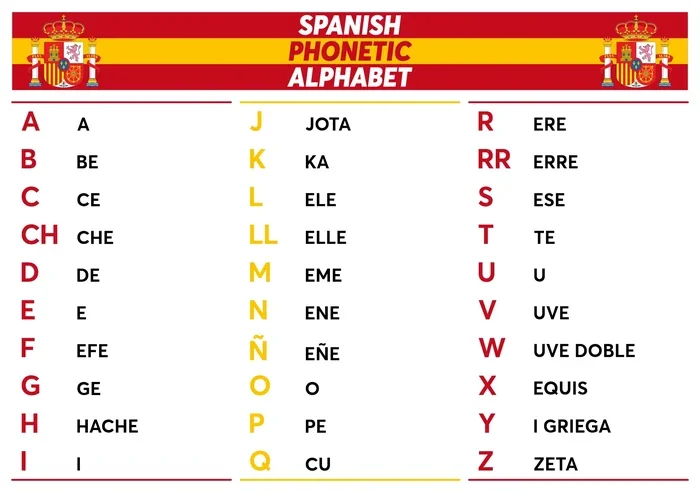

The letter G in Spanish has two distinct sounds that change depending on the vowels and letters that follow it. Understanding the hard G and soft G rules is essential for anyone learning Spanish pronunciation. This guide breaks down every G sound with clear examples and practical tips so you can speak like a native.
Learning a new language is exciting, but pronunciation can trip you up fast. One letter that causes trouble for many learners is the letter G. If you have ever wondered how to say the letter G in Spanish, you are not alone. This letter behaves very differently in Spanish than it does in English.
The good news is that the rules are simple and predictable. Once you understand the two main sounds of G, you can pronounce almost any Spanish word correctly. Let us walk through everything you need to know about Spanish pronunciation of the letter G.
Whether you are just starting out with the Spanish alphabet or you are trying to refine your accent, this guide has you covered. We will look at the hard G, the soft G, special combinations, and common mistakes to avoid. By the end, you will have a clear picture of how to speak Spanish with confidence when the letter G appears.
Key Takeaways
- Two Sounds, One Letter: The letter G in Spanish makes either a hard sound or a soft sound, depending on what comes after it.
- Hard G Rule: G sounds like the English G before A, O, U, and consonants.
- Soft G Rule: G sounds like an H before E and I.
- GUE and GUI: These special combinations have unique rules, often with a silent U.
- Context Matters: The in situ meaning of the letter G changes based on its position in a word.
- Practice Wins: Repeating words with native audio is the fastest way to master the Spanish G.
📑 Table of Contents
The Two Sounds of the Letter G in Spanish
The letter G in Spanish makes exactly two sounds. That is it. Unlike English, where G can sound different in words like “go” and “gentle,” Spanish keeps things much simpler. The sound depends entirely on which vowel or letter follows the G.
Here is the basic idea:
- Hard G: Sounds like the G in English words like “go” or “game.”
- Soft G: Sounds like the H in English “hello” or the Scottish “loch.”
This simple rule applies to almost every word in the Spanish language. Once you memorize which vowels trigger each sound, you will be able to read and pronounce new words on the fly.
Why the Letter G Is Different in Spanish
In English, the letter G has multiple sounds. Think of “giant” versus “gate.” The vowel after G changes the sound. Spanish follows a similar pattern, but it is much more consistent. There are fewer exceptions, which makes Spanish phonology easier to master over time.
The phonetics of Spanish are designed to be phonetic. That means words are pronounced exactly as they are spelled. The letter G follows clear rules, and once you know them, you can tackle any word with confidence.
Understanding these G pronunciation rules is a big step toward sounding like a native Spanish speaker. It also helps with listening comprehension, since you will recognize words more easily when you know what the G sounds like in each context.
When to Use the Hard G Sound
The hard G sound is the one most English speakers are familiar with. It is the strong, voiced sound you make at the back of your throat. In Spanish, this sound appears in specific situations.
The Hard G Rule
The letter G makes a hard sound when it appears before these letters:
- A as in “gato”
- O as in “gol”
- U as in “guerra”
- Consonants like L, R, N, and S
When you see G followed by any of these, use the hard English G sound. Your tongue should press against the soft palate, and you should feel a strong burst of air.
For example, the word gato (which means cat) uses the hard G. If you are exploring Spanish cat names, you will find that “Gato” is one of the most popular choices. The hard G gives it a strong, clear start.
| Word | G Sound | English Equivalent |
|---|---|---|
| Gato | Hard G | Like “go” |
| Gol | Hard G | Like “gold” |
| Guerra | Hard G | Like “war” |
| Gran | Hard G | Like “grand” |
Quick Tips for the Hard G
- Keep your tongue pressed firmly against the back of your mouth.
- Do not let the sound become soft or breathy.
- Practice with words like “gato,” “gran,” and “gusto” daily.
- Listen to native speakers and try to match their energy.
Expert Insight: Many English speakers accidentally soften the G before A, O, and U. This happens because of English habits. Focus on keeping the G strong and consistent. Record yourself and compare with native audio to catch any softness.
When to Use the Soft G Sound
The soft G is where many learners struggle. This sound does not exist in English in the same way, so it feels unfamiliar at first. But once you get the hang of it, it becomes second nature.
The Soft G Rule
The letter G makes a soft, breathy sound when it appears before these vowels:
- E as in “gente”
- I as in “ginger” (in Spanish, “gente” means people)
When G meets E or I, it changes its sound completely. Instead of a hard, voiced sound, it becomes a breathy H-like sound. This is one of the most important letter G sounds to master in Spanish.
The word gente is a perfect example. It starts with a soft G that sounds like an H. If you say it with a hard G, Spanish speakers might not understand you. The same applies to words like “gentil” and “ginger” (the Spanish word for ginger).
Interestingly, the in situ meaning of the letter G shifts entirely based on its position in the word. Before E and I, G becomes softer and lighter. This context-dependent behavior is a key part of Spanish phonetics.
Quick Tips for the Soft G
- Think of the H sound in “hello” when you see G before E or I.
- Do not puff your cheeks. The sound comes from the throat.
- Keep the breath gentle and steady.
- Practice words like “gente,” “gentil,” and “girar.”
Common Mistake: Many English speakers pronounce the soft G like the English G in “gentle.” This is wrong in Spanish. The soft G in Spanish is always an H-like sound, never a soft English G.
Special G Combinations: GUE and GUI
Spanish has some unique letter combinations that add a layer of complexity to the G. The two most important are GUE and GUI. These combinations follow special rules that every Spanish learner should know.
The GUE Combination
When G is followed by UE, the U is silent. You only pronounce the G and the E. The G makes a hard sound, just like before A, O, and U.
Examples include:
- Guerra (war) — pronounced “GEH-rah”
- Guía (guide) — pronounced “GEE-ah”
- Guapo (handsome) — pronounced “GAH-poh”
Notice that the U is not pronounced at all. Your mouth moves from G directly to the vowel that follows.
The GUI Combination
The GUI combination works the same way. The U is silent, and you pronounce the hard G followed by the I.
Examples include:
- Guía (guide) — pronounced “GEE-ah”
- Guiso (stew) — pronounced “GEE-soh”
- Guion (script) — pronounced “GEE-on”
When the U Is Not Silent
There is one exception. When the U has an accent mark (ú), it is pronounced. This happens in words like:
- Saguaro — the U is pronounced because it carries the accent
- Guau (woof, like a dog barking) — the U is pronounced
Without the accent, the U in GUE and GUI is always silent. This is one of the most important G pronunciation rules to remember.
Quick Tips for GUE and GUI
- Skip the U unless it has an accent mark.
- Practice saying “guerra” and “guía” slowly at first.
- Listen to native speakers and mimic their rhythm.
- Remember that the U is a silent placeholder that affects the G sound.
Common Words That Start with G in Spanish
Now that you know the rules, let us put them into practice. Here are some common Spanish words that start with the letter G, grouped by sound.
Hard G Words
- Gato (cat) — “GAH-toh”
- Grano (grain) — “GRAH-noh”
- Gusto (taste/enjoyment) — “GOOS-toh”
- Gente — wait, this one is soft! Let us keep it in the right section.
- Gran (great) — “grahn”
- Globo (balloon) — “GLOH-boh”
Soft G Words
- Gente (people) — “HEHN-teh”
- Girar (to turn) — “hee-RAHR”
- Gimnasio (gym) — “HEEM-nah-see-oh”
- Gestionar (to manage) — “hehs-tee-oh-NAHR”
If you are learning Spanish pet names, knowing how to pronounce the G in words like “gato” is essential. Check out our guide to Spanish cat names for more inspiration and pronunciation practice.
Similarly, if you are exploring Spanish rabbit names, many of them feature the letter G in different positions. Practicing these names helps reinforce your understanding of both hard and soft G sounds in real-world contexts.
Practice Tips to Master the Spanish G
Knowing the rules is only half the battle. The other half is practice. Here are some proven strategies to help you master the letter G sounds in Spanish.
1. Listen and Repeat
Find audio clips of native Spanish speakers. Listen to how they pronounce words with G. Then repeat after them. This method, called shadowing, is one of the most effective ways to improve your accent.
2. Record Yourself
Use your phone to record yourself saying words with G. Play it back and compare it to native audio. You will quickly notice areas where your pronunciation needs work.
3. Practice in Context
Do not just practice individual words. Say full sentences and phrases. This helps you get used to the natural rhythm and flow of Spanish consonants within words.
4. Focus on Tongue Placement
The hard G requires your tongue to press against the soft palate. The soft G uses the back of your throat. Paying attention to where your tongue and throat are positioned makes a big difference.
5. Use Flashcards
Write Spanish words with G on flashcards. Practice them daily. Mix hard G words with soft G words to train your brain to switch between sounds automatically.
Expert Insight: Consistency beats intensity. Ten minutes of daily practice is more effective than one long session per week. Make the Spanish G a part of your daily routine, and you will see steady improvement.
Common Mistakes to Avoid
Even dedicated learners make mistakes with the Spanish G. Here are the most common errors and how to fix them.
Mistake 1: Pronouncing G Like in English Before E and I
This is the number one mistake. In English, “gentle” has a soft G that sounds like “j.” In Spanish, the soft G before E and I sounds like H, not J. Always remember: G before E and I = H sound in Spanish.
Mistake 2: Pronouncing the U in GUE and GUI
Unless the U has an accent mark, it is silent. Saying “goo-ee-rah” for “guerra” is incorrect. The correct pronunciation is “GEH-rah.”
Mistake 3: Making the Hard G Too Soft
Some learners soften the G before A, O, and U because they are worried about being too harsh. The hard G in Spanish is strong and clear. Do not be afraid to give it full force.
Mistake 4: Ignoring Regional Differences
While the basic rules of G pronunciation are the same across Spanish-speaking countries, regional accents can affect the exact sound. In some parts of Spain, the soft G is more pronounced as a guttural H. In Latin America, it is often softer. Exposure to different accents helps you adapt.
Quick Tip: If you are exploring Spanish rabbit names or other Spanish vocabulary, use them as pronunciation practice. Each new word is a chance to reinforce your understanding of the letter G.
Final Thoughts on the Spanish Letter G
Mastering how to say the letter G in Spanish is a rewarding milestone. The rules are clear, the practice is straightforward, and the results are immediate. Once you can confidently switch between hard and soft G sounds, you will notice a real improvement in your overall Spanish pronunciation.
Remember the two key rules. Hard G before A, O, U, and consonants. Soft G before E and I. Add the special rules for GUE and GUI, and you have a complete toolkit for tackling any word with the letter G.
Practice daily, listen to native speakers, and do not be afraid to make mistakes. Every mispronounced word is a step toward getting it right. The more you expose yourself to the Spanish language, the more natural these sounds will feel.
Whether you are learning Spanish for travel, work, or personal growth, nailing the letter G brings you one step closer to sounding like a native Spanish speaker. Keep practicing, stay curious, and enjoy the journey.
If you are interested in expanding your Spanish vocabulary, check out our resources on Spanish teddy bear names and other themed name lists. They are great tools for practicing pronunciation in a fun and engaging way.
With the knowledge you have gained from this guide, you are well-equipped to handle the letter G in any Spanish word you encounter. Keep building your skills, and soon the Spanish G will feel as natural as it does to native speakers.
Frequently Asked Questions
Is the letter G in Spanish pronounced the same way in all Spanish-speaking countries?
The basic rules for G pronunciation are the same everywhere. However, regional accents can affect the exact sound of the soft G. In Spain, the soft G before E and I is often a stronger guttural H sound, while in Latin America it tends to be softer. Both are correct.
What is the difference between the hard G and soft G in Spanish?
The hard G sounds like the English G in “go” and appears before A, O, U, and consonants. The soft G sounds like an H and appears before E and I. These two sounds cover almost all G pronunciations in Spanish.
Why is the U silent in GUE and GUI combinations?
The U in GUE and GUI acts as a silent placeholder. It changes the sound of the G from soft to hard without being pronounced itself. The only exception is when the U has an accent mark, like in “saguaro,” where it is pronounced.
How can I practice the Spanish G sound every day?
Start by picking five hard G words and five soft G words. Say them out loud five times each. Listen to native speakers and repeat after them. Recording yourself and comparing to native audio is also very effective. Consistency is key.
Are there any Spanish words where G has a completely different sound?
In standard Spanish, G only makes two sounds: hard and soft. There are no additional sounds. However, in some dialects or informal speech, the soft G can become even softer or almost disappear. These variations are regional and do not change the core rules.
Can learning Spanish cat and rabbit names help me practice the letter G?
Absolutely. Words like “gato” (cat) and various rabbit names featuring G give you real-world examples to practice with. They make pronunciation drills more fun and help you connect the letter G to everyday Spanish vocabulary.



