
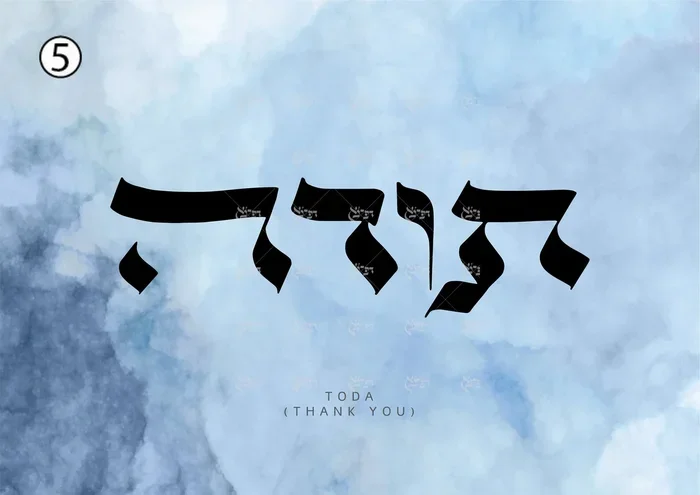

Learning how to say thank you in Hebrew opens doors to deeper connections with Hebrew speakers. The most common phrase is “Toda,” but Hebrew offers many ways to express gratitude depending on the situation. This guide covers every level of Hebrew thank-you expressions, from casual to formal, so you can sound like a local in any setting.
Have you ever wanted to thank someone in Hebrew but froze because you didn’t know the right phrase? You are not alone. Many people start learning Hebrew and quickly realize that thank you in Hebrew is more layered than it seems at first glance.
The Hebrew language is rich with expressions of gratitude. From a simple Toda to heartfelt blessings, there is a way to say thank you for every moment. Whether you are traveling to Israel, connecting with Hebrew-speaking friends, or just curious about the language, this guide will help you say thank you in Hebrew like a native speaker.
What makes Hebrew gratitude unique is how much meaning sits behind each phrase. A single word can carry warmth, respect, or even spiritual depth. That is why understanding the cultural context of these expressions matters just as much as learning the words themselves. Let us dive in and explore the beautiful world of Hebrew thank-you phrases.
Key Takeaways
- Toda is the basic thank you: It works in almost every casual situation and is the first phrase every learner should know.
- Toda Raba means thank you very much: Use this when you want to show extra gratitude in everyday Hebrew.
- Hebrew has formal and informal thank yous: Knowing the difference helps you sound natural and respectful.
- Pronunciation matters: Getting the guttural sounds right makes a big difference in how native speakers perceive you.
- Cultural context shapes gratitude: Hebrew thank-you expressions carry deep cultural and even spiritual meaning.
- Avoid common mistakes: Don’t over-formalize casual settings or under-formalize professional ones.
📑 Table of Contents
- The Most Common Ways to Say Thank You in Hebrew
- Understanding the Cultural Context of Hebrew Gratitude
- Formal vs Informal Thank You in Hebrew
- Hebrew Thank You Phrases for Different Situations
- Pronunciation Tips for Hebrew Thank You Phrases
- Common Mistakes to Avoid When Saying Thank You in Hebrew
- Expert Insights on Learning Hebrew Gratitude
- Key Takeaways
- Conclusion
The Most Common Ways to Say Thank You in Hebrew
Every language has its go-to thank-you word. In Hebrew, that word is Toda. It is short, sweet, and works in almost any situation. But Hebrew gives you more tools than just one. Let us look at the most common ways to express gratitude.
Toda — The Simple Thank You
Toda is the bread and butter of Hebrew gratitude. You will hear it everywhere in Israel. It is the equivalent of saying “thanks” in English. Use it when someone holds a door for you, hands you something, or gives you a compliment.
The pronunciation is simple. It sounds like “toh-DAH.” The stress falls on the second syllable. Keep your tone warm and natural. Israelis appreciate a genuine smile along with the word.
Here are some quick examples of when to use Toda:
- Someone gives you directions on the street.
- A cashier hands you your change.
- A friend passes you a coffee.
- Someone holds the elevator door for you.
Toda is informal and friendly. It fits casual daily life perfectly. You will sound natural and respectful every time you use it.
Toda Raba — Thank You Very Much
If you want to step up your gratitude game, Toda Raba is the phrase to learn. It means thank you very much in Hebrew. The word “Raba” adds emphasis and warmth. It shows that the gesture meant a lot to you.
Pronounce it as “toh-RAH-bah.” Again, the stress lands on the middle syllable. Keep your voice steady and heartfelt.
Use Toda Raba when:
- Someone gives you a meaningful gift.
- A friend goes out of their way to help you.
- You receive exceptional service at a restaurant or store.
- Someone supports you during a tough time.
This phrase works in both casual and semi-formal settings. It is a safe and powerful choice in most situations.
Toda Raba Me’od — The Strongest Everyday Thank You
Want to go even further? Toda Raba Me’od takes gratitude to the next level. It translates to thank you very, very much. This is the phrase you use when someone has done something truly special for you.
Break it down: “Toda” means thank you, “Raba” means very much, and “Me’od” adds even more emphasis. It is like saying “thank you a million times” in English.
Use this phrase sparingly. Reserve it for moments that truly deserve extra appreciation. Overusing it can make it feel less genuine.
Understanding the Cultural Context of Hebrew Gratitude
In many languages, thank-you phrases carry cultural weight. Hebrew is no different. The way you express gratitude in Hebrew reflects your understanding of the culture and the in situ meaning of the words within Israeli society. To truly grasp how to say thank you in Hebrew, you need to understand the cultural backdrop behind the phrases.
For a deeper look at how meaning shifts depending on cultural context, you can explore the In Situ Meaning concept, which helps explain why words carry different weight in different settings. This idea applies directly to Hebrew expressions of gratitude.
Gratitude in Jewish Tradition
Hebrew is the language of Jewish tradition and scripture. Many Hebrew thank-you expressions have roots in religious and spiritual practices. Even secular Israelis often use phrases that carry deep historical meaning.
For example, some Hebrew thank-you blessings trace back to ancient prayers of gratitude. These blessings acknowledge God or the universe for blessings received. While you do not need to be religious to use them, understanding their origin adds richness to your language learning journey.
When you learn thank you in Hebrew, you are also learning about a culture that values gratitude deeply. In Jewish tradition, expressing thanks is not optional. It is a daily practice woven into prayer, meals, and conversations.
The Role of Gratitude in Israeli Culture
Israeli culture is direct and warm. People appreciate honesty and sincerity. When you say thank you in Hebrew, Israelis notice your effort. It shows respect for their language and their culture.
Israelis often respond to Toda with phrases like “Bevakasha” (you’re welcome) or “Bevakasha raba” (you’re very welcome). Learning these responses completes the gratitude exchange and makes conversations feel more natural.
Formal vs Informal Thank You in Hebrew
Not all thank-you expressions are created equal. Hebrew has different levels of formality, and knowing when to use each one makes a big difference.
Informal Thank You Phrases
Casual settings call for casual phrases. Here are the most common informal ways to express gratitude:
- Toda — Simple and everyday.
- Toda Raba — Warm and appreciative.
- Yoter toda — Means “more thanks” or “thanks even more.”
- Toda raba me’od — Extra strong gratitude.
These phrases work with friends, family, peers, and even strangers in casual settings. They are the building blocks of everyday Hebrew gratitude.
Formal Thank You Phrases
Formal situations require a more polished approach. Here are some options:
- Toda rabba — Still works in formal settings but with a respectful tone.
- Ha-kavoda — This means “the honor” and is used in professional or ceremonial contexts.
- Toda le-ha’ra’ah — A more literary and formal way to say thank you for a favor.
When in doubt, Toda Raba is a safe formal choice. It works in most settings without feeling too casual or too stiff.
Politeness Levels and When to Use Each
Here is a quick guide to help you choose the right level of gratitude:
- Casual (friends, peers): Toda, Yoter toda
- Semi-formal (acquaintances, service workers): Toda Raba, Toda Raba Me’od
- Formal (professional, ceremonial): Ha-kavoda, Toda le-ha’ra’ah
Matching your thank-you phrase to the situation shows emotional intelligence and cultural awareness. Israelis will appreciate the effort.
Hebrew Thank You Phrases for Different Situations
Real life is full of different moments. Each moment calls for a slightly different way to express gratitude. Let us walk through some common scenarios.
Thanking Someone for a Gift
When someone gives you a gift in Hebrew culture, the response matters. A simple Toda might feel too brief. Instead, try:
- Toda Raba — Thank you very much.
- Ani me’od me’ushar et ze — I am very grateful for this.
Adding a personal touch like “I really love it” in Hebrew (“Ani ohev/et at zeh be’yoter”) makes the thank-you even more meaningful.
Thanking Someone for Help
If someone helps you with a task or a problem, use a phrase that acknowledges their effort:
- Toda Raba Me’od — Thank you so much.
- Hakol toda — All thanks (a warm, complete expression of gratitude).
These phrases show that you recognize the time and energy the person invested in helping you.
Thanking Someone in Writing
Written thank-yous in Hebrew follow the same patterns. You can use Toda Raba in a text message or email. For a more personal note, try:
- Rak be’vakasha — Just with gratitude.
- Toda al ha-kavod — Thanks for the honor.
Written expressions of gratitude are common in Israeli business and personal communication. They leave a lasting impression.
Quick Tips for Using Hebrew Thank You Phrases
Here are some fast tips to help you use these phrases with confidence:
- Practice the pronunciation out loud at least five times before using it in real life.
- Pair your thank-you with eye contact and a smile.
- Match the formality level to the situation.
- Do not be afraid to mix Hebrew and English if you are learning.
- Listen to how native speakers say these phrases and mimic their tone.
Pronunciation Tips for Hebrew Thank You Phrases
Hebrew pronunciation can feel tricky at first. The guttural sounds and unique letter combinations are different from English. But with a little practice, you will nail it.
The Gutural Sounds
Hebrew has several guttural sounds that do not exist in English. The letter “chet” (ח) sounds like a soft throat clearing. The letter “ayin” (ע) is a deep throat sound. These sounds appear in many Hebrew words, including some thank-you phrases.
Do not worry if you cannot produce these sounds perfectly at first. Israelis are very forgiving of learners. They will still understand and appreciate your effort.
Stress Patterns
Hebrew words usually stress the last or second-to-last syllable. For Toda, the stress is on “da.” For Toda Raba, the stress is on “ra.” Paying attention to stress makes your pronunciation sound more natural.
Common Pronunciation Mistakes to Avoid
- Do not pronounce the “r” too hard. It should be soft, like a gentle tap.
- Do not skip the “a” sounds. Each vowel matters in Hebrew.
- Do not rush. Take your time and let each syllable breathe.
Listening to native speakers is the best way to improve your pronunciation. Try watching Hebrew TV shows or listening to Hebrew music. Repeat the thank-you phrases out loud and compare your tone to the originals.
Common Mistakes to Avoid When Saying Thank You in HebrewLearning a new language means making mistakes. But some mistakes are easy to avoid. Here are the most common ones learners make with Hebrew thank-you phrases.
Using the Wrong Level of Formality
Using a casual Toda in a formal business meeting can feel too relaxed. On the other hand, using a stiff formal phrase with a close friend can feel awkward. Always match your expression to the setting.
Overusing Strong Phrases
Toda Raba Me’od is powerful. But if you use it for every small favor, it loses its impact. Save the strongest phrases for moments that truly deserve them.
Ignoring the Response
In Hebrew conversations, the response to a thank-you matters too. When someone says Toda to you, reply with Bevakasha (you’re welcome). This back-and-forth completes the exchange and shows cultural awareness.
Mispronouncing Key Words
Mispronouncing “Toda” or “Raba” can change the meaning or make the phrase sound awkward. Practice the sounds slowly and build up speed over time.
Expert Insights on Learning Hebrew Gratitude
Language experts agree that gratitude phrases are among the first things learners should master. They are short, useful, and culturally significant. But they also say that understanding the depth behind each phrase is what separates a good learner from a great one.
Native Hebrew speakers often say that thank you in Hebrew is not just a phrase. It is a reflection of values. Gratitude is woven into the fabric of Israeli life. From family dinners to business meetings, expressing thanks is a daily practice.
When you learn these phrases, you are not just memorizing words. You are connecting with a culture that values kindness, respect, and appreciation. That connection makes the learning process richer and more meaningful.
Key Takeaways
- Toda is your everyday thank you: Use it in casual settings with confidence.
- Toda Raba adds warmth: Perfect for showing extra gratitude in most situations.
- Hebrew thank-you phrases carry cultural depth: Understanding the background makes them more meaningful.
- Match formality to the setting: Casual for friends, formal for professional contexts.
- Pronunciation matters: Practice guttural sounds and stress patterns regularly.
- Avoid common mistakes: Do not overuse strong phrases or ignore the response.
- Gratitude is a value in Hebrew culture: Using these phrases connects you to Israeli traditions and warmth.
Conclusion
Learning how to say thank you in Hebrew is more than just memorizing words. It is about connecting with people and culture. From the simple Toda to the heartfelt Toda Raba Me’od, each phrase carries its own weight and warmth.
Hebrew thank-you expressions reflect a culture that values gratitude, sincerity, and respect. When you use these phrases, you show that you care about the language and the people who speak it. That effort always shines through.
Start with Toda and build from there. Practice the pronunciation. Learn the cultural context. And most importantly, use these phrases with genuine feeling. That is what makes the difference between a learner and a native speaker.
Now you have everything you need to express gratitude in Hebrew like a pro. Go ahead and try them out. You will be surprised how far a simple thank you in Hebrew can take you.
Frequently Asked Questions
What is the simplest way to say thank you in Hebrew?
The simplest way to say thank you in Hebrew is Toda. It is short, easy to pronounce, and works in almost any casual situation. If you want to add emphasis, say Toda Raba for thank you very much.
Is there a difference between thank you in Hebrew for men and women?
No, the basic thank-you phrases like Toda and Toda Raba are the same for everyone. However, some related words change based on gender. For example, “me’ushar” (grateful) becomes “me’ushar” for a male speaker and “me’usharet” for a female speaker. But the thank-you phrases themselves stay the same.
Can I use English thank-you phrases when speaking Hebrew?
Yes, many Israelis understand English and will appreciate your effort either way. But learning thank you in Hebrew shows respect for the culture and language. Even a simple Toda can make a conversation feel more authentic and warm.
How do you respond when someone says thank you to you in Hebrew?
The most common response is Bevakasha, which means “you’re welcome.” You can also say Bevakasha raba for “you’re very welcome.” These responses complete the gratitude exchange naturally.
Are there religious Hebrew thank-you expressions?
Yes, Hebrew has several blessings and prayers of gratitude rooted in Jewish tradition. Some people use phrases like “Baruch Hashem” (thank God) to express thanks. These carry deep cultural and spiritual meaning, but they are not required for everyday conversation.
How long does it take to feel comfortable saying thank you in Hebrew?
Most learners feel comfortable with Toda and Toda Raba within a few days of practice. The key is repetition and real-life use. Try saying these phrases every time you interact with a Hebrew speaker. The more you practice, the more natural it will feel.



