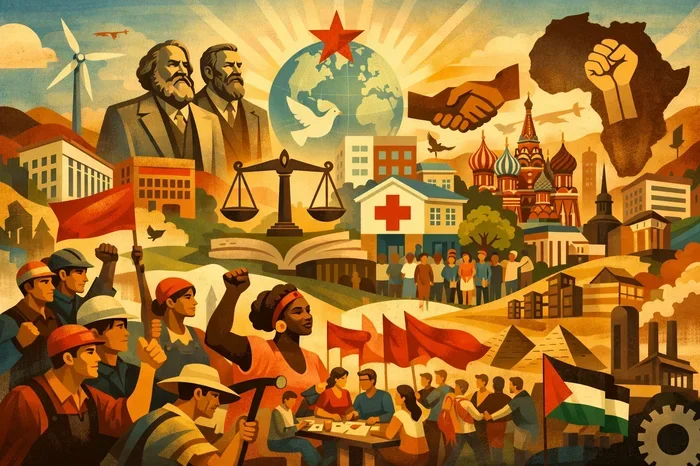

The socialist meaning centers on shared ownership and equal distribution of resources. At its core, socialism seeks to reduce inequality by placing power in the hands of the community rather than private individuals. Understanding what socialism truly means helps clarify debates about economics, politics, and social fairness. This guide breaks down the socialist definition in plain language with real-world examples.
Have you ever wondered about the socialist meaning? Maybe you heard the word on the news or read it in a book. Either way, you are not alone. The term socialism comes up a lot in political conversations. But what does it really mean? This guide breaks it all down in simple, clear language. You will walk away with a solid understanding of what socialism stands for. Let us dive right in.
The socialist meaning goes far beyond what most people think. It is not just about government control or red flags. At its heart, socialism is about fairness. It is about making sure everyone has a fair shot at a good life. When we look at the socialist definition, we see a system built on shared ownership. Instead of one person or corporation controlling everything, the community shares the wealth. This idea has shaped societies for over 200 years. And it continues to influence politics and economics today.
Key Takeaways
- Socialist meaning: A system where the community or government owns and controls major resources and industries.
- Core principle: Wealth and power should be shared fairly among all people, not concentrated in a few hands.
- Historical roots: Socialist ideas emerged in response to the harsh conditions of the Industrial Revolution.
- Modern forms: Democratic socialism, Marxist socialism, and welfare-state socialism all carry the socialist meaning in different ways.
- Key goals: Economic equality, public ownership, workers’ rights, and social welfare programs.
- Global impact: Socialist policies shape governments and economies around the world today.
- Misconceptions: Socialism is often confused with communism, but the two have distinct meanings and goals.
📑 Table of Contents
What Does Socialist Mean? The Basic Definition
Let us start with the basics. The socialist meaning refers to a system where the people collectively own or control the means of production. That sounds fancy, but it is simpler than it seems. The “means of production” means things like factories, land, tools, and resources. In a socialist system, these belong to everyone. Not just the rich folks or big corporations.
The socialist definition also emphasizes social equality. Everyone contributes according to their ability. Everyone receives according to their needs. This idea comes from the belief that no one should be born into poverty while others live in luxury. Socialist ideology pushes back against extreme wealth gaps. It wants a level playing field for all.
Here are the key elements of the socialist meaning:
- Collective ownership: Resources belong to the community, not private individuals.
- Economic equality: Wealth is distributed more evenly across society.
- Public services: Healthcare, education, and housing are provided by the government.
- Workers’ rights: Workers have a stronger voice in how businesses operate.
- Wealth redistribution: Money and resources flow from the wealthy to the broader population.
So when someone asks, “What does socialist mean?” you can answer with confidence. It means a society built on shared resources and equal opportunity.
The History Behind Socialist Ideas
Understanding the socialist meaning becomes much easier when you know where it came from. The roots of socialism go deep into history. During the 1700s and 1800s, the Industrial Revolution changed everything. Factories popped up everywhere. Workers labored long hours for very little pay. Children worked in dangerous conditions. The gap between the rich and the poor grew wider every year.
People started to ask questions. Why do factory owners get rich while workers struggle to eat? Is there a better way to organize society? These questions gave birth to socialist ideology. Thinkers and writers began to imagine a world where workers had more power.
Early Socialist Thinkers
Several key figures shaped early socialist theory. Robert Owen was a factory owner who believed workers deserved better conditions. He created model communities where people shared resources. Henri de Saint-Simon focused on organizing society based on individual talents and needs. Charles Fourier imagined communities where people worked together in harmony.
But the most famous name in socialist history is Karl Marx. Marx, along with Friedrich Engels, wrote “The Communist Manifesto” in 1848. His ideas gave the socialist meaning a more structured framework. Marx believed that capitalism would eventually collapse under its own contradictions. He argued that workers should unite and take control of the economy.
Socialism Spreads Around the World
By the early 1900s, socialist movements had spread across Europe and beyond. Workers formed parties and unions. They fought for better wages, shorter hours, and safer conditions. The socialist meaning became a rallying cry for millions of people.
In Russia, the Bolshevik Revolution of 1917 brought socialist governance to power. The Soviet Union became the world’s first major socialist state. But this version of socialism looked very different from the democratic models that followed. It showed both the promise and the challenges of putting socialist principles into practice.
Different Types of Socialism
Not all socialism looks the same. The socialist meaning has many interpretations. Different countries and thinkers have shaped their own versions. Here are the most common types you should know about.
Democratic Socialism
Democratic socialism is probably the most well-known form today. It combines socialist policies with democratic elections. In a democratic socialist system, the government owns key industries like healthcare, energy, and transportation. But citizens still vote and have political freedom.
Countries like Sweden, Norway, and Denmark often get mentioned in this context. They have strong welfare states. They provide free healthcare and education. Yet they also have free markets and democratic elections. This blend gives the socialist meaning a practical, modern twist.
Marxist Socialism
Marxist socialism follows the ideas of Karl Marx closely. It calls for the complete overthrow of capitalism. In theory, a classless society would emerge where everyone is equal. The government controls all major industries and resources. Historically, this model has led to single-party states in countries like the Soviet Union and China.
The socialist meaning in a Marxist context is more radical. It seeks total economic transformation. Critics argue that this version often leads to authoritarian rule. Supporters believe it is the only way to truly eliminate inequality.
Libertarian Socialism
Libertarian socialism might sound like an oxymoron. But it has a clear socialist meaning. It combines socialist economics with individual freedom. In this model, there is no state control. Instead, workers and communities self-manage their own resources. Think of cooperatives and worker-owned businesses.
This form of socialism emphasizes decentralization. It trusts local communities to make their own decisions. It is a middle ground between heavy government control and pure capitalism.
Welfare State Socialism
Welfare state socialism focuses on government programs that support citizens. This includes unemployment benefits, pensions, public healthcare, and free education. The government does not necessarily own all industries. But it plays a big role in ensuring everyone has access to basic needs.
This is the form of socialist policy that many Western democracies practice today. It reflects a softer, more gradual approach to the socialist meaning.
Socialism vs. Capitalism: Key Differences
To really understand the socialist meaning, it helps to compare it with capitalism. These two systems are often seen as opposites. But the comparison reveals a lot about how societies work.
| Feature | Socialism | Capitalism |
|---|---|---|
| Ownership | Community or government owns key resources | Private individuals and corporations own resources |
| Wealth Distribution | Redistributed to reduce inequality | Wealth accumulates based on market success |
| Government Role | Strong role in economy and social services | Limited role, free market dominates |
| Motivation | Social welfare and equality | Profit and individual success |
| Healthcare | Often provided publicly and free | Usually private and paid for by individuals |
| Education | Public and often free | Varies; can be private or public |
Neither system is perfect. Capitalism drives innovation and economic growth. But it can also create extreme inequality. Socialism promotes fairness and equality. But it can sometimes lead to inefficiency or government overreach. The socialist meaning is not about picking a side. It is about understanding what each system offers.
Socialist Principles in Everyday Life
The socialist meaning is not just a theory. It shows up in everyday life more than you might think. Many countries have adopted socialist policies without calling themselves socialist.
Think about public libraries. They are free for everyone. That is a socialist principle in action. Public roads, fire departments, and public schools all reflect the idea that basic services should be available to all. These institutions embody the socialist meaning of shared resources for the common good.
Here are some real-world examples of socialist practices you might recognize:
- Medicare and Medicaid: Government-run health programs for seniors and low-income families.
- Social Security: A system where workers contribute and receive benefits in retirement.
- Public universities: State-funded education that keeps tuition affordable.
- Unemployment insurance: A safety net for workers who lose their jobs.
- Public transportation: Government-run buses, trains, and subways.
These programs may not be “pure socialism.” But they carry the spirit of the socialist meaning. They show that collective action can improve people’s lives.
Common Misconceptions About Socialism
There are many myths surrounding the socialist meaning. Let us clear up a few of the biggest ones.
Myth 1: Socialism means no private property. This is not entirely true. Most modern socialists support private property for personal use. They just believe that major industries and resources should be shared. The socialist definition is about collective ownership of productive assets, not your personal belongings.
Myth 2: Socialism and communism are the same. They are related but different. Communism is a more extreme version that aims for a classless, stateless society. The socialist meaning is broader and can include democratic systems. Socialism often works within existing political structures.
Myth 3: Socialism kills innovation. This is a common talking point from critics. But many socialist countries have strong innovation records. Sweden, for example, produces world-leading tech companies and scientists. The socialist meaning does not mean stagnation. It means directing innovation toward public benefit.
Why the Socialist Meaning Matters Today
The socialist meaning is more relevant now than ever. Income inequality has grown dramatically in many countries. The gap between the rich and the poor continues to widen. Healthcare costs keep rising. Housing becomes less affordable every year. These problems make socialist ideas attractive to a new generation.
Young people around the world are engaging with socialist ideology more than in decades. Politicians openly discuss socialist policies like universal healthcare and free college. The socialist meaning is evolving. It is adapting to modern challenges like climate change, automation, and global inequality.
At the same time, critics raise valid concerns. Government control can sometimes lead to bureaucracy and inefficiency. Central planning can struggle to match the flexibility of markets. Understanding the socialist meaning means acknowledging both its strengths and its weaknesses.
The Future of Socialism
Where is socialism heading? The answer depends on where you look. In Europe, democratic socialist parties continue to gain influence. In Latin America, leaders have embraced socialist governance with varying results. In the United States, the conversation around the socialist meaning has shifted dramatically.
Climate change is also reshaping socialist theory. Many socialists argue that the environment cannot be protected under capitalism. They believe that collective ownership of resources is essential for sustainable living. This green angle gives the socialist meaning a fresh and urgent dimension.
Technology is another factor. Automation and artificial intelligence are transforming the economy. Some socialist thinkers propose universal basic income as a solution. This would give every citizen a basic income regardless of employment. It is a bold idea that reflects the core socialist principle of ensuring everyone’s basic needs are met.
Key Takeaways
- Socialist meaning: A system built on shared ownership, social equality, and collective well-being.
- Historical roots: Socialist ideas arose from the struggles of industrial workers in the 1800s.
- Multiple forms: Democratic socialism, Marxist socialism, libertarian socialism, and welfare state socialism all carry the socialist meaning in different ways.
- Core principles: Economic equality, workers’ rights, public services, and wealth redistribution define the socialist ideology.
- Modern relevance: Socialist policies like public healthcare and social security are part of daily life in many countries.
- Misconceptions abound: Socialism is not the same as communism, and it does not mean the end of all private property.
- Future outlook: The socialist meaning continues to evolve in response to new global challenges.
Final Thoughts on the Socialist Meaning
The socialist meaning is rich, complex, and deeply relevant. It is not a one-size-fits-all concept. It has changed over centuries and continues to evolve. At its core, socialism is about fairness. It is about making sure that everyone has access to the resources they need to live a dignified life.
Whether you agree with socialist ideology or not, understanding it matters. The socialist definition shapes political debates, economic policies, and social movements around the world. When you know what socialism really means, you can engage in those conversations with confidence and clarity.
The socialist meaning challenges us to think about what kind of society we want. Do we want a world where wealth is concentrated in the hands of a few? Or do we want a world where everyone has a fair share? These are big questions. And the socialist meaning offers a framework for answering them.
So the next time you hear the word “socialist,” you will know more than most people. You will understand the history, the principles, and the modern applications. You will see the socialist meaning not as a scary label, but as a set of ideas about fairness, equality, and shared prosperity.
Keep learning. Keep asking questions. And keep exploring the ideas that shape our world. The socialist meaning is just one piece of a much bigger puzzle. And understanding that puzzle is the first step toward making informed decisions about the future.
Frequently Asked Questions
What is the simple socialist meaning?
The simple socialist meaning is a system where the community or government owns and manages key resources and industries. The goal is to share wealth and opportunities more equally among all people. It focuses on fairness, collective ownership, and social welfare.
How does the socialist meaning differ from communism?
The socialist meaning is broader and can include democratic systems. Socialism often works within existing political frameworks and allows for some private ownership. Communism, as described by Marx, aims for a completely classless and stateless society. In practice, communist systems have tended to be more centralized and authoritarian than most socialist models.
Which countries follow socialist principles today?
Several countries practice forms of socialist policy without officially calling themselves socialist. Nordic countries like Sweden, Norway, and Denmark have strong welfare states and public services. Cuba and China follow more state-controlled models. Many nations incorporate socialist programs like public healthcare and education into their economies.
Is socialism the same as social democracy?
The socialist meaning and social democracy overlap but are not identical. Social democracy works within a capitalist framework but adds strong safety nets and public services. Socialism, in its broader socialist definition, often calls for more extensive public ownership of industries. Social democracy is generally seen as a moderate form of the socialist meaning.
What are the main goals of socialist ideology?
The core goals of the socialist meaning include economic equality, workers’ rights, public ownership of major industries, and wealth redistribution. Socialists aim to reduce poverty, provide universal access to healthcare and education, and ensure that everyone has a basic standard of living. These goals are driven by the belief that society should work for the benefit of all, not just the wealthy few.
Can socialist policies work in a capitalist economy?
Yes, many socialist policies already work within capitalist economies. Public schools, social security, unemployment insurance, and minimum wage laws are all examples. These programs reflect the socialist meaning of collective support and shared resources. Countries like the United States and the United Kingdom blend capitalist markets with socialist-style social programs every day.