
The rpm meaning stands for revolutions per minute, a measure of how fast your engine crankshaft spins. Your RPM gauge gives you real-time engine speed data that directly affects performance, fuel efficiency, and long-term engine health. Understanding rpm meaning helps every driver make smarter choices behind the wheel.
You have probably glanced at your dashboard while driving and noticed a number that goes up and down. That number is your rpm meaning in action. It stands for revolutions per minute, and it tells you how fast your engine is working. Many drivers ignore this number completely. But understanding rpm meaning can change the way you drive forever.
Your engine speed affects everything from fuel economy to how long your car lasts. When you know what your RPM gauge is telling you, you can avoid costly repairs. You can also drive more smoothly and save money at the pump. This guide covers the full rpm meaning in plain, simple terms. You will learn how it works, why it matters, and what to do when things go wrong.
Let us start with the basics. RPM stands for revolutions per minute. Every time your engine fires, your crankshaft rotation turns the wheels. The RPM reading on your dashboard counts how many full turns happen in one minute. A higher number means your engine is working harder. A lower number means it is idling or cruising. Either way, your RPM gauge gives you a window into your engine’s health.
Key Takeaways
- RPM means revolutions per minute: It measures how fast your engine’s crankshaft completes full rotations every 60 seconds.
- The tachometer is your RPM gauge: It sits on your dashboard and shows your current engine speed at all times.
- RPM affects fuel economy: Driving at optimal RPM saves gas and reduces long-term costs.
- High RPM causes wear: Consistently hitting the redline can damage your transmission and engine parts over time.
- RPM fluctuation signals problems: Unstable engine revs often point to issues like vacuum leaks or dirty fuel injectors.
- Proper gear shifting depends on RPM: Shifting at the right RPM range keeps your vehicle speed smooth and efficient.
- Regular maintenance helps stabilize RPM: Clean filters, fresh spark plugs, and proper engine load management keep readings steady.
📑 Table of Contents
What Does RPM Meaning Actually Mean?
The rpm meaning is simple on the surface but deep in practice. Revolutions per minute measures the speed of your engine’s crankshaft rotation. Every time the crankshaft completes one full turn, your pistons move up and down. This cycle creates the power that moves your car forward.
How the Tachometer Displays RPM
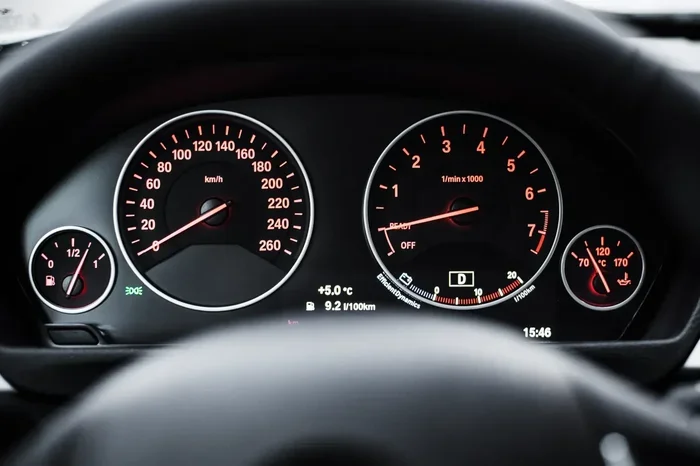
Your tachometer is the dial or digital display that shows your engine speed. Most cars have a needle-style gauge on the left side of the dashboard. The numbers usually range from zero to six or seven thousand. Some modern cars show RPM as a digital readout instead. Either way, the display gives you a live RPM reading every second you are driving.
Here is a quick look at what common RPM ranges mean:
- Idle speed (600-1,000 RPM): Your engine is running but the car is not moving.
- Low RPM (1,000-2,500 RPM): You are cruising at a steady pace on the highway.
- Mid RPM (2,500-4,000 RPM): You are accelerating or climbing a hill.
- High RPM (4,000-6,000+ RPM): You are pushing hard, either racing or towing heavy loads.
Each RPM range serves a purpose. The key is knowing when to stay in each zone and when to shift gears.
Why RPM Fluctuation Happens
You may notice your RPM fluctuation from time to time. This is normal in small amounts. For example, when you stop at a red light, your idle speed may dip slightly. When you press the gas, engine revs rise quickly. However, large or sudden RPM drops can signal a problem. A rough idle or a bouncing needle on your RPM gauge often means something needs attention.
How RPM Impacts Your Vehicle’s Performance
The rpm meaning goes far beyond just a number on your dash. It directly controls how your car feels and performs. When you understand this connection, you become a much better driver.
RPM and Engine Power
Your engine produces engine performance power at different RPM levels. Most cars have a sweet spot where they make the most torque and horsepower. This is often between 3,000 and 4,500 RPM. When you stay in this optimal RPM zone, your car feels responsive and strong. Push past it, and you may lose power or strain the engine.
Think of it like riding a bicycle. You have a gear where your legs move easiest and fastest. That is your optimal RPM. Shift too high or too low, and pedaling feels heavy and slow. Your car works the same way.
RPM and Fuel Efficiency
Your fuel efficiency depends heavily on engine speed. Driving at very high RPM burns more gas because the engine works harder. Driving at very low RPM can also hurt economy because the engine may lug. The best fuel economy usually comes from staying in the mid-range RPM zone for your specific vehicle.
Here are some quick tips to save fuel using RPM awareness:
- Shift up early when engine revs reach around 2,000 to 2,500 in manual cars.
- Avoid holding the gas pedal down too hard at high RPM.
- Use cruise control at steady RPM on flat highways.
- Watch for RPM spikes when going uphill and ease off the gas slightly.
Small changes in how you manage RPM can add up to real savings over months and years.
RPM and Transmission Health
Your transmission and RPM work hand in hand. When you shift gears, you change the RPM to match your vehicle speed. If you shift too early or too late, it puts extra stress on the transmission. Over time, this can lead to expensive repairs.
Automatic transmissions handle gear shifting for you, but they still rely on RPM signals to know when to change gears. Manual transmissions give you full control over RPM and shifting timing. Either way, smooth RPM management keeps your transmission healthy for years.
Common RPM Problems and What They Mean
Not all RPM readings are normal. Sometimes your RPM gauge tells you something is wrong. Learning to read these signs can save you from big breakdowns.
High Idle RPM
If your idle speed sits above 1,000 RPM when the car is warmed up, something may be off. Common causes include a vacuum leak, a dirty throttle body, or a faulty idle air control valve. A revving engine at idle also wastes fuel and creates extra noise.
RPM Drop When Stopping
A sudden RPM drop when you come to a stop can mean your engine is struggling to keep running. This often points to a weak engine load management issue, a clogged fuel filter, or problems with the fuel injectors. If your car stalls after a sharp RPM drop, get it checked right away.
RPM Needle Bouncing or Spiking
A bouncing RPM gauge needle is never a good sign. It usually means inconsistent fuel delivery or a problem with the ignition system. Engine revs that spike randomly can also indicate a misfire or a failing sensor. These issues may feel small at first, but they can grow into serious engine performance problems if ignored.
RPM Stuck High After Shifting
If your RPM stays high after you shift gears, your transmission may be slipping. This is a common problem in older cars or vehicles with high mileage. A slipping transmission means the gears are not engaging properly, and it will only get worse without repair.
How to Keep Your RPM in the Healthy Range
Good RPM habits start with simple routines. You do not need to be a mechanic to keep your engine speed in check. A few smart practices go a long way.
Warm Up Your Engine Properly
Many drivers rev their engine right after starting it. This is a mistake. Let your car idle for 30 to 60 seconds before driving. This gives the oil time to circulate and the engine load to stabilize. You will see your idle speed settle into a normal range before you move.
Shift Gears at the Right Time
If you drive a manual car, pay attention to your RPM gauge when shifting. Most cars perform best when you shift up between 2,000 and 3,000 RPM. Shifting too late pushes engine revs into the red zone. Shifting too early makes the engine work too hard at low speeds. Find your car’s sweet spot and stick with it.
Listen to Your Engine
Your ears are powerful tools for understanding rpm meaning. A smooth, steady engine sound usually means stable RPM. A rough, rattling, or whining sound often means RPM fluctuation or another issue. If something sounds off, check your RPM gauge and pay attention to how the car feels.
Keep Up with Regular Maintenance
Regular service keeps your RPM reading accurate and your engine healthy. Replace your air filter, spark plugs, and fuel filter on schedule. Clean fuel injectors help maintain consistent engine revs. A well-maintained car runs at a steady RPM and uses fuel more efficiently.
Watch for Dashboard Warning Lights
Modern cars have sensors that watch your RPM and engine speed constantly. If a warning light comes on, do not ignore it. The check engine light often triggers when RPM readings fall outside normal ranges. A quick scan with an OBD-II tool can reveal the exact problem before it gets worse.
Expert Tips for Understanding RPM in Different Driving Situations
Every driving situation calls for a slightly different approach to RPM. Here are some expert-level tips that make a real difference.
City Driving and Stop-and-Go Traffic
In city traffic, your RPM changes constantly. You idle at low RPM, then accelerate up to mid-range RPM repeatedly. Try to keep your engine revs smooth and avoid stomping the gas. Aggressive acceleration in city driving burns fuel and wears out your transmission faster.
Highway Driving and Cruising
On the highway, your RPM should stay steady and relatively low. Most cars cruise comfortably between 1,500 and 2,500 RPM at highway speeds. If your RPM is consistently above 3,000 on the highway, you may be in too low a gear or your vehicle speed is too slow for the gear selected.
Towing and Heavy Loads
When you tow a trailer or carry heavy cargo, your engine load increases significantly. Your RPM will naturally run higher to provide the extra power needed. Stay in the lower gears longer and let the RPM climb into the mid-to-high range. Do not be afraid of higher RPM in these situations, but also do not let it hit the redline constantly.
Cold Weather and RPM
Cold weather affects your engine speed in surprising ways. In winter, your idle speed may run a bit higher than normal. This is normal and helps the engine warm up faster. As the engine reaches operating temperature, your RPM will settle back down. If it does not, there may be a sensor issue worth checking.
Final Thoughts on RPM Meaning
The rpm meaning is one of the most important things every driver should understand. Your RPM gauge tells you the truth about your engine at all times. When you learn to read it, you drive better, save more fuel, and protect your car from expensive damage.
Remember that rpm meaning is not just a number. It is a conversation between you and your vehicle. Every RPM reading tells a story about how hard your engine is working. Listen to it. Respect it. And your car will reward you with years of reliable service.
Take a moment next time you drive to glance at your RPM gauge. Notice how it changes with acceleration, braking, and shifting. Over time, you will develop an instinct for optimal RPM in every situation. That instinct is what separates a good driver from a great one.
Understanding rpm meaning is a small investment of time that pays off big. Your engine performance, fuel efficiency, and long-term car health all depend on it. Start paying attention today, and you will feel the difference on every drive.
Frequently Asked Questions
What is the RPM meaning in simple terms?
RPM stands for revolutions per minute. It measures how many full turns your engine’s crankshaft makes in one minute. The higher the number, the faster your engine is spinning. Your RPM gauge on the dashboard shows this number in real time so you always know your engine speed.
What is a normal RPM range for most cars?
Most cars idle between 600 and 1,000 RPM. When driving, a healthy RPM range is usually between 1,500 and 4,000 depending on speed and gear. Hitting the redline above 6,000 or 7,000 RPM regularly can damage your engine over time.
Why does my RPM bounce up and down while idling?
Small RPM fluctuation at idle is normal. Large bouncing usually signals a problem like a vacuum leak, dirty fuel injectors, or a failing idle air control valve. If your engine revs bounce a lot at a stop light, it is worth getting a mechanic to check it out.
Does RPM affect fuel economy?
Yes, absolutely. Driving at very high RPM burns more fuel because the engine works harder. Staying in the optimal RPM range, usually between 1,500 and 3,000, gives you the best fuel efficiency. Smooth RPM management is one of the easiest ways to save gas.
What should I do if my RPM needle goes into the red zone?
If your RPM gauge hits the red zone, ease off the gas pedal immediately. Staying at high RPM for too long causes overheating and excess wear on engine parts. Shift up to a higher gear if you are in a manual car, and let the engine speed come back down to a safe level.
Can bad spark plugs cause RPM problems?
Yes, worn or dirty spark plugs can cause RPM drops, rough idling, and inconsistent engine revs. Spark plugs ignite the fuel-air mixture in your engine, and when they fail, the combustion process becomes uneven. This directly affects your RPM reading and overall engine performance. Replacing them on schedule keeps RPM stable.
=== CONCLUSION ===
The rpm meaning is a fundamental part of driving that every car owner should understand. From the tachometer on your dash to the way your car accelerates and shifts, RPM touches nearly everything. It affects your engine performance, your fuel efficiency, and even how long your car will last.
By paying attention to your RPM gauge and learning what different RPM ranges tell you, you become a more informed and confident driver. You can spot problems early, shift gears at the right time, and keep your engine speed in the healthy zone. These small habits add up to big savings and fewer trips to the repair shop.
Start today. Glance at your RPM more often. Notice how it changes when you accelerate, brake, and climb hills. Over time, understanding rpm meaning will become second nature. Your car will thank you with better performance and a longer life on the road.