

Learning how to say yerba mate correctly is easier than you think. This guide breaks down the pronunciation step by step, covers regional variations from Argentina to Brazil, and shares insider tips so you sound like a local. Whether you are new to the drink or a longtime fan, you will walk away confident and ready to order.
This is a comprehensive guide about how to say yerba mate.
Key Takeaways
- Correct pronunciation matters: Saying yerba mate the right way builds trust and shows respect for the culture behind the drink.
- Break it into three parts: Yerba, mah, teh — simple syllables that anyone can master with a little practice.
- Regional accents vary: Argentine, Uruguayan, Paraguayan, and Brazilian styles all sound slightly different, and each one is correct.
- The bombilla and gourd matter: Understanding the tools of the trade helps you appreciate the full yerba mate experience.
- Common mistakes are easy to avoid: Mispronouncing the “r” or stressing the wrong syllable are the most frequent slip-ups.
- Practice makes perfect: Listening to native speakers and repeating out loud is the fastest way to improve.
- It is more than a drink: Yerba mate is a social ritual, and knowing how to talk about it opens doors in South American culture.
[FEATURED_IMAGE_PLACEHOLDER]
Have you ever walked into a café, looked at the menu, and felt totally unsure about how to order yerba mate? You are not alone. This South American drink has exploded in popularity worldwide, but many people still stumble over the name. The good news is that learning how to say yerba mate correctly takes just a few minutes, and it makes a huge difference.
When you get the pronunciation right, something magical happens. People smile. They relax. They might even offer you a sip from their mate gourd. That is the power of speaking even a little bit of the local language. This guide will walk you through everything you need to know about how to say yerba mate like a pro. We will cover the basics, explore regional differences, and share practical tips you can use right away.
Yerba mate is not just a beverage. It is a cultural tradition shared across Argentina, Uruguay, Paraguay, and southern Brazil. The way people prepare and drink it connects communities and families. By learning the correct yerba mate pronunciation, you show respect for that tradition. And honestly, it feels pretty great to get it right.
What Is Yerba Mate and Why Does Pronunciation Matter?
Yerba mate is a traditional caffeinated drink made from the leaves of the Ilex paraguariensis plant. People across South America have enjoyed it for centuries. It is often compared to coffee or tea, but it has its own unique flavor profile and cultural significance. The drink is known for its earthy, grassy taste and its energizing effects.
So why does pronunciation matter so much? First, it shows respect. When you make the effort to say a word correctly, people notice. It tells them you care about their culture. Second, correct pronunciation helps you communicate more clearly. If you mispronounce it, you might get confused at a café or market. Third, it simply feels good to get it right. There is a quiet confidence that comes with speaking a word the way locals do.
The word yerba mate comes from the Quechua language, which was spoken by the Inca people. “Yerba” means herb, and “mate” refers to the gourd used to drink it. Understanding these roots helps you remember the pronunciation. It also gives you a deeper appreciation for the drink’s history. When you sip your next mate, you are participating in a tradition that stretches back hundreds of years.
How to Say Yerba Mate: The Correct Pronunciation Step by Step
Let us get into the nuts and bolts of how to say yerba mate. The phrase has two main words, and each one has its own rhythm. Breaking it down into syllables makes it much easier to tackle.
The First Word: Yerba
Yerba is pronounced “SEHR-bah.” That is right — it sounds like the English word “herb” but with a Spanish twist. The “y” at the beginning does not sound like a “y” in English. Instead, it takes on an “eh” sound. The second syllable rhymes with “bah.”
Here is a quick breakdown:
- Yer — sounds like “sher” (think of the “sh” sound in English)
- ba — sounds like “bah” (short and simple)
Say it slowly a few times: “SEHR-bah.” Do not rush it. Let each syllable breathe. Once you feel comfortable, try speeding up a little. The goal is to sound natural, not robotic.
The Second Word: Mate
Mate is pronounced “MAH-teh.” This is where many English speakers make mistakes. You might be tempted to say it like the English word “mate” as in a friend. Resist that urge. In Spanish, the “a” is open and broad, like the “a” in “father.”
Here is the breakdown:
- Ma — sounds like “mah” (open mouth, like you are saying “more” without the “r”)
- teh — sounds like “teh” (a soft, short “e” sound)
Put it all together: “SEHR-bah MAH-teh.” That is it. That is the correct way to say yerba mate. Practice it a few times out loud, and you will be surprised how quickly it clicks.
Putting It All Together
Now combine both words smoothly. The stress falls on the first syllable of each word: YER-ba MA-te. Try saying it five times in a row. Then say it in a full sentence, like “I would like to order some yerba mate, please.” Saying it in context helps your brain remember the rhythm.
Quick Tip: Record yourself saying yerba mate on your phone. Listen back and compare it to a native speaker online. This simple trick accelerates your progress dramatically.
Regional Variations in How People Say Yerba Mate
Here is something interesting. There is no single “correct” way to say yerba mate across all of South America. Different countries and regions have their own accents and styles. All of them are valid. Let us explore some of the most common variations.
Argentine Spanish
In Argentina, where yerba mate is deeply woven into daily life, the pronunciation is soft and smooth. The “y” in “yerba” sounds almost like a gentle “sh.” Argentines also tend to drop the final “r” in many words, so “yerba” might sound more like “SEH-bah” to an untrained ear. This is called yeísmo, and it is a hallmark of Argentine Spanish.
Uruguayan Style
Uruguayans also love their mate — in fact, they may drink it even more than Argentines do. The pronunciation is very similar to the Argentine style, but with a slightly more clipped rhythm. The word “mate” in Uruguay often sounds like “MAH-teh” with a very clear, short ending. Uruguayans are proud of their mate culture and will appreciate your effort to pronounce it correctly.
Paraguayan Accent
In Paraguay, things get a bit different. The Paraguayan Spanish accent has some unique features. The “r” is often rolled more heavily, and the “y” in “yerba” can sound a bit softer. Paraguayans also have their own version of cold yerba mate called tereré, which is worth trying if you ever visit.
Brazilian Chimarrão
In southern Brazil, people drink a version of yerba mate called chimarrão. The pronunciation is quite different from the rest of South America. Brazilians pronounce the “r” at the back of the throat, almost like a gentle gargle. If you order chimarrão in Brazil, you will fit right in.
| Country | Word Used | Key Pronunciation Feature |
|---|---|---|
| Argentina | Yerba mate | Soft “sh” sound for the “y”; yeísmo |
| Uruguay | Mate | Clear, clipped “MAH-teh” |
| Paraguay | Yerba mate / Tereré | Heavier rolled “r”; softer “y” |
| Brazil | Chimarrão | Guttural “r” at the back of the throat |
The Ritual of Drinking Mate Like a Local
Knowing how to say yerba mate is just the beginning. To truly sound like a local, you need to understand the ritual of drinking mate. This is where the culture really comes alive.
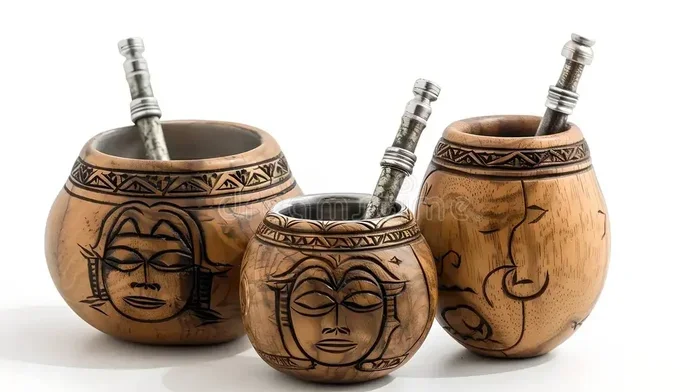
The mate gourd is the traditional vessel used to drink yerba mate. It is usually made from a dried gourd, though modern versions come in wood, metal, and ceramic. The bombilla is the special metal straw with a filter at the bottom. Together, the gourd and bombilla form the heart of the mate experience.
Here is how the ritual typically works:
- One person, called the cebador, prepares the mate and takes the first few sips.
- The cebador then passes the mate gourd to the next person in a circle.
- Each person drinks the entire serving and hands it back to the cebador.
- The same yerba is refilled and shared multiple times — sometimes up to 20 rounds.
This sharing ritual is a symbol of friendship and community. When you participate in it, you are joining something bigger than just a drink. You are connecting with people. And when you ask for the mate using the correct pronunciation, you show that you understand and respect this tradition.
A few key terms to know:
- Cebador — the person who prepares and serves the mate
- Bombilla — the metal straw used to drink yerba mate
- Mate gourd — the container that holds the yerba and hot water
- Tereré — cold yerba mate, popular in Paraguay
- Chimarrão — Brazilian-style yerba mate
Common Mistakes People Make When Saying Yerba Mate
Even with the best intentions, people make mistakes when they try to say yerba mate. Awareness of these errors helps you avoid them and sound more natural.
Mistake 1: Pronouncing the “Y” Like in English
This is the most common error. In English, “yerba” would sound like “YER-buh.” But in Spanish, the “y” in yerba is closer to a soft “sh” or an “eh” sound. Think of it as “SEHR-bah,” not “YER-buh.” This single adjustment makes a world of difference.
Mistake 2: Stressing the Wrong Syllable
English speakers often stress the wrong part of the word. Remember, the stress in yerba is on the first syllable (SEHR), and in mate it is also on the first syllable (MAH). Stressing the second syllable — “yehr-BAH” or “ma-TEH” — sounds unnatural to native speakers.
Mistake 3: Adding Extra Syllables
Some people add an extra “r” or “l” sound at the end of words. “Yerba” does not have a hidden “r” at the end. “Mate” does not end with a hard “t.” Keep it clean and simple. Two words, four syllables total. That is all you need.
Mistake 4: Confusing Mate with the English Word
In English, “mate” means a friend or a partner. In Spanish, mate refers to the drink and the gourd. Do not say “I am going to grab my mate” with an English accent and expect to sound natural. Keep the Spanish pronunciation clear and distinct.
Expert Insight: According to language coaches, the fastest way to fix pronunciation mistakes is to shadow native speakers. Listen to a recording of someone saying yerba mate, pause, and repeat immediately. Mimic their rhythm, tone, and speed. Do this for just five minutes a day, and you will see real improvement within a week.
Quick Tips to Perfect Your Yerba Mate Pronunciation
Ready to level up your yerba mate pronunciation? Here are some practical tips you can start using today.
- Listen and repeat: Find a YouTube video or audio clip of a native speaker saying how to say yerba mate. Repeat after them at least five times.
- Use a mirror: Watch your mouth shape as you say each syllable. The open “ah” sounds in “bah” and “mah” require a relaxed jaw.
- Practice with a friend: If you have a friend who speaks Spanish, ask them to correct you. Real-time feedback is incredibly valuable.
- Slow down: Speed comes naturally with practice. Start slow and focus on accuracy first.
- Use it in context: Order yerba mate at a restaurant or café whenever you can. Real-world practice builds real confidence.
- Remember the meaning: Knowing that “yerba” means herb and “mate” means gourd helps you remember the pronunciation. It gives the words context and meaning.
Quick Tip: Try saying “I love yerba mate” five times in a row before you go to bed tonight. By morning, it will feel much more natural.
Why Learning to Say Yerba Mate Opens Doors
When you take the time to learn how to say yerba mate properly, you are doing more than just improving your pronunciation. You are building a bridge to another culture. In Argentina and Uruguay, sharing mate is one of the most common ways people connect. If you can ask for it correctly, you instantly gain a bit of social credibility.
Travelers who make the effort to speak even a few words of the local language consistently report better experiences. Shopkeepers are friendlier. Café owners offer recommendations. Strangers start conversations. Language is the key to connection, and yerba mate is one of the best keys you can carry.
Beyond social benefits, there is a personal satisfaction that comes with getting it right. You learn something new. You challenge yourself. You step outside your comfort zone. These are the small victories that make travel and cultural exploration so rewarding.
The health benefits of yerba mate are another reason to embrace the drink and its name. Yerba mate is rich in antioxidants, vitamins, and minerals. It provides a gentle energy boost without the jitters of coffee. It supports digestion and can improve mental focus. So not only will you sound like a local, but you will also be doing something good for your body.
Conclusion
How to say yerba mate is a small but meaningful skill that pays off in big ways. You now know the correct pronunciation, the regional variations, the common mistakes to avoid, and the practical tips to keep improving. The phrase “SEHR-bah MAH-teh” is your new go-to, and with a little practice, it will roll off your tongue effortlessly.
Remember that yerba mate is more than a trendy beverage. It is a living tradition that connects millions of people across South America. Every time you say it correctly, you honor that tradition. You show respect. You open doors. So the next time you are at a café or sharing a mate gourd with friends, say it with confidence. You have got this.
Pick up your bombilla, take a sip, and enjoy the rich, earthy flavor of one of the world’s most beloved drinks. And now, you can say its name exactly the way the locals do. That is a win worth celebrating.
Frequently Asked Questions
Is it pronounced yerba mate or hierba mate?
The most widely accepted pronunciation is yerba mate. However, in some regions, you may hear “hierba mate” as an alternative. Both are derived from the same root word meaning herb, but yerba is the standard term used across most of South America and in international markets.
Do Argentines pronounce the “y” in yerba differently?
Yes, many Argentines pronounce the “y” as a soft “sh” sound due to a linguistic feature called yeísmo. This means “yerba” might sound closer to “sehr-bah” rather than “yehr-bah.” Both pronunciations are considered correct within Argentine Spanish.
Can I say yerba mate in English-speaking countries and still be correct?
Absolutely. The Spanish pronunciation is the standard worldwide, even in English-speaking countries. When you order yerba mate in a café in New York, London, or Sydney, using the Spanish pronunciation shows knowledge and respect for the drink’s origins.
What is the difference between mate and chimarrão?
Mate and chimarrão are essentially the same drink but from different countries. “Mate” is the term used in Argentina, Uruguay, and Paraguay, while “chimarrão” is the Brazilian term for yerba mate. The preparation and the type of yerba used may vary slightly between regions.
Is it rude to mispronounce yerba mate in South America?
Not at all. South Americans are generally warm and forgiving with language learners. However, making the effort to pronounce yerba mate correctly is always appreciated. It shows that you care about the culture and are willing to learn, which people genuinely value.
How can I practice saying yerba mate every day?
Try incorporating it into your daily routine. Say it out loud when you are making your morning yerba mate, when you are ordering at a café, or even when you are talking to yourself. Repetition is the fastest path to natural-sounding pronunciation. You can also record yourself and compare with native speaker audio online.
Frequently Asked Questions
What is how to say yerba mate?
how to say yerba mate is an important topic with many practical applications.



