

Learning how to say that in sign language is easier than you think. This guide walks you through basic signs, the alphabet, and real-world tips so you can start communicating with the deaf community right away. Whether you are a complete beginner or brushing up on your skills, you will find practical advice to build confidence fast.
Key Takeaways
- Sign language is a visual language that relies on hand shapes, movements, and facial expressions.
- Start with basic signs like “hello,” “thank you,” and “please” to build a strong foundation.
- Finger spelling is essential for spelling out words that do not have a dedicated sign.
- Facial expressions carry meaning and are just as important as hand gestures in deaf communication.
- Practice daily with real people or online resources to improve your fluency and confidence.
- Context matters — understanding the in situ meaning of a gesture helps you interpret it correctly.
- Join the deaf community to immerse yourself and learn how to sign naturally.
📑 Table of Contents
- What Is Sign Language and Why Should You Learn It?
- Basic Signs to Get You Started
- The Sign Language Alphabet and Finger Spelling
- How Facial Expressions Bring Signs to Life
- Common Phrases You Can Use Right Away
- Tips for Practicing and Improving Your Sign Language Skills
- Common Mistakes Beginners Make
- Final Thoughts
What Is Sign Language and Why Should You Learn It?
Sign language is a rich and complete visual language. It uses hand shapes, movements, and facial expressions to convey meaning. People in the deaf community have used it for centuries to communicate effectively.
When you wonder how to say that in sign language, you are stepping into a beautiful world of nonverbal communication. It is not just about moving your hands. Your face, body, and even your eyes play a huge role.
Learning sign language opens doors. You can connect with deaf friends, colleagues, and strangers. You also gain a deeper understanding of deaf culture and the experiences of the community. Many people find that picking up basic signs boosts their empathy and awareness.
The beauty of sign language is its accessibility. You do not need expensive classes to start. All you need is curiosity and a willingness to practice. This guide will show you exactly how to get going.
Why Context Matters in Sign Language
Here is something many beginners miss. The meaning of a sign can change based on context. This is similar to how words carry different weight depending on where and how they are used. Understanding the in situ meaning of a gesture helps you interpret it correctly in real conversations.
For example, the same hand movement might mean something different in one culture compared to another. Always pay attention to the situation and the person you are communicating with. Context gives signs their true power.
Basic Signs to Get You Started
Every journey begins with a single step. The same goes for learning sign language. Start with simple, everyday signs that you can use right away. These foundational signs build your confidence and give you quick wins.
Here are some essential signs every beginner should know:
- Hello — Wave your open hand near your forehead, fingers pointing up. Move it outward slightly.
- Thank you — Touch your chin with your fingertips, then move your hand forward slightly.
- Please — Place your flat hand on your chest and rub it in a circular motion.
- Yes — Make a fist and nod it up and down at the wrist.
- No — Tap your thumb and index fingers together, then open your hand outward.
- I love you — Raise your thumb, index finger, and pinky while keeping the other two fingers down.
These signs are simple but powerful. Practice each one slowly at first. Speed will come naturally as your muscle memory develops.
How to Practice Basic Signs Effectively
Repetition is your best friend when learning basic signs. Try saying the sign and the word out loud together. This dual coding helps your brain remember faster. You can also practice in front of a mirror to check your hand positioning.
Another great tip is to label objects around your house with sticky notes. Write the sign next to the English word. This creates a visual reminder that keeps you engaged throughout the day.
The Sign Language Alphabet and Finger Spelling
Finger spelling is a core part of how to say that in sign language. Not every word has its own unique sign. When you encounter names, places, or specific terms, you spell them out letter by letter.
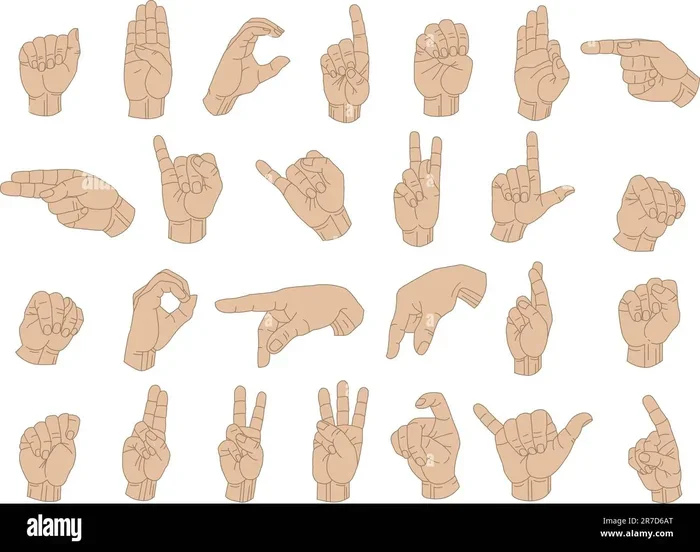
The ASL alphabet uses 26 hand shapes, one for each letter of the English alphabet. Here is a quick overview of how to position your hand for each letter:
- A — Make a fist with your thumb resting on the side of your index finger.
- B — Hold all four fingers flat against your palm with your thumb tucked in.
- C — Shape your hand into a C, fingers curved and slightly spread.
- D — Point your index finger up, with your middle finger and thumb touching it.
- E — Make a fist with your thumb tucked over your fingers.
- F — Touch the tip of your index finger to the tip of your thumb, other fingers up.
You get the idea. The full alphabet takes time to master. Start with the letters you use most often in your daily conversations. Names of your friends and family are great places to begin.
Common Mistakes in Finger Spelling
Many beginners bounce their hand up and down while spelling. This is a common mistake. Keep your hand steady and move it only slightly from side to side. Smooth, controlled movements make your spelling much easier to read.
Another mistake is looking at your own hand instead of facing your conversation partner. Keep your eyes on the person you are communicating with. This helps you pick up on their reactions and adjust in real time.
How Facial Expressions Bring Signs to Life
This might surprise you. Your face does more than smile or frown in sign language. Facial expressions are grammatical markers. They change the meaning of entire sentences. Without the right expression, your message can come across wrong.
For instance, raised eyebrows usually signal a yes or no question. Furrowed brows indicate a who, what, where, or when question. Your mouth shape also matters. A wide mouth can indicate something large, while pursed lips suggest something small.
Think of your face as a second set of hands. When you learn how to say that in sign language, you are really learning to use your entire body as a communication tool. This is what makes sign language so expressive and visually stunning.
Why Body Language Complements Sign Language
Your body position adds layers of meaning. Leaning forward shows interest. Shifting your weight can indicate a change in topic. Even the direction you face matters. These elements work together to create a complete picture of your message.
When you watch experienced signers, notice how their whole body moves. It is not just the hands. The shoulders, head, and even the feet contribute. This holistic approach is what gives sign language its natural flow and rhythm.
Common Phrases You Can Use Right Away
Now that you know the basics, let us put them together. Here are some common phrases that will help you navigate everyday conversations in sign language:
- Nice to meet you — Combine the signs for “nice,” “meet,” and “you” in sequence.
- How are you? — Point to the person, then sign “how” by moving your hands inward with palms up.
- I do not understand — Sign “I,” then shake your head slightly while signing “understand” and adding a negative motion.
- Can you help me? — Sign “can,” then “you,” followed by “help” with both hands moving toward you.
- What is your name? — Sign “what” by raising your eyebrows and hands, then point to the person and sign “name.”
These phrases are practical and immediately useful. Try using them with a friend who knows sign language or practice them on your own. The more you use them, the more natural they will feel.
Finding the Right Sign for Complex Ideas
Sometimes you need to express something that does not have a single sign. This is where understanding the in situ meaning becomes critical. You break the idea into smaller parts and sign each component separately. For example, to sign “I need to go to the store,” you would sign “I,” “need,” “go,” “store” in sequence.
Building sentences this way takes practice. Start with simple structures and gradually work up to more complex ones. Over time, you will develop a natural rhythm that feels comfortable and clear.
Tips for Practicing and Improving Your Sign Language Skills
Consistency beats intensity when it comes to learning sign language. Short daily practice sessions work better than one long session per week. Even 15 minutes a day can lead to noticeable progress over time.
Here are some practical tips to accelerate your learning:
- Watch and imitate — Follow along with sign language videos online. Pause and repeat each sign until it feels natural.
- Find a practice partner — Connect with someone who is deaf or hard of hearing. Real conversation is the best teacher.
- Use a sign language dictionary — Apps and websites let you look up signs quickly and see slow-motion demonstrations.
- Join a local class or group — Community centers and universities often offer beginner-friendly sign language courses.
- Record yourself — Film your signing and compare it to professional examples. This helps you spot areas for improvement.
- Immerse yourself — Attend deaf community events. Surrounding yourself with fluent signers accelerates your growth.
Remember, everyone learns at their own pace. Do not get discouraged if a sign feels awkward at first. With patience and regular practice, your skills will improve steadily.
How to Say That in Sign Language: Putting It All Together
The phrase “how to say that in sign language” itself can be broken down and signed. You would use the signs for “how,” “say,” “that,” and “sign language” in sequence. This is a perfect exercise to try right now.
Start slow. Focus on accuracy over speed. As you grow more comfortable, your movements will become smoother and faster. The goal is clear communication, not perfection.
One of the most rewarding parts of learning sign language is the connections you make. You will find that people appreciate your effort deeply. Even a few basic signs can break down barriers and build bridges between communities.
Common Mistakes Beginners Make
Every learner hits a few bumps along the way. Being aware of common pitfalls helps you avoid them. Here are some mistakes to watch out for:
- Ignoring facial expressions — Without them, your signs lose grammatical context and meaning.
- Signing too fast — Speed does not equal fluency. Clarity always comes first.
- Only using one hand — Many signs require both hands working together. Practice bilateral coordination.
- Not learning deaf culture — Sign language is deeply tied to the culture and identity of the deaf community.
- Skipping practice — Like any language, sign language fades without regular use. Stay consistent.
Avoiding these mistakes will save you time and frustration. Focus on building good habits from the very beginning.
Final Thoughts
Learning how to say that in sign language is a journey worth taking. It is a skill that connects you to a vibrant and welcoming community. From basic greetings to full conversations, every sign you learn brings you closer to meaningful communication.
Start small. Be patient. Celebrate your progress. The world of sign language is vast and rewarding, and you are already on the right path. Keep practicing, keep exploring, and most importantly, enjoy the process.
Your hands can do amazing things. Let them tell stories, share feelings, and build connections that words alone cannot convey. The journey of learning sign language starts with a single sign. Make it today.
Frequently Asked Questions
Is sign language the same around the world?
No, sign languages vary by country and region. American Sign Language (ASL) is different from British Sign Language (BSL) and others. Each sign language has its own grammar, vocabulary, and cultural nuances. However, many basic signs share similarities across different systems.
How long does it take to learn sign language?
It depends on your goals and how much you practice. Basic conversational skills can develop in a few months of regular practice. Achieving fluency usually takes one to two years of consistent study and real-world use. Like any language, the more you immerse yourself, the faster you improve.
Can children learn sign language easily?
Yes, children are remarkably quick at picking up sign language. Their brains are highly adaptable, and they often learn through play and imitation. Many parents teach their babies basic signs to improve communication before verbal skills develop. Early exposure builds a strong foundation.
Do I need to be deaf to learn sign language?
Absolutely not. People of all hearing abilities learn sign language. In fact, hearing individuals who learn sign language often become valuable bridges within the deaf community. The motivation to learn matters far more than your hearing ability.
What is the best way to practice sign language alone?
Watching videos and mirroring the signs is one of the best solo practices. You can also describe your daily activities using signs. Recording yourself and reviewing the footage helps you spot areas to improve. Consistency and self-awareness drive progress.
How important are facial expressions in sign language?
They are extremely important. Facial expressions serve as grammatical markers that change the meaning of signs and sentences. A sign that looks neutral might mean something entirely different with the right eyebrow raise or mouth shape. Never underestimate the power of your face in deaf communication.
=== CONCLUSION ===
Learning how to say that in sign language opens up a world of possibility. You now have the basic signs, finger spelling skills, and practical tips to start communicating today. Remember to practice consistently, pay attention to context, and embrace the rich culture behind the language. Every sign you learn is a step toward deeper connection and understanding. Keep going, and enjoy the journey.



