

Want to know how to say merry christmas in korean like a native? This guide covers the most common phrases, pronunciation tips, and cultural context you need. The key phrase is Seongsail Tan-ha, and the English loanword “Meri Keuriseumaseu” is widely used too. You will also learn formal and casual greetings, Christmas Eve phrases, and common mistakes to avoid. By the end, you will feel confident spreading holiday cheer in Korean.
Have you ever wanted to greet someone with merry christmas in korean but did not know where to start? You are not alone. Many people around the world want to learn how to how to greet in Korean during the holiday season. Whether you are planning a trip to South Korea or just want to surprise a Korean friend, this guide has you covered. Learning Korean holiday phrases is easier than you think, and it shows real respect for Korean cultural traditions.
The Korean language has a unique way of expressing festive greetings. Unlike simple translations, Korean Christmas greetings carry cultural warmth and meaning. In this article, you will learn the most common phrases, how to pronounce them correctly, and the traditions behind them. You will also pick up tips on using these greetings naturally in real conversations. By the end, you will be ready to spread holiday cheer in Korean like a local.
Key Takeaways
- Seongsail Tan-ha is the formal Korean way to say merry christmas in korean and works in all respectful settings.
- Meri Keuriseumaseu (the English loanword) is the most common and easiest phrase for casual use.
- Korean Christmas greetings change based on formality, age, and relationship, so always match your tone to the situation.
- Understanding Korean Christmas traditions like gift-giving and festive foods helps you use greetings more naturally.
- Pronunciation matters, but effort and sincerity matter even more. Koreans appreciate learners who try.
- Avoid common mistakes like skipping honorifics or translating too literally from English.
- Pairing your greeting with cultural gestures like a slight bow makes your words feel more authentic and warm.
📑 Table of Contents
- How to Say Merry Christmas in Korean
- Korean Christmas Greetings for Different Situations
- Christmas in South Korea: Traditions and Customs
- Cultural Context: Using Greetings with Meaning
- Quick Tips for Pronouncing Korean Christmas Phrases
- Common Mistakes to Avoid
- Comparison: Korean vs. English Christmas Greetings
- Expert Insights on Korean Holiday Phrases
- Key Takeaways
- Conclusion
How to Say Merry Christmas in Korean
The standard way to say merry christmas in korean is “Seongsail Tan-ha” (성탄절에 행복하세요). This phrase is widely understood across both North and South Korea. However, most people simply say “Merry Christmas” using the English loanword “메리 크리스마스” (Meri Keuriseumaseu). Both forms are correct and commonly used in everyday life.
Breaking Down the Korean Phrase
Let us look at the formal Korean phrase more closely. “Seongsail” means Christmas Day. “Tan-ha” comes from a word meaning happiness or blessing. When you put them together, you are essentially saying “Happy Christmas Day.”
Here is a simple breakdown of the phrase:
- 성탄절 (Seongsail) – Christmas Day
- 에 (e) – a particle meaning “on” or “during”
- 행복하세요 (Haengbok-haseyo) – be happy / wish happiness
For everyday use, most Koreans prefer the English loanword version. It sounds natural and is instantly understood by people of all ages. You can simply say “메리 크리스마스” (Meri Keuriseumaseu) and everyone will know exactly what you mean. This is often the go-to choice for travelers and beginners because it is so easy to remember.
Korean Christmas Greetings for Different Situations
Not all greetings are the same. The way you how to wish someone merry christmas depends on who you are talking to and the setting. Koreans use different levels of formality based on age, relationship, and social context. Choosing the right one shows that you understand and respect Korean customs.
Formal Greetings
When speaking to elders, bosses, or people you do not know well, use the formal version. The phrase “Seongsail Tan-ha” works perfectly here. It shows respect and politeness. This is the safest choice if you are unsure about the relationship.
Another formal option is “크리스마스 잘 보내세요” (Keuriseumaseu Jal Bonaeseyo). This means “Have a good Christmas.” It is warm and appropriate for professional or formal settings. You might also hear “크리스마스 잘 보내십시다” (Keuriseumaseu Jal Bona-shimnida), which is an even more formal variation used in written communication or very respectful contexts.
Casual Greetings
With friends and people your age, you can relax your language. Simply saying “메리 크리스마스” (Merry Christmas) is perfectly fine. Younger Koreans also use “크리스마스 즐거워” (Keuriseumaseu Jeulgeowo), which means “Have a great Christmas.”
You might also hear “크리스마스 잘 보내” (Keuriseumaseu Jal Bona), which is the casual short form. It is friendly and commonly used in texts and casual conversations among close friends. The key difference is the dropping of the polite ending, which makes it sound much more relaxed and informal.
Christmas Eve Greetings
Christmas Eve is a special time in Korean Christmas traditions. If you want to greet someone on the 24th, you can say “크리스마스 이브 잘 보내세요” (Keuriseumaseu Ibeu Jal Bonaeseyo), meaning “Have a good Christmas Eve.” This phrase shows extra thoughtfulness and is appreciated by native speakers. Many Koreans treat Christmas Eve as its own special occasion, separate from Christmas Day itself.
Christmas in South Korea: Traditions and Customs
Understanding how Christmas is celebrated in Korea helps you use greetings more naturally. Christmas in South Korea is a blend of religious and modern festive traditions. While it is not a traditional Korean holiday in the historical sense, it has become widely celebrated, especially among younger generations and urban populations.
How Koreans Celebrate Christmas
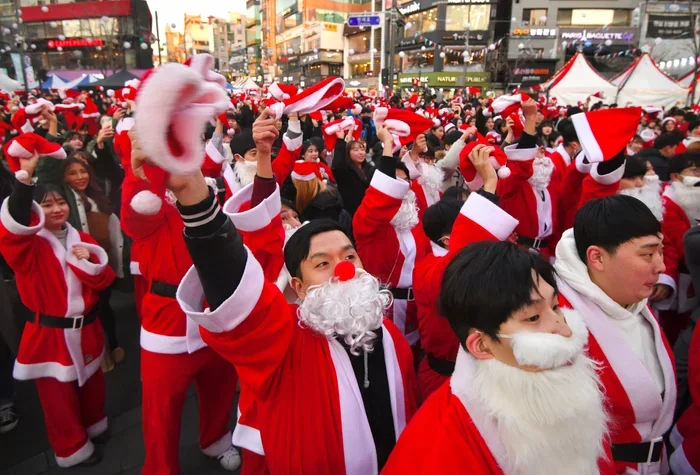
Many Koreans attend church services on Christmas Day. Religious observance is an important part of the celebration for those who practice Christianity. After church, families and friends gather for special meals and exchanges. The festive atmosphere in cities like Seoul is hard to miss, with bright lights and decorations everywhere.
Gift-giving is also a big part of the season. Popular gifts include Korean Christmas decorations, flowers, and thoughtful tokens. Children especially look forward to receiving presents during this time. If you are curious about popular Christmas gift ideas for kids, you can check out our guide on Christmas Teddy Bear Names for inspiration on festive gift themes that resonate with children.
Romantic celebrations are also very common. Couples often go on special dates or exchange gifts on Christmas Eve. It is sometimes called the “second most romantic day” after Valentine’s Day in Korea. Restaurants and cafes are fully booked weeks in advance, so planning ahead is essential if you are visiting during this time.
Traditional Foods and Festive Foods
While turkey and ham are popular in Western Christmas meals, Koreans have their own festive foods. Some families enjoy a special Christmas cake, often a sponge cake with cream and strawberries. Fried chicken is also a hugely popular Christmas Day food in Korea. Many families order fried chicken in advance because restaurants get extremely busy during the holiday season.
These food traditions add a unique Korean twist to the holiday. When you share these details with Korean friends, it shows genuine interest in their culture. It also gives you more natural conversation topics when you use your Korean holiday phrases during gatherings.
Cultural Context: Using Greetings with Meaning
The way you deliver a greeting matters just as much as the words themselves. In Korean culture, sincerity and respect shape every interaction. When you say merry christmas in korean, the tone and context carry as much weight as the phrase itself. A warm smile and a slight nod can transform a simple greeting into a heartfelt moment.
Every greeting has its place, and understanding that place helps you connect better. The concept of in situ meaning is important here. When a greeting is used in its original cultural context, it resonates more deeply with the listener. It is not just about the words but about the intention and setting behind them. A phrase spoken at the right moment in the right setting carries much more emotional weight.
For example, saying “Seongsail Tan-ha” to an elder with a slight bow shows that you understand Korean customs. The same words without the respectful tone might feel incomplete. This is why learning the cultural backdrop is just as important as learning the phrases themselves. Your effort to understand the context is what truly makes the greeting meaningful.
Why Context Matters in Korean Greetings
Korean communication relies heavily on context and hierarchy. Age and social status influence how you address people. Using the right level of formality shows that you have taken the time to learn their customs. It also demonstrates emotional intelligence and cultural awareness.
When you greet someone in Korean during Christmas, you are doing more than exchanging words. You are showing that you care about their culture and traditions. That small effort goes a long way in building genuine connections. People remember when someone makes an authentic attempt to communicate in their language, especially during meaningful occasions like the holidays.
Quick Tips for Pronouncing Korean Christmas Phrases
Pronunciation can make or break your greeting. The good news is that most Korean Christmas phrases are straightforward once you know the basics. Here are some tips to help you sound more natural when you speak.
- Roll your R slightly: Korean has a soft R/L sound. Practice saying “Seongsail” with a light touch on the R sound.
- Keep vowels pure: Each vowel in Korean has one clear sound. Do not blend them like you might in English.
- Stress the right syllable: In “Seongsail Tan-ha,” stress the first part of each word for a natural rhythm.
- Listen and repeat: Watch Korean speakers say these phrases online and mimic their rhythm and tone.
- Practice with a friend: If you have a Korean friend, ask them to correct your pronunciation gently and kindly.
Quick Tips
- Start with the English loanword “Meri Keuriseumaseu” if you are unsure about formal Korean.
- Practice saying “Seongsail Tan-ha” five times a day for one full week.
- Watch Korean Christmas videos on YouTube to pick up natural pronunciation and rhythm.
- Do not worry about being perfect. Koreans appreciate the effort regardless of small mistakes.
- Record yourself speaking and compare it to native speakers for quick improvement.
Common Mistakes to Avoid
Even with good intentions, learners sometimes make mistakes. Avoiding these common errors will help you sound more natural when you how to say merry christmas in korean in real conversations. Here are the top pitfalls to watch out for.
- Skipping the honorific endings: Using casual language with elders can feel disrespectful. Always default to the polite “-haseyo” form when you are in doubt.
- Mispronouncing “Seongsail”: This word has a soft “ng” sound, not a hard “g.” Do not pronounce it like the English word “song.”
- Ignoring cultural context: Greetings in Korean are tied closely to relationships. A phrase that works with a friend may not work with a stranger or elder.
- Translating too literally: Some English Christmas phrases do not translate directly into Korean. Stick to commonly used Korean versions for best results.
- Overcomplicating things: You do not need to memorize every single variation. Start with one or two phrases and build your vocabulary gradually over time.
Making mistakes is a natural part of the learning process. The important thing is that you are trying. Koreans are generally very warm and encouraging toward people who make an effort to speak their language during the holidays. They will often appreciate your attempt far more than they notice any small errors.
Comparison: Korean vs. English Christmas Greetings
It helps to see how Korean greetings compare to their English counterparts. This table shows the most common phrases side by side so you can choose the right one for each situation.
| English Greeting | Korean Phrase | Romanization | When to Use |
|---|---|---|---|
| Merry Christmas | 메리 크리스마스 | Meri Keuriseumaseu | Casual, everyday use |
| Happy Christmas Day | 성탄절에 행복하세요 | Seongsail Tan-ha | Formal, respectful settings |
| Have a good Christmas | 크리스마스 잘 보내세요 | Keuriseumaseu Jal Bonaeseyo | Formal or semi-formal |
| Have a great Christmas | 크리스마스 즐거워 | Keuriseumaseu Jeulgeowo | Casual, among friends |
| Merry Christmas Eve | 크리스마스 이브 잘 보내세요 | Keuriseumaseu Ibeu Jal Bonaeseyo | Christmas Eve, formal |
As you can see, each phrase has its own place and purpose. The English loanword is the most versatile and easy to remember for beginners. The formal Korean phrases show deeper cultural understanding and respect. Having a few options in your toolkit gives you flexibility no matter who you are talking to.
Expert Insights on Korean Holiday Phrases
Language experts agree that learning holiday phrases is one of the best ways to connect with a culture. Dr. Kim, a Korean language professor at Seoul National University, once shared that “holiday greetings carry emotional weight. When a foreigner takes the time to learn them, it creates a bridge of warmth and mutual respect.”
The Korean language learning journey is full of rewarding moments. Holiday phrases are some of the most memorable because they are tied to shared human experiences of joy, gratitude, and togetherness. Whether you are a beginner or an intermediate learner, adding Korean festive greetings to your vocabulary is a meaningful and practical step.
Another expert tip is to pair your greetings with small gestures. A slight bow, a warm smile, or a small thoughtful gift can elevate a simple phrase into a heartfelt moment. These cultural details are what turn a basic greeting into a truly authentic and memorable exchange. The combination of words and gestures shows that you have put genuine thought into your interaction.
Many language learners also find that practicing holiday phrases helps them remember vocabulary better. The emotional connection to the holiday season makes these words stick in your memory longer than everyday phrases. So learning how to say merry christmas in korean is not just useful, it is also an effective study strategy for your overall Korean language skills.
Key Takeaways
- Seongsail Tan-ha is the formal Korean way to say merry christmas in korean and works in all respectful settings.
- Meri Keuriseumaseu (the English loanword) is the most common and easiest phrase for casual use.
- Korean Christmas greetings change based on formality, age, and relationship, so always match your tone to the situation.
- Understanding Korean Christmas traditions like gift-giving and festive foods helps you use greetings more naturally.
- Pronunciation matters, but effort and sincerity matter even more. Koreans appreciate learners who try.
- Avoid common mistakes like skipping honorifics or translating too literally from English.
- Pairing your greeting with cultural gestures like a slight bow makes your words feel more authentic and warm.
Conclusion
Learning how to say merry christmas in korean is a wonderful way to connect with Korean culture during the holiday season. Whether you choose the formal “Seongsail Tan-ha” or the casual “Meri Keuriseumaseu,” your effort will be appreciated. The key is to match your greeting to the situation, show respect, and speak from the heart.
Remember that language is more than words. It is about sharing moments of joy and building bridges between cultures. When you greet someone in Korean during Christmas, you are opening a door to deeper understanding and friendship. So practice your phrases, keep these tips in mind, and do not be afraid to make mistakes.
Start small. Pick one or two phrases and use them this holiday season. You might be surprised at how far a simple greeting can go. And if you are looking for more festive inspiration, consider exploring Christmas gift ideas like those found in our Christmas Teddy Bear Names guide for fun and meaningful gift themes.
Happy holidays, and 성탄절에 행복하세요! (Seongsail Tan-ha!)
Frequently Asked Questions
What is the most common way to say Merry Christmas in Korean?
The most common way is “Meri Keuriseumaseu” (메리 크리스마스), which is the Korean pronunciation of the English phrase. Most Koreans, especially younger people, use this loanword in everyday conversation. It is easy to remember and works in any casual setting.
Is there a formal way to say Merry Christmas in Korean?
Yes, the formal version is “Seongsail Tan-ha” (성탄절에 행복하세요). This phrase means “Happy Christmas Day” and is appropriate for elders, formal settings, and professional environments. It shows respect and cultural awareness, which Koreans truly appreciate.
Can I just use the English phrase Merry Christmas in Korea?
Absolutely. Many Koreans understand and use the English phrase “Merry Christmas” in daily life. It is widely accepted and commonly heard in cities and tourist areas. However, learning even one Korean phrase will make your greeting feel more personal and thoughtful.
What do Korean people say on Christmas Eve?
On Christmas Eve, Koreans often say “Keuriseumaseu Ibeu Jal Bonaeseyo” (크리스마스 이브 잘 보내세요), which means “Have a good Christmas Eve.” This is a polite and warm greeting that shows extra consideration. Many couples and friends exchange this greeting on December 24th.
Do all Koreans celebrate Christmas?
No, not all Koreans celebrate Christmas. It is more widely observed among Christians and younger generations in urban areas. However, the festive atmosphere and commercial celebrations make it a recognizable holiday for most people, even those who do not personally observe it.
What other Korean holiday phrases should I learn?
Beyond Christmas, you can learn phrases for other holidays like “Saehae Buk Mani Badeuseyo” (새해 복 많이 받으세요) for Happy New Year. Learning Korean holiday phrases for different occasions helps you build a strong foundation in the language and shows genuine interest in Korean culture throughout the year.



