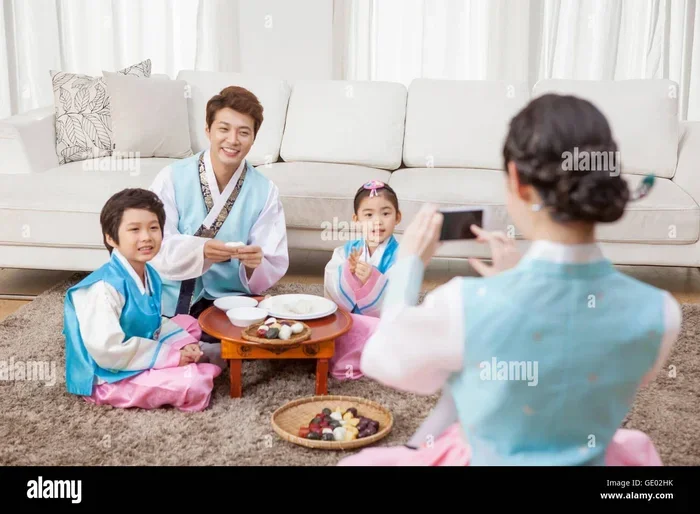

Learning how to say mom in Korean is easier than you think, but the right word depends on your relationship, formality level, and regional background. Korean has multiple words for mom, each carrying unique cultural weight and emotional depth. By the end of this guide, you will know exactly which term to use and when to use it.
If you have ever wondered how to say mom in Korean, you are not alone. Millions of people around the world are learning Korean every single day, and family words are usually the very first things they want to know. The Korean language gives you more than one way to call your mother, and each version carries its own level of respect, warmth, and cultural meaning.
Understanding these differences is not just about memorizing vocabulary. It is about stepping into a whole new way of thinking about family, respect, and love. Korean culture places a deep value on honorifics and social relationships, and the words we use for our parents reflect that beautifully. In this article, we will walk you through every common term, when to use each one, and how native speakers really talk about their mothers every day.
We will also explore regional dialects, common mistakes, and practical tips that will help you sound natural from day one. Whether you are planning a trip to Korea, talking to a Korean friend, or simply curious about the language, this guide has everything you need. Let us dive right in and explore how to say mom in Korean the way real native speakers do.
Key Takeaways
- 아마 (Amma) is the most common informal way Korean people call their moms in daily life.
- 에미 (Eomeoni) is the formal and respectful term used in written and public settings.
- Korean has dialect variations that change how mom is pronounced and spelled across regions.
- The word you choose reflects Korean cultural values around respect, hierarchy, and family bonds.
- Using the wrong form can feel awkward, so understanding context is just as important as memorizing the word.
- Native speakers often mix informal and formal terms depending on who is listening.
- Practice with real-life examples to sound natural and confident when speaking Korean.
📑 Table of Contents
- The Most Common Ways to Say Mom in Korean
- How Korean Culture Shapes the Way We Say Mom
- Regional and Dialect Variations for Mom
- Common Mistakes When Saying Mom in Korean
- Quick Tips for Remembering Korean Words for Mom
- How Native Speakers Really Use These Words
- Why Learning Korean Family Words Matters
- Conclusion
The Most Common Ways to Say Mom in Korean
Korean offers several words for mom, and each one fits a different situation. The word you pick depends on who is listening, where you are, and how casual or formal the moment is. Let us look at the most popular options and break them down one by one.
아마 (Amma) The Go-To Informal Word
When Korean children call their mothers at home, they almost always use the word 아마 (amma). This is the casual, everyday, and deeply affectionate way to say mom. It is warm, familiar, and completely natural in family settings. Think of it as the equivalent of saying “Mom” in English when you are sitting at the dinner table with your family.
Adults also use 아마 sometimes, but usually only in very private or emotional moments. For example, a grown daughter might whisper 아마 when she is feeling grateful or nostalgic. The word carries a strong sense of closeness and personal connection. It is never used in formal settings or with people outside the family.
Here is a quick look at how 아마 fits into everyday Korean conversation:
- 아마, 저기 봐! (Amma, jeogi bwa!) — Mom, look over there!
- 아마가 맛있는 밥을 만들었어. (Amma-ga masisseun bapeul mandeureosseo.) — Mom made delicious food.
- 아마한테 전화할 거야. (Amma-hante jeonhwahal geoya.) — I am going to call Mom.
As you can see, 아마 works beautifully in casual sentences. It feels effortless and genuine, which is exactly how native speakers use it. If you want to sound natural in informal Korean conversations, this is the word to start with.
에미 (Eomeoni) The Respectful and Formal Term
Now let us talk about 에미 (eomeoni). This is the formal way to refer to someone else’s mother or your own mother in respectful contexts. You would use 에미 when speaking to elders, in written Korean, or in public situations where politeness matters.
In Korean culture, respecting your parents and other adults is deeply rooted in daily life. Using 에미 shows that you understand and honor this value. It is the kind of word you might hear in a news broadcast, a formal letter, or a respectful conversation with someone older than you.
Here are some examples of how 에미 appears in real sentences:
- 에미께서 별세하셨습니다. (Eomeoni-kkeseo byeolse-hasyeosseumnida.) — Mother has passed away. (Formal)
- 그분의 에미는 아주 부드러워요. (Geubun-ui eomeoni-neun aju budeureowoyo.) — His mother is very kind.
Notice how 에미 always carries a sense of distance and respect. It is not a word you would use casually at home with your own mother. The formality of the word is intentional, and it reflects the deep Korean emphasis on proper speech levels and social awareness.
How Korean Culture Shapes the Way We Say Mom
To truly understand how to say mom in Korean, you need to understand a little bit about Korean culture itself. Language does not exist in a vacuum, and Korean words for family are shaped by centuries of tradition, Confucian values, and deep respect for elders.
In Korea, family relationships are structured around clear roles and responsibilities. Children are taught from a very young age to honor their parents, listen to their elders, and use respectful language at all times. This cultural foundation directly influences the vocabulary people use. The word you choose for mom is not just a label — it is a reflection of your relationship, your social awareness, and your emotional connection.
When Korean speakers switch between 아마 and 에미, they are doing more than just changing a word. They are signaling their awareness of the social context. This kind of flexibility is one of the most fascinating aspects of the Korean language. It shows how deeply language and culture are intertwined. In many ways, learning these family words is like gaining a small window into the Korean worldview.
Some learners find this complexity overwhelming at first. But once you understand the logic behind it, everything starts to make sense. Every word has a purpose, and every form carries meaning. This is what makes Korean such a rich and beautiful language to learn.
Regional and Dialect Variations for Mom
Korea is a diverse country with several regional dialects, and these differences extend to how people say mom. While the standard language uses 아마 and 에미, dialects from different provinces can offer unique and interesting variations.
Gyeongsang Dialect
In the Gyeongsang region of southeastern Korea, people sometimes pronounce mom differently than in the standard language. The informal version might sound softer or carry a distinct regional accent that locals immediately recognize. These dialectal differences are a source of pride and identity for many Koreans.
Jeolla Dialect
The Jeolla province in southwestern Korea also has its own charm when it comes to family words. Some speakers in this region use slightly different vowel sounds or add local inflections that make the word for mom sound uniquely warm and familiar. These variations are a living reminder of Korea’s rich linguistic heritage.
Understanding these dialect differences can be a fun and rewarding part of your Korean language journey. It also shows respect for the diverse communities within Korea. Even if you only learn the standard forms, knowing that regional variations exist will make your understanding of the language deeper and more nuanced.
Common Mistakes When Saying Mom in Korean
Learning how to say mom in Korean is straightforward, but mistakes do happen. Here are some of the most common errors that Korean language learners make, along with simple ways to avoid them.
- Using 아마 in formal situations. This is probably the biggest mistake. 아마 is for private, casual, and family-only moments. Using it in a formal setting can come across as too familiar or disrespectful.
- Confusing 에미 with 아마. Some beginners mix up the formal and informal terms. Remember that 에미 is always respectful, while 아마 is always casual.
- Ignoring speech levels. Korean has multiple speech levels, and the way you attach particles and verbs changes depending on the formality of the word you are using. Ignoring this can make your sentences sound awkward or even rude.
- Overusing English loanwords. Some learners try to say “mom” with an English accent in Korean. While Koreans understand what you mean, using the native Korean words shows effort and respect for the language.
- Forgetting about context. The right word depends on who you are talking to and where you are. Always consider the social situation before you speak.
Avoiding these mistakes will help you sound much more natural and confident. The key is to practice in real conversations and pay attention to how native speakers use these words in different settings.
Quick Tips for Remembering Korean Words for Mom
Memorizing new vocabulary can be challenging, but these quick tips will make it easier to remember how to say mom in Korean and keep the words fresh in your mind.
- Use repetition daily. Say 아마 and 에미 out loud several times a day. Repetition is one of the most powerful tools for memory.
- Create flashcards. Write the Korean word on one side and the English meaning on the other. Review them during short breaks throughout your day.
- Watch Korean dramas and variety shows. Pay attention to how characters address their mothers. You will hear 아마 and 에미 used naturally in real-life-like situations.
- Practice with a language partner. Find a Korean friend or language exchange partner and ask them to correct your pronunciation. Real practice beats memorization every time.
- Connect words to emotions. Think about your own mother or a mother figure you love. When you say 아마, imagine calling out to her in a warm, familiar way. This emotional connection makes the word stick.
- Explore the in situ meaning of these words. Understanding how these words function in real Korean family settings helps you remember them better than rote memorization alone.
These tips work because they engage different parts of your brain. You are not just memorizing a word. You are building a real connection to it. Over time, 아마 and 에미 will feel natural and automatic, just like they do for native speakers.
How Native Speakers Really Use These Words
In everyday life, Korean speakers are quite flexible with how they refer to their mothers. A young child might run up to their mother and shout 아마 with pure excitement. A teenager might text a friend about their 에미 making dinner. An adult might introduce their mother to a colleague using 에미 to show proper respect.
What is really interesting is how native speakers switch between these terms depending on the situation. This code-switching happens naturally and effortlessly for Koreans, but it can be confusing for language learners. The best way to get comfortable with this is to immerse yourself in the language as much as possible. Listen to Korean podcasts, watch Korean television shows, and try to pick up on the subtle cues that tell you which word to use and when.
Over time, you will start to develop an instinct for the right word in the right moment. This is the real goal of language learning — not just knowing the words, but feeling comfortable using them in real life. And when it comes to something as personal and meaningful as how to say mom in Korean, that comfort really matters.
Why Learning Korean Family Words Matters
Family words are more than just vocabulary in Korean. They are a window into the heart of Korean society. The way Koreans refer to their parents, grandparents, siblings, and extended family tells you a great deal about their values, their history, and their daily lives.
When you learn how to say mom in Korean, you are also learning about respect, gratitude, and the deep bonds that Korean families share. These words carry generations of cultural meaning, and using them correctly shows that you care about the language and the people who speak it.
Whether you are a complete beginner or an intermediate learner, taking the time to understand these family terms will accelerate your progress. You will sound more natural, you will connect better with Korean speakers, and you will gain a deeper appreciation for one of the most beautiful aspects of the Korean language.
So take your time, practice regularly, and enjoy the journey. Learning how to say mom in Korean is not just a language exercise. It is a small but meaningful step toward understanding an entire culture and the people who live in it.
Conclusion
We have covered a lot of ground in this guide on how to say mom in Korean. From the informal and beloved 아마 to the respectful and formal 에미, each word has its own place and purpose in Korean life. You have also explored regional dialects, common mistakes, quick memory tips, and the cultural context that gives these words their real meaning.
The beauty of the Korean language is that every word tells a story, and the words for mom are no exception. They reflect love, respect, family bonds, and centuries of cultural tradition. By learning these terms and using them correctly, you are not just expanding your vocabulary. You are showing respect for a rich and vibrant culture.
Now it is your turn. Pick up the word 아마 and say it out loud. Feel how it sounds. Imagine calling out to someone you love with that word. That is the real magic of language learning. It connects you to people, to cultures, and to moments that truly matter. Keep practicing, stay curious, and enjoy every step of your Korean language journey.
Frequently Asked Questions
What is the most common way to say mom in Korean?
The most common and widely used word is 아마 (amma). It is the informal, everyday term that Korean children use at home and that adults use in private and emotional moments. It is warm, natural, and perfect for casual conversations with people you trust.
Is 에미 the same as 아마?
No, they are not the same. 에미 (eomeoni) is the formal and respectful way to refer to a mother, while 아마 is the casual and affectionate term. You would use 에미 in public, written, or formal settings, and 아마 at home or with close family members.
Can I use 아마 when talking to my Korean friend about their mom?
It depends on the situation. If you are speaking casually and your friend is comfortable with informal language, using 아마 is perfectly fine. However, if the conversation is more formal or your friend is older, it is safer to use 에미 or other respectful terms to show proper courtesy.
Are there other words for mom in Korean besides 아마 and 에미?
Yes, there are additional terms and dialect variations. Some regions have their own unique pronunciations, and there are also older or literary forms of the word. However, 아마 and 에미 are by far the most commonly used and widely understood terms across all of Korea.
How can I practice saying mom in Korean naturally?
The best way to practice is through real conversation and immersion. Watch Korean dramas, listen to Korean podcasts, and try to use the words in your daily practice. Repeating the words out loud, creating flashcards, and chatting with native speakers will all help you sound more natural over time.
Does the word for mom change based on the speaker’s age in Korean?
Yes, it does. Younger Korean speakers typically use 아마 in casual settings, while older speakers or those in formal contexts prefer 에미. The speaker’s age, the listener’s age, and the social situation all play a role in determining which word is appropriate. This reflects the Korean emphasis on social hierarchy and respectful communication.