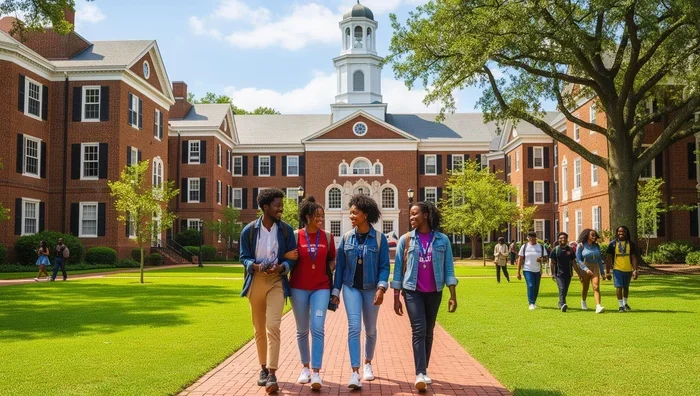

The HBCU meaning refers to Historically Black Colleges and Universities, institutions founded to provide higher education to Black Americans when they were excluded from other schools. These HBCU schools have produced countless leaders, innovators, and changemakers who shaped the nation. Understanding the HBCU meaning helps us appreciate the role these institutions play in academic excellence and community empowerment.
You have probably heard the term HBCU thrown around a lot. Maybe you saw it on social media. Maybe you heard it from a friend or a news anchor. But what does HBCU actually mean? The HBCU meaning is simple on the surface. It stands for Historically Black Colleges and Universities. But the story behind that meaning runs deep. These schools carry a powerful legacy. They have changed lives. They have broken barriers. And they continue to shape the future of education in America today.
In this article, we will break down the HBCU meaning in plain language. We will explore where these schools came from. We will look at why they still matter. We will also share practical tips for anyone considering an HBCU school. Whether you are a student, a parent, or just curious, this guide has something for you. Let us dive in.
Key Takeaways
- HBCU meaning: Historically Black Colleges and Universities, institutions created to educate Black Americans during segregation.
- Rich legacy: HBCUs have a long history of producing influential graduates in every field imaginable.
- Cultural impact: HBCU culture includes vibrant traditions, marching bands, and strong campus communities.
- Scholarship opportunities: Many HBCUs offer generous financial aid and HBCU scholarships to support students.
- Still relevant today: HBCUs continue to serve diverse student populations and drive innovation in higher education.
- Top schools matter: Knowing the HBCU list helps students find the right fit for their goals.
- Community-driven: HBCUs build strong alumni networks and foster lifelong connections among HBCU graduates.
📑 Table of Contents
- What Does HBCU Stand For?
- A Brief History of HBCUs
- Why HBCUs Still Matter Today
- The HBCU Culture and Experience
- Famous HBCU Graduates and Their Impact
- How to Choose the Right HBCU for You
- Common Mistakes People Make When Learning About HBCUs
- The Future of HBCUs and Their Growing Importance
- Conclusion
What Does HBCU Stand For?
The term HBCU stands for Historically Black Colleges and Universities. These are institutions of higher learning that were created before the Civil Rights Act of 1964. Their main purpose was to serve Black students who were barred from attending predominantly white institutions. The HBCU meaning is rooted in a history of resilience and determination.
HBCUs were not just schools. They were safe havens. They were places where Black minds could grow without limits. They offered programs in science, arts, law, medicine, and more. Many of these institutions started with very little funding. Yet they produced some of the most brilliant minds in American history.
The Legal Context Behind HBCUs
To fully understand the HBCU meaning, you need to know a bit about American history. For much of the 1800s and early 1900s, Black Americans were not allowed to attend the same schools as white Americans. This was legal. It was called segregation. In response, community leaders and organizations stepped up. They built schools specifically for Black students. These schools became the foundation of what we now call HBCUs.
The HBCU definition has evolved over time. Today, any school that was established before 1964 with the mission of educating Black students can earn the HBCU designation. The U.S. Department of Education officially recognizes over 100 HBCUs across the country. These schools welcome students of all races and backgrounds now. But their original mission remains a vital part of their identity.
A Brief History of HBCUs
The HBCU legacy stretches back over 180 years. The first HBCU was founded in 1837. It was called Cheyney University of Pennsylvania. From that moment on, a movement began. More schools opened in the years that followed. Some were started by religious groups. Others were founded by abolitionists and community leaders.
During the Reconstruction era after the Civil War, HBCUs grew rapidly. The Freedmen’s Bureau helped establish many of these institutions. Schools like Howard University, Fisk University, and Hampton Institute became major centers of learning. They trained teachers, doctors, lawyers, and ministers. They gave Black Americans a path to upward mobility when doors were shut everywhere else.
Key Milestones in HBCU History
Here are some important moments that shaped the HBCU meaning we know today:
- 1837: Cheyney University of Pennsylvania becomes the first HBCU.
- 1854: Lincoln University is founded as the first degree-granting HBCU.
- 1867: Howard University opens in Washington, D.C.
- 1871: Fisk University begins its famous Jubilee Singers tour to raise funds.
- 1881: Tuskegee Institute is founded by Booker T. Washington.
- 1964: The Civil Rights Act is passed, ending legal segregation in education.
- Today: Over 100 HBCUs serve tens of thousands of students nationwide.
These milestones show how the HBCU meaning has grown from survival to excellence. Each school carries a unique story. Together, they form one of the most important chapters in American education.
Why HBCUs Still Matter Today
Some people wonder if HBCUs are still relevant. After all, segregation is no longer legal. Black students can attend any school they choose. So why do HBCUs still matter? The answer is simple. HBCUs offer something that few other institutions can match. They offer community, culture, and a sense of belonging.
The HBCU meaning today goes far beyond history. These schools are thriving centers of academic excellence. They produce a disproportionate number of Black professionals in fields like medicine, law, engineering, and business. Despite making up only about 3 percent of all colleges in the U.S., HBCUs produce nearly 20 percent of all Black graduates.
HBCUs and Academic Excellence
When you look at the HBCU rankings, you see schools that punch well above their weight. Institutions like Spelman College, Howard University, and Morehouse College consistently rank among the best in the nation. These schools offer rigorous programs, dedicated faculty, and strong support systems for students.
Many HBCUs have invested heavily in modern facilities and technology. They have expanded their HBCU enrollment to include students from all over the world. International students now choose HBCUs for their unique cultural experience and strong academic programs. The HBCU meaning continues to evolve with each new generation.
Economic Impact of HBCUs
The economic impact of HBCUs is enormous. These schools generate billions of dollars in economic activity each year. They create jobs in their local communities. They attract research funding and grants. And they produce graduates who go on to earn higher salaries and contribute more to the economy.
For many students, especially those from low-income families, HBCUs provide an affordable path to a degree. HBCU scholarships and financial aid programs help bridge the gap. Schools like the United Negro College Fund (UNCF) have raised millions to support students at HBCUs across the country. The HBCU legacy of accessibility and opportunity remains strong.
The HBCU Culture and Experience
If there is one thing everyone agrees on about HBCUs, it is the culture. The HBCU culture is unlike anything else in higher education. It is vibrant. It is welcoming. It is proud. When you step onto an HBCU campus, you feel it immediately. The energy is different. The sense of community is powerful.
Understanding the HBCU meaning means understanding the culture that surrounds these institutions. It is not just about classes and degrees. It is about identity, heritage, and pride. HBCUs celebrate Black history, art, music, and achievement every single day.
HBCU Traditions and Campus Life
HBCU traditions are legendary. From homecoming celebrations that draw thousands of alumni to step shows that showcase talent and creativity, campus life at an HBCU is unforgettable. Students form bonds that last a lifetime. The HBCU alumni network is one of the strongest in the country.
Here are some of the most beloved HBCU traditions:
- Homecoming: A week-long celebration with football games, parades, and alumni reunions.
- Step Shows: Competitive performances featuring synchronized movement and rhythm.
- Greek Life: Historically Black fraternities and sororities play a major role on campus.
- Marching Bands: HBCU bands like the Marching Illini and the Human Jukebox are famous nationwide.
- Founder’s Day: Schools celebrate the person or group that established the institution.
These traditions are a huge part of the HBCU experience. They build school spirit. They connect students to their heritage. And they create memories that last forever.
HBCU Football and Athletics
HBCU football is a cultural phenomenon. The HBCU football rivalry games draw massive crowds and national attention. Schools like Grambling State, Florida A&M, and Howard have passionate fan bases that rival any major program. The annual Bayou Classic between Grambling and Southern is one of the most-watched HBCU events of the year.
Athletics at HBCUs have produced countless professional players. Many NFL stars, NBA players, and Olympic athletes are proud HBCU graduates. The HBCU meaning extends to the playing field as much as the classroom. These schools prove that excellence knows no bounds.
Famous HBCU Graduates and Their Impact
The list of famous HBCU alumni is staggering. These graduates have changed the world in every field you can imagine. When you look at the HBCU meaning in action, these success stories tell the whole story.
Thurgood Marshall, the first Black Supreme Court Justice, graduated from Howard University School of Law. Martin Luther King Jr. earned his doctorate from Boston University but was deeply shaped by Morehouse College, where he studied as an undergraduate. Oprah Winfrey attended Tennessee State University. Kamala Harris graduated from Howard University. These names represent just a fraction of the impact HBCUs have had on American society.
HBCU Graduates by the Numbers
Here are some impressive statistics about HBCU graduates and their contributions:
- HBCUs produce nearly 40 percent of all Black engineers.
- About 50 percent of Black teachers graduated from an HBCU.
- HBCUs account for a large share of Black lawyers and doctors in the U.S.
- Many Black members of Congress are proud HBCU alumni.
- HBCU graduates have founded major businesses and nonprofits across the country.
These numbers show why the HBCU meaning matters so much. These schools do not just educate students. They transform communities. They create leaders. They drive progress.
How to Choose the Right HBCU for You
If you are thinking about attending an HBCU, you are not alone. More and more students are discovering the HBCU meaning firsthand. The question is, how do you choose the right school? With over 100 HBCUs to choose from, the decision can feel overwhelming. But it does not have to be.
Factors to Consider When Picking an HBCU
Here are some practical tips to help you find the best fit:
- Location: Do you want to stay close to home or explore a new city? HBCUs are spread across the country, from the East Coast to the West Coast.
- Academic Programs: Look for schools that offer strong programs in your area of interest. Check the HBCU rankings for programs in your field.
- Campus Culture: Visit campuses if you can. Get a feel for the vibe. Talk to current students. The HBCU culture varies from school to school.
- Financial Aid: Look into HBCU scholarships and grants. Many schools offer generous aid packages to help students manage costs.
- Alumni Network: A strong alumni network can open doors after graduation. Research the HBCU alumni connections at each school.
- Campus Facilities: Check out the dorms, libraries, labs, and recreation centers. Modern facilities make a big difference in your college experience.
Quick Tips for Visiting HBCU Campuses
Visiting a campus is one of the best ways to understand the HBCU meaning in person. Here are a few quick tips:
First, schedule a tour through the admissions office. Most HBCUs offer guided tours that cover the key parts of campus. Second, attend a class if possible. Sit in on a lecture and see what the learning environment feels like. Third, eat in the dining hall. Food is a big part of campus life, and you will get a real sense of the community. Fourth, talk to as many people as you can. Students, professors, and staff can all give you valuable insights. Finally, trust your gut. If a school feels right, it probably is.
Common Mistakes People Make When Learning About HBCUs
As you explore the HBCU meaning, it is worth knowing about some common misconceptions. Avoiding these mistakes will help you get a clearer picture of what HBCUs are all about.
One big mistake is thinking HBCUs only accept Black students. While they were founded to serve the Black community, most HBCUs today welcome students of all races and ethnicities. Another mistake is assuming all HBCUs are the same. Each school has its own strengths, culture, and identity. Doing your research is essential.
Some people also underestimate the value of an HBCU education. They think these schools are less competitive or less prestigious than other institutions. This could not be further from the truth. Many HBCUs are top-tier schools that attract world-class faculty and talented students from around the globe.
Finally, do not overlook the financial side. Many students assume HBCUs are too expensive. In reality, many HBCUs are affordable, and there are numerous HBCU scholarships available. The key is to look for help and apply early.
The Future of HBCUs and Their Growing Importance
The HBCU meaning is expanding every year. These institutions are embracing new technologies, new programs, and new partnerships. HBCUs are leading the way in fields like artificial intelligence, cybersecurity, and sustainability. They are also expanding their global reach, attracting students from Africa, the Caribbean, and beyond.
Government support for HBCUs has grown in recent years. Federal funding helps these schools upgrade facilities, hire top faculty, and expand their programs. Philanthropic organizations are also stepping up. Companies like Apple, Google, and Microsoft have launched initiatives to support HBCU graduates and fund HBCU research.
The role of HBCUs in promoting diversity in education cannot be overstated. These schools remind us that education is a powerful tool for change. They prove that when you give people the right opportunities, incredible things happen. The HBCU legacy will continue to inspire future generations for years to come.
Conclusion
The HBCU meaning is about much more than a name. It is about history, resilience, excellence, and community. These institutions have overcome tremendous obstacles to provide world-class education to generations of students. From their founding during a time of deep injustice to their thriving presence today, HBCUs have earned their place as pillars of American education.
Whether you are a prospective student, a parent, or simply someone who wants to understand the HBCU meaning better, we hope this guide has been helpful. The story of HBCUs is the story of American perseverance. It is a story of people who refused to accept limits. It is a story that continues to unfold every single day. And if you are considering an HBCU school for your education, know that you are joining a proud and powerful tradition. The HBCU meaning is yours to carry forward.
Frequently Asked Questions
What does HBCU stand for?
HBCU stands for Historically Black Colleges and Universities. These are institutions that were established before 1964 with the mission of educating Black Americans during a time of segregation. Today, over 100 HBCUs are recognized by the U.S. Department of Education, and they welcome students of all backgrounds.
Why are HBCUs important?
HBCUs are important because they have provided educational opportunities to Black Americans for over 180 years. They produce a significant share of Black professionals in fields like medicine, law, engineering, and education. The HBCU meaning goes beyond academics, representing culture, community, and empowerment.
Can non-Black students attend HBCUs?
Yes, absolutely. While HBCUs were founded to serve the Black community, most of these institutions welcome students of all races and ethnicities today. Many HBCUs have diverse student bodies that include international students. The HBCU culture is open and inclusive.
Are HBCUs expensive?
Not necessarily. Many HBCUs are affordable compared to other colleges. There are also numerous HBCU scholarships and financial aid options available. Schools like UNCF offer grants and awards that can significantly reduce the cost of attendance. It is always worth exploring your financial options.
What is the difference between an HBCU and a regular college?
The main difference is the mission and history. HBCUs were created specifically to educate Black students when they were excluded from other institutions. They carry a unique cultural identity and strong sense of community. While many regular colleges now serve diverse populations, HBCUs maintain a deep connection to Black heritage and history.
How many HBCUs are there in the United States?
There are over 100 HBCUs recognized by the U.S. Department of Education. These schools are spread across more than 20 states, with a concentration in the Southeast. The HBCU list includes public and private institutions, large universities, and small colleges.
=== CONCLUSION ===
The HBCU meaning is a story of strength, excellence, and endless possibility. These institutions have shaped America in profound ways. They have educated leaders, fueled innovation, and built communities. Understanding the HBCU meaning helps us appreciate the role these schools play in our society. Whether you are exploring your college options or simply expanding your knowledge, HBCUs deserve your attention and respect. The HBCU legacy is alive and thriving, and it will continue to inspire for generations to come.