

Learning how to say all the numbers in Spanish is easier than you think. This guide breaks down every number group, from one to millions, with clear rules and real examples. You will also discover ordinal numbers, common mistakes, and pro tips to sound like a local.
Key Takeaways
- Spanish numbers follow clear patterns: once you learn 1-29, you can build larger numbers easily.
- Gender matters for some number words: “uno” changes to “un” before masculine nouns.
- Ordinal numbers are rarely used in daily life: Spanish speakers prefer cardinal numbers for dates and floors.
- Large numbers use a different grouping system: millions and billions follow a logical structure once you know the base words.
- Pronunciation is straightforward: most Spanish number words are phonetic and easy to read once you know the sounds.
- Practice with real-life scenarios: using numbers in context helps you retain them faster than memorization alone.
📑 Table of Contents
- How to Say All the Numbers in Spanish: A Complete Guide
- Why Learning Spanish Numbers Matters
- Numbers 1 Through 29: The Building Blocks
- Counting in the Tens: 30, 40, 50, and Beyond
- Hundreds, Thousands, and Large Numbers
- Ordinal Numbers: First, Second, Third, and Beyond
- Common Mistakes and How to Avoid Them
- Fun Ways to Practice Spanish Numbers
- Conclusion
How to Say All the Numbers in Spanish: A Complete Guide
Numbers are one of the first things you learn in any new language. They show up everywhere, from ordering food to telling time. But how to say all the numbers in Spanish can feel overwhelming at first glance.
The good news? Spanish number words follow logical patterns. Once you understand a few simple rules, you can count well past one hundred without breaking a sweat. This guide walks you through every group, from the basics to large numbers, so you can build your Spanish vocabulary step by step.
Whether you are a complete beginner or brushing up on your skills, this article gives you everything you need. We will cover pronunciation tips, common mistakes, and fun ways to practice. By the end, you will feel confident using Spanish number words in real conversations.
Why Learning Spanish Numbers Matters
Numbers are not just for math class. You use them every single day, often without thinking about it. When you tell someone your age, ask for the price of something, or check the time, you are using numbers. In Spanish, these same everyday moments require counting in Spanish with confidence.
Here are some real situations where knowing your Spanish cardinal numbers comes in handy:
- Shopping at a market and asking for the price of fruits or clothes.
- Telling someone your phone number or address in a Spanish-speaking country.
- Reading a bus schedule or train ticket without relying on English.
- Talking about dates, years, and historical events in conversations.
- Ordering the right quantity of food or drinks at a restaurant.
Beyond practical uses, numbers also open the door to deeper cultural understanding. Many Spanish-speaking cultures have unique ways of expressing quantities and values. For instance, if you are learning about Spanish pet names like Spanish cat names, you will often hear numbers mixed in with affectionate terms. Similarly, Spanish rabbit names and Spanish teddy bear names sometimes incorporate number words that reflect how locals use counting in naming traditions.
Numbers 1 Through 29: The Building Blocks
Think of numbers one through twenty-nine as the foundation of everything else. These are the words you will use most often, and they follow a pattern that makes higher numbers much easier to learn.
Numbers 1 to 15
The first fifteen numbers are unique words you need to memorize. There is no shortcut here, but they are short and easy to repeat:
- Uno (one)
- Dos (two)
- Tres (three)
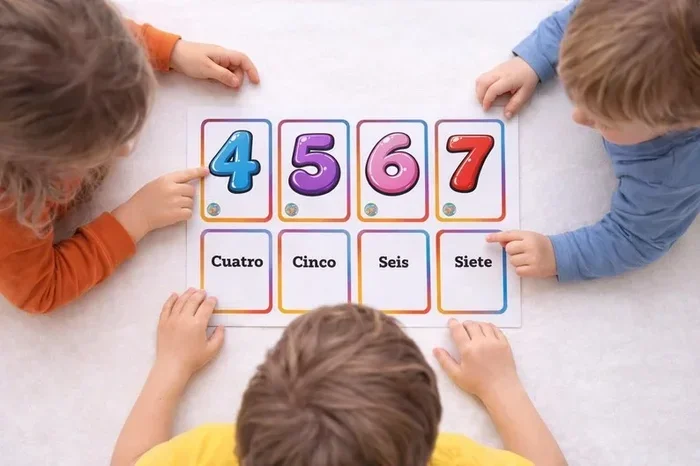
- Cuatro (four)
- Cinco (five)
- Seis (six)
- Siete (seven)
- Ocho (eight)
- Nueve (nine)
- Diez (ten)
- Once (eleven)
- Doce (twelve)
- Trece (thirteen)
- Catorce (fourteen)
- Quince (fifteen)
Notice that “uno” is a tricky little word. When it stands alone, it stays “uno.” But before a masculine noun, it drops the “o” and becomes “un.” For example, “un libro” means “one book,” but “uno libro” would sound wrong to a native ear. This small detail matters for sounding natural in Spanish number pronunciation.
Numbers 16 to 29
From sixteen onward, things get creative. Spanish uses a mix of Latin roots and compound word-building:
- Dieciséis (sixteen)
- Diecisiete (seventeen)
- Dieciocho (eighteen)
- Diecinueve (nineteen)
- Veinte (twenty)
- Veintiuno (twenty-one)
- Veintidós (twenty-two)
- Veintitrés (twenty-three)
- Veinticuatro (twenty-four)
- Veinticinco (twenty-five)
See the pattern? Numbers 16 through 19 attach to “dieci-,” and numbers 21 through 29 attach to “veinti-.” Once you know these prefixes, you can build many more words without extra memorization. This is one of the most helpful Spanish number rules to remember.
Counting in the Tens: 30, 40, 50, and Beyond
The tens in Spanish are simple and regular. Each one follows a consistent ending: “-enta.” This makes the Spanish counting system feel almost like a code once you crack it.
| Number | Spanish Word | Pronunciation Tip |
|---|---|---|
| 30 | Treinta | Say ” tray-en-tah” |
| 40 | Cuarenta | Say ” kwah-ren-tah” |
| 50 | Cincuenta | Say ” seen-kwen-tah” |
| 60 | Sesenta | Say ” seh-sen-tah” |
| 70 | Setenta | Say ” seh-ten-tah” |
| 80 | Ochenta | Say ” oh-chehn-tah” |
| 90 | Noventa | Say ” noh-ben-tah” |
| 100 | Cien / Ciento | “Cien” for 100 alone, “ciento” for 101+ |
To make numbers like thirty-five or seventy-two, you simply combine the tens with the ones using “y.” For example, “treinta y cinco” means thirty-five, and “setenta y dos” means seventy-two. This pattern holds true for almost all two-digit numbers above twenty-nine.
Quick Tip: When you say “cien” for exactly one hundred, it stands alone. But when you add anything after it, switch to “ciento.” So “one hundred five” becomes “ciento cinco,” not “cien cinco.” This is a small rule that makes a big difference in sounding fluent.
Hundreds, Thousands, and Large Numbers
Once you know the tens and the hundreds, the rest of the Spanish numerical system follows a beautifully logical structure. Let us break it down.
Hundreds
The hundreds work just like the tens. You combine the base hundred word with the tens and ones:
- Doscientos (two hundred)
- Trescientos (three hundred)
- Cuatrocientos (four hundred)
- Quinientos (five hundred)
- Seiscientos (six hundred)
- Setecientos (seven hundred)
- Ochocientos (eight hundred)
- Novecientos (nine hundred)
So “five hundred twenty-three” becomes “quinientos veintitrés.” Notice how the pieces fit together like puzzle parts. This is what makes learning Spanish numbers so rewarding once you get past the first fifteen words.
Thousands and Beyond
For thousands, the word is “mil.” One thousand is “mil,” and you add it before the rest of the number. For example, “one thousand five hundred” is “mil quinientos.” For two thousand, it becomes “dos mil.”
Millions use “millón” (singular) or “millones” (plural). One million is “un millón,” and five million is “cinco millones.” Billions follow the same logic with “mil millones” (one billion) and “diez mil millones” (ten billion).
Expert Insight: Spanish speakers in different regions sometimes say numbers slightly differently. In Spain, you might hear “mil doscientos” for 1,200, while in Latin America, the same phrase is common too. The core system stays the same everywhere, so focus on the patterns rather than regional quirks.
Ordinal Numbers: First, Second, Third, and Beyond
Ordinal numbers show order or position. In English, you use them for floors in a building, dates, and rankings. Spanish does too, but with a twist: ordinal numbers are used far less often than in English.
Here are the first ten ordinals:
- Primero (first)
- Segundo (second)
- Tercero (third)
- Cuarto (fourth)
- Quinto (fifth)
- Sexto (sixth)
- Séptimo (seventh)
- Octavo (eighth)
- Noveno (ninth)
- Décimo (tenth)
For numbers above ten, you usually add “-avo” or “-ésimo” to the cardinal number. So “twentieth” becomes “vigésimo,” and “fiftieth” becomes “quincuagésimo.” But here is the real-world truth: most Spanish speakers simply say the cardinal number when talking about floors, dates, or positions. Saying “el piso dieciocho” (floor eighteen) sounds more natural than “el decimoctavo piso” in everyday conversation.
This is an important distinction for anyone serious about Spanish number pronunciation and natural fluency. Cardinals are your best friends for daily use.
Common Mistakes and How to Avoid Them
Even dedicated learners make mistakes with Spanish number words. Here are the most common ones and how to fix them:
Mistake 1: Forgetting Gender Agreement
As mentioned earlier, “uno” becomes “un” before masculine nouns. But many learners forget this and say “uno libro” instead of “un libro.” Always drop the “o” when the number comes right before a noun.
Mistake 2: Confusing “Cien” and “Ciento”
This trips up almost every beginner. Remember: “cien” is for exactly one hundred by itself. “Ciento” is used when there is more to the number. “Cien personas” means “one hundred people,” but “ciento una personas” means “one hundred and one people.”
Mistake 3: Mispronouncing “V” Sounds
In Spanish, the letter “v” is pronounced the same as “b.” So “veinte” sounds like “bain-teh,” not “vay-een-teh.” Getting this right improves your Spanish counting clarity immediately.
Mistake 4: Using Ordinals When Cardinals Are Expected
As we covered, native speakers prefer cardinal numbers for most situations. Saying “tercer piso” instead of “piso tres” might sound overly formal or even slightly awkward in casual settings.
Fun Ways to Practice Spanish Numbers
Memorizing numbers does not have to feel like a chore. Here are some enjoyable methods to build your Spanish vocabulary naturally:
- Count objects around you: Name the books on your shelf, the cups on your table, or the cars passing by. Say each count out loud in Spanish.
- Watch Spanish videos: Search for counting videos or children’s shows in Spanish. The repetition helps lock in the words.
- Practice with a friend: Quiz each other on numbers during a walk or a coffee break. Short, frequent sessions work best.
- Use flashcard apps: Apps like Anki or Quizlet let you practice Spanish number words on the go. Five minutes a day adds up fast.
- Read aloud in Spanish: Pick up a simple Spanish book or news article and read the numbers you find. This builds both recognition and pronunciation.
If you enjoy exploring how numbers and language connect to culture, you might also enjoy learning about the meaning of life in different languages. Numbers often carry symbolic weight in cultural philosophies, and understanding them adds depth to your language journey.
The key to mastering how to say all the numbers in Spanish is consistency. Short daily practice beats long weekly cramming every time. Make it a habit, and the numbers will start flowing naturally.
Conclusion
Mastering how to say all the numbers in Spanish is one of the most rewarding steps in your language journey. You start with the basics, build up through the teens and tens, and soon find yourself handling hundreds, thousands, and even millions with ease. The patterns are logical, the pronunciation is clear, and the practical applications are endless.
Remember to focus on the common mistakes we covered, practice regularly, and always use numbers in real-life context. Whether you are shopping, telling time, or just counting your blessings, these Spanish cardinal numbers will serve you well. Keep practicing, stay curious, and soon you will count in Spanish without even thinking about it.
Frequently Asked Questions
What are the easiest Spanish numbers to learn first?
Start with numbers one through fifteen. These are unique words that form the foundation for everything else. Once you know these, the pattern for numbers sixteen through twenty-nine becomes much easier to pick up.
How do you say numbers above 100 in Spanish?
You combine the hundreds with the tens and ones using simple addition. For example, “three hundred forty-five” is “trescientos cuarenta y cinco.” The structure is very logical once you learn the base hundred words.
Do Spanish numbers change based on gender?
Yes, but only slightly. The number “uno” changes to “un” before a masculine noun. Most other numbers stay the same regardless of the noun’s gender, which makes the system simpler than many learners expect.
Are ordinal numbers important in everyday Spanish?
Not as much as cardinal numbers. Native speakers mostly use cardinal numbers for dates, floors, and rankings. Ordinals appear in formal writing and specific contexts, but they are not essential for daily conversation.
How long does it take to learn all Spanish numbers?
With consistent daily practice, most learners can comfortably count to one million within two to four weeks. The key is to practice in short sessions and use numbers in real-life situations whenever possible.
Why do some Spanish numbers sound different in Spain versus Latin America?
The core number system is the same everywhere. Differences are mostly in pronunciation and occasional word choices, like “ciento” versus regional variations. These differences are small and do not affect understanding between speakers.



