

Learning how to say 1 million in Spanish is simpler than you think. The word is un millón, and once you understand the Spanish numbering system, large numbers become a breeze. This guide walks you through pronunciation, writing rules, real-life examples, and common mistakes so you can confidently use Spanish numbers in any conversation.
Key Takeaways
- Un millón is how you say 1 million in Spanish — simple and straightforward.
- Spanish large numbers follow a logical pattern once you know the base words.
- Pronunciation is phonetic, so you can sound it out easily.
- Writing large numbers in Spanish uses periods and commas differently than English.
- Practice with real-life examples helps you remember and use these numbers naturally.
- Avoid common mistakes like mixing up decimal and thousands separators.
- Mastering numbers up to a million opens the door to bigger Spanish numbers with ease.
📑 Table of Contents
- How to Say 1 Million in Spanish: A Complete Guide
- The Basic Building Blocks of Spanish Numbers
- How to Say 1 Million in Spanish
- Writing 1 Million in Spanish
- Building Up to Even Bigger Numbers
- Real-Life Examples Where You Need This
- Common Mistakes to Avoid
- Practice Exercises to Lock It In
- Beyond 1 Million: Expanding Your Spanish Number Skills
- Conclusion
How to Say 1 Million in Spanish: A Complete Guide
Have you ever stared at a Spanish text and hit a wall when you saw a big number? You are not alone. Millions of language learners struggle with large numbers in Spanish. But here is the good news. Saying 1 million in Spanish is way easier than it looks.
The answer is un millón. That is it. Two simple words. Once you know this, you can build on it to tackle any big number. In this guide, we will break everything down step by step. You will learn pronunciation, writing rules, real-life examples, and even some fun tips to make the process stick.
Whether you are traveling to a Spanish-speaking country, studying finances, or just curious, this article has you covered. Let us dive in and make Spanish numbers your new best friend.
Why Large Numbers Matter in Spanish
Numbers are everywhere. They show up in prices, dates, addresses, and conversations. If you cannot handle large numbers in Spanish, everyday tasks become frustrating. Imagine trying to buy a house or understand a bank statement. You need to know how to say and write numbers like a local.
Spanish-speaking countries use the metric system, local currencies, and unique formatting for big figures. For example, in Spain, a period separates thousands, and a comma marks decimals. In Latin America, it is the opposite. This small difference can cause big confusion if you are not ready.
Knowing how to say 1 million in Spanish gives you a strong foundation. From there, you can count all the way up to billions and beyond. The pattern stays the same. You just add more pieces.
The Basic Building Blocks of Spanish Numbers
Before you tackle un millón, you need to know the basics. Spanish numbers follow a logical system. Once you understand the pattern, bigger numbers feel natural.
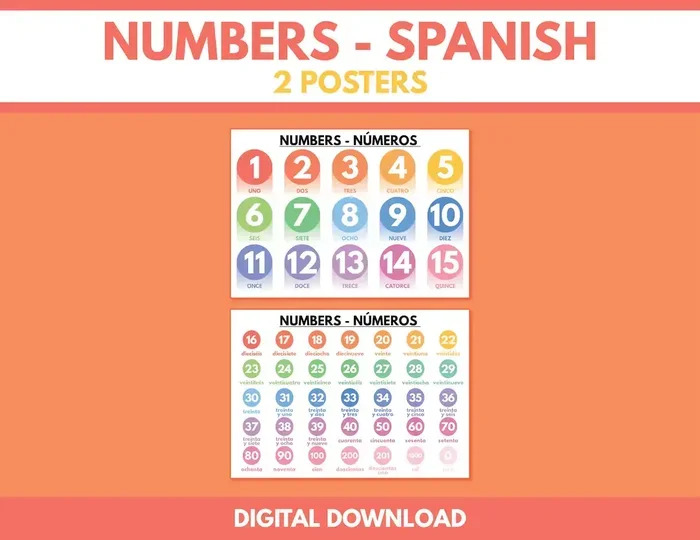
Numbers 1 Through 20
Start here. These are the foundation of everything:
- 1 = uno
- 2 = dos
- 3 = tres
- 4 = cuatro
- 5 = cinco
- 10 = diez
- 15 = quince
- 20 = veinte
These words are short and easy to remember. Practice saying them out loud. The more you hear yourself say them, the faster they stick.
Tens and Hundreds
After 20, things get a little creative but still logical:
- 30 = treinta
- 40 = cuarenta
- 50 = cincuenta
- 100 = cien
- 200 = doscientos
- 500 = quinientos
Notice how cien changes to ciento when it is part of a larger number. For example, 101 is ciento uno. This small shift trips up many learners. Keep it in mind as you move forward.
Thousands and Beyond
Now we get to the big leagues:
- 1,000 = mil
- 2,000 = dos mil
- 100,000 = cien mil
- 500,000 = quinientos mil
See the pattern? You just stack the words together. No complicated formulas. No strange rules. This is what makes the Spanish numbering system so user-friendly.
How to Say 1 Million in Spanish
Here is the moment you have been waiting for. How do you say 1 million in Spanish? The answer is un millón.
Let that sink in. Un millón. Two syllables for the first word and two for the second. That is all it takes.
Pronunciation Guide
Let us break down the pronunciation so you can say it with confidence:
- Un sounds like “oon” in English. Keep it short and crisp.
- Millón sounds like “mee-YOHN.” The stress falls on the last syllable.
Put them together: “oon mee-YOHN.” That is it. Practice saying it three times in a row. Say it while brushing your teeth or driving to work. Repetition is your best friend when learning how to pronounce Spanish numbers.
Common Mistakes in Pronunciation
Here are a few pitfalls to avoid:
- Do not say “mill-OWN.” The stress is on the second syllable, not the first.
- Do not roll the R too hard. A soft tap is enough.
- Do not add extra syllables. Keep it clean and simple.
If you get stuck, try slowing down. Break the word into parts. Say “un” first, then “millón.” Speed will come with practice.
Writing 1 Million in Spanish
Saying the number is only half the battle. You also need to know how to write it. Writing large numbers in Spanish follows specific formatting rules that differ from English.
Number Formatting: Spanish vs. English
This is where things get interesting. In English, we write 1,000,000 with commas. In Spanish, the formatting is different depending on the region:
| Format | English | Spain | Latin America |
|---|---|---|---|
| 1 Million | 1,000,000 | 1.000.000 | 1,000,000 |
| Decimal Point | . | , | . |
| Thousands Separator | , | . | , |
See the difference? In Spain, periods separate thousands, and commas mark decimals. In Latin America, it mirrors English. This is a crucial distinction. If you mix them up, you could end up with a very wrong number.
Writing 1 Million in Words
When you write un millón in a sentence, it follows the same rules as other Spanish nouns. Here are some examples:
- Tengo un millón de dólares. (I have one million dollars.)
- La población es de un millón de personas. (The population is one million people.)
- Gané un millón en la lotería. (I won a million in the lottery.)
Notice that un millón is masculine. When you use it with a noun, the article must match. This is a small detail that makes a big difference in sounding natural.
Building Up to Even Bigger Numbers
Once you know how to say 1 million in Spanish, you can scale up. The system is designed to be expandable.
Millions and Billions
Here is how the progression works:
- Un millón = 1,000,000 (1 million)
- Dos millones = 2,000,000 (2 million)
- Mil millones = 1,000,000,000 (1 billion)
- Un billón = 1,000,000,000,000 (1 trillion in Spain) — Note: This differs by region.
Wait, did you catch that? In Spain, un billón means one trillion. In Latin America, it means one billion. This is one of the trickiest parts of Spanish numbers. Always clarify the region you are speaking with.
Quick Tips for Remembering Large Numbers
Struggling to remember these? Try these tricks:
- Chunk it. Break big numbers into groups of three. Read them as smaller pieces.
- Use flashcards. Write the number on one side and the Spanish word on the other.
- Practice daily. Spend five minutes a day reading numbers out loud in Spanish.
- Watch Spanish TV. Notice how news anchors say large numbers. Mimic their rhythm.
These small habits add up fast. Within a few weeks, you will be reading large numbers in Spanish without even thinking about it.
Real-Life Examples Where You Need This
You might wonder, “When will I actually use this?” More often than you think. Here are some real-life situations where knowing how to say 1 million in Spanish comes in handy:
Travel and Shopping
Visiting Spain or Latin America? You will see prices in the millions for real estate, cars, and luxury goods. If someone says a house costs un millón de euros, you need to know that is one million euros. Without this knowledge, you might miss a great deal or overpay.
Business and Finance
If you work with Spanish-speaking clients or partners, numbers are part of daily communication. Budgets, revenue figures, and projections all involve large numbers. Being able to say and understand un millón in a meeting shows professionalism and respect.
Everyday Conversations
Even casual chats involve numbers. People talk about population, sports scores, savings goals, and more. Imagine a friend saying, “Mi ciudad tiene un millón de habitantes” (My city has a million inhabitants). You want to understand that without pausing to translate.
Common Mistakes to Avoid
Learning Spanish numbers is rewarding, but mistakes happen. Here are the most common ones and how to avoid them:
Mixing Up Decimal and Thousands Separators
This is the #1 mistake. Remember that Spain uses periods for thousands and commas for decimals. If you write 1.000.000 thinking it is one thousand, you are off by a factor of 1,000. Always double-check the format based on the region.
Forgetting the Accent Mark
Millón has an accent on the O. Writing it as “millon” is technically incorrect. While people will understand you, the accent mark matters in formal writing and shows attention to detail.
Using the Wrong Gender
Remember that millón is masculine. Use “un millón,” not “una millón.” This applies to all large number words in Spanish. The gender must agree with the noun it modifies.
Confusing Millón with Millar
These two words look similar but mean different things. Millón means million. Millar means thousand. Do not mix them up in conversation or writing.
Expert Insight
Language experts recommend learning numbers in chunks. Start with 1-100, then move to thousands, then millions. This layered approach builds confidence and prevents overwhelm. Once you master how to say 1 million in Spanish, the next milestone feels much closer.
Practice Exercises to Lock It In
Reading about numbers is great. But practice is what makes the knowledge stick. Try these exercises:
- Read aloud. Find a Spanish news article and read every number you see out loud.
- Write it out. Take a number like 3,500,000 and write it in Spanish words. (Answer: tres millones quinientos mil.)
- Partner up. Ask a friend to say a number in Spanish, and you write it down. Then switch roles.
- Use apps. Apps like Duolingo and Memrise have number-specific exercises that make practice fun.
The more you practice, the more natural un millón will feel. Soon, you will not even need to think about it.
Beyond 1 Million: Expanding Your Spanish Number Skills
Now that you know how to say 1 million in Spanish, why stop there? The same logic applies to even larger numbers. You can build millions into billions and beyond.
Think about how you learned numbers as a child. You started small and grew from there. The Spanish numbering system works the same way. Each new level adds just one or two new words.
If you want to go deeper, explore how numbers work in other contexts. For instance, if you are naming a pet in Spanish, numbers can inspire creative names. Check out Spanish cat names for ideas that blend numbers and personality. You can also look at Spanish rabbit names or Spanish teddy bear names for fun ways to use what you have learned.
The journey of learning Spanish numbers does not end at a million. It is a continuous process that gets easier with every step. Celebrate your progress and keep pushing forward.
Conclusion
Learning how to say 1 million in Spanish is a milestone worth celebrating. The word un millón is simple, elegant, and powerful. With the right pronunciation, writing rules, and practice, you can use it confidently in any situation.
Remember the key points. The number is un millón. Pronounce it as “oon mee-YOHN.” Write it with the correct regional formatting. Avoid common mistakes like confusing separators or dropping the accent mark. And practice regularly to build lasting confidence.
Numbers are the building blocks of communication. Once you master them, you open doors to deeper conversations, better travel experiences, and stronger connections with Spanish speakers around the world. So go ahead. Say it loud. Say it proud. Un millón.
Frequently Asked Questions
What is the easiest way to remember how to say 1 million in Spanish?
Break it into two parts: “un” and “millón.” Think of it as “oon mee-YOHN.” Say it out loud five times a day for a week. The rhythm will stick with you quickly.
Is un millón masculine or feminine in Spanish?
Un millón is masculine. Always use the article “un” before it, not “una.” This rule applies to all large number words in Spanish, including millones and millares.
Do Spanish-speaking countries format numbers the same way?
No. Spain uses periods for thousands and commas for decimals. Most Latin American countries use commas for thousands and periods for decimals. Always consider your audience when writing numbers.
Can I use un millón in everyday conversation?
Absolutely. People use it when talking about population, money, sports stats, and more. For example, “Mi equipo tiene un millón de seguidores” is a perfectly natural sentence in daily conversation.
How is saying 1 million different in Spain versus Mexico?
The word itself is the same — un millón. The main difference lies in number formatting and occasional vocabulary. In Mexico and most of Latin America, the comma-thousands system matches English formatting.
What comes after un millón in Spanish?
After un millón comes dos millones (2 million), then mil millones (1 billion). The pattern stays consistent. You simply add the multiplier before the base word. This makes scaling up much easier than in English.



