
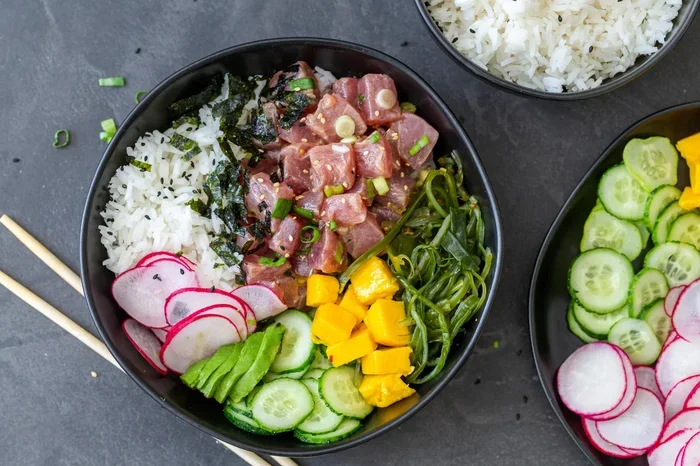

Learning how to say poke correctly is easier than you think. The Hawaiian word is pronounced POH-kay, not poke like the English word. This guide covers the real pronunciation, the dish’s origins, and tips to sound like a local every time you order.
If you have ever walked into a restaurant and felt unsure about how to order a poke bowl, you are not alone. The word poke comes from the Hawaiian language, and its pronunciation trips up a lot of people. Many visitors to Hawaii or fans of poke bowls around the world wonder, “Is it poke like the English word or something else?”
The answer is simple once you know the secret. Learning how to say poke like a native speaker is a small effort that pays off big time. It shows respect for Hawaiian culture, and it makes ordering food so much more fun. In this guide, we will walk you through everything you need to know about the correct poke pronunciation, the history behind the word, and easy tips to sound confident every time.
Whether you are planning a trip to Hawaii, ordering delivery, or just curious about the dish, this article has you covered. We will break down the sounds, compare common mistakes, and give you real-world examples you can use right away. Let us dive in and master how to say poke the right way.
Key Takeaways
- Correct pronunciation: Poke is said POH-kay, with a long O sound and a soft k.
- Hawaiian roots: The word comes from the Hawaiian language and means “to slice” or “cut crosswise.”
- Spelling variations: You may see it written as poke, poké, or pokè depending on the region.
- Common mistakes: Avoid rhyming it with “roke” or saying it like the English word “poke.”
- Practice tips: Listen to native speakers, break the word into two parts, and repeat out loud.
- Cultural respect: Knowing how to say poke properly shows respect for Hawaiian culture and traditions.
- Global popularity: Poke bowls have exploded in popularity worldwide, making correct pronunciation even more useful.
📑 Table of Contents
- What Does Poke Mean and Where Does It Come From?
- How to Say Poke: The Correct Pronunciation
- Poke Bowl vs. Poké: Understanding the Spelling
- Tips for Saying Poke Like a Native Speaker
- The Rise of Poke Bowls Around the World
- Common Mistakes People Make With Poke
- Key Takeaways
- Final Thoughts on How to Say Poke
What Does Poke Mean and Where Does It Come From?
The Hawaiian Origin of the Word
The word poke comes from Hawaiian. In the Hawaiian language, poke (pronounced POH-kay) means “to slice” or “to cut crosswise.” This makes perfect sense when you think about the dish. Traditional poke is made by cutting raw fish into small, bite-sized cubes. The word itself describes the action of preparing the fish, not just the final bowl of food.
Poke has deep roots in Hawaiian culture. For centuries, Hawaiian fishermen would prepare fresh catches of fish and season them with sea salt, seaweed, and limu (Hawaiian seaweed). Over time, this simple preparation evolved into the beloved dish we know today. Understanding the origin of the word helps you appreciate why getting the pronunciation right matters.
Why Pronunciation Matters
You might wonder why it is such a big deal how you say poke. After all, people understand what you mean most of the time. But pronunciation carries cultural weight. When you take the time to learn how to say poke correctly, you show respect for the Hawaiian people and their language. Hawaii has a rich linguistic heritage, and every effort to honor it is appreciated by locals.
Beyond cultural respect, there is a practical side too. If you visit Hawaii and walk into a local fish market or a poke shop, using the correct pronunciation helps you connect with the staff. They will appreciate your effort, and you might even get a better recommendation or a warm smile in return. Small gestures like this go a long way when you are traveling.
How to Say Poke: The Correct Pronunciation
Breaking Down the Sounds
So, how to say poke like a native? The word has two syllables. The first syllable sounds like the English word “pole” or the letter name “P.” The second syllable sounds like the word “kay.” Put them together, and you get POH-kay.
Here is a simple way to practice:
- First syllable: Say “POH” like you are stretching out a rubber band. The O is long and open.
- Second syllable: Say “kay” like you are telling someone your name starts with K.
- Put it together: POH-kay. That is it. Smooth and simple.
Try saying it slowly at first. Then speed up gradually until it flows naturally. The emphasis falls on the first syllable, so make your POH a little louder and longer than the kay part.
Common Mispronunciations to Avoid
There are a few mistakes that people make frequently when trying to say poke. Knowing what to avoid helps you sound more confident.
- Saying it like the English verb “poke”: The English word poke rhymes with “roke” and has a short O sound. The Hawaiian word poke has a long O sound. This is the single biggest mistake people make.
- Adding an extra syllable: Some people say “po-keh” or “poh-keh-ee.” Keep it to two clean syllables: POH-kay.
- Emphasizing the wrong part: The stress belongs on the first syllable. POH-kay, not po-KAY.
- Using a hard “k” at the end: The second syllable is soft. “Kay” not “keh” with a harsh ending.
Think of it this way. If you say the English word poke, it sounds like you are prodding something. When you say POH-kay the Hawaiian way, it sounds musical and natural. The difference is all in the vowel sounds.
Poke Bowl vs. Poké: Understanding the Spelling
Why Different Spellings Exist
If you have ever searched for poke online, you have probably noticed different spellings. You might see poke, poké, or even pokè. These variations all refer to the same dish and the same pronunciation. The differences come from how people adapt the Hawaiian word to English spelling rules.
The accent mark (called a kahakō in Hawaiian) over the e in poké indicates a long vowel sound. However, most English speakers do not use the accent mark. The simple spelling “poke” is the most common in everyday use, especially in menus, social media, and casual conversation.
Here is a quick comparison:
| Spelling | Used In | Pronunciation |
|---|---|---|
| poke | Menus, everyday English, casual use | POH-kay |
| poké | Hawaiian language, formal writing | POH-kay (with long e) |
| pokè | Some international menus | POH-kay |
No matter which spelling you see, the pronunciation stays the same. POH-kay. Always.
Does the Spelling Affect the Taste?
Some people joke that the spelling poké makes the bowl taste more authentic. In reality, the spelling has zero effect on flavor. What matters is the quality of the ingredients. A great poke bowl starts with fresh ahi tuna or salmon, seasoned with soy sauce, sesame oil, and Hawaiian salt. The toppings, rice, and preparation style all play a role too.
If you want to explore different styles, look for traditional Hawaiian poke, which uses minimal seasoning and lets the fish shine. On the other hand, fusion poke bowls might include spicy mayo, avocado, or crispy onions. Both are delicious, and both are pronounced the same way.
Tips for Saying Poke Like a Native Speaker
Practice with Native Hawaiian Words
One of the best ways to improve your pronunciation is to practice with other Hawaiian words. Hawaiian has a simple phonetic system, which means words are pronounced exactly as they are written. Once you get comfortable with Hawaiian vowel sounds, saying poke becomes effortless.
Here are a few common Hawaiian words to try:
- Aloha: Ah-LOH-hah (hello, goodbye, or love)
- Mahalo: Mah-HAH-loh (thank you)
- Ono: OH-noh (delicious)
- Lānai: LAH-nye (a balcony or patio)
- Kai: KY (the ocean)
Notice how each vowel has a clear, pure sound. There are no silent letters or tricky combinations. This simplicity makes Hawaiian one of the easiest languages to pronounce once you know the basic rules.
Listen and Repeat Techniques
The fastest way to learn how to say poke correctly is to listen to native speakers. You can find plenty of audio clips online through Hawaiian language resources, YouTube videos, or pronunciation apps.
Here is a simple practice routine you can follow:
- Listen: Hear a native speaker say POH-kay slowly.
- Repeat: Say it out loud immediately after hearing it.
- Record yourself: Use your phone to record your version and compare.
- Adjust: Notice the differences and tweak your pronunciation.
- Repeat daily: Practice for just two minutes a day until it feels natural.
Within a few days, you will be saying POH-kay without even thinking about it. The key is consistency and active listening.
Use It in Real Conversations
The best way to build confidence is to use the word in real situations. When you order a poke bowl at a restaurant, say “I would like a poke bowl, please” out loud. When you talk to friends about the dish, use the correct pronunciation.
Do not worry about making mistakes. Every time you try, you get better. Over time, saying POH-kay will feel completely natural, and you will wonder why you ever hesitated.
The Rise of Poke Bowls Around the World
Why Poke Became So Popular
Poke bowls have taken the food world by storm over the past decade. What was once a humble Hawaiian fisherman’s meal is now a global sensation. You can find poke bowls in major cities across the United States, Europe, Asia, and Australia.
Several factors have driven this popularity. First, poke bowls are healthy and packed with protein. They fit perfectly into the growing demand for nutritious, fresh meals. Second, poke bowls are highly customizable. You can choose your base, your protein, your sauce, and your toppings. This flexibility appeals to a wide range of dietary preferences and tastes.
Third, social media has played a huge role. Poke bowls are colorful, beautiful, and photogenic. People love sharing pictures of their colorful bowls on Instagram and TikTok. This visual appeal has helped spread awareness of poke culture far beyond Hawaii.
Finding the Best Poke Near You
As poke bowls have grown in popularity, so has the number of poke restaurants. Today, you can find dedicated poke shops, sushi restaurants offering poke bowls, and even grocery stores with poke counters. The options are nearly endless.
When searching for a great poke spot, keep these tips in mind:
- Look for fresh, high-quality fish. The fish should smell clean and ocean-like, not fishy.
- Check if the restaurant uses traditional Hawaiian seasonings or fusion-style sauces.
- Read reviews from locals, not just tourists. Local favorites often have the best quality.
- Ask the staff how to say poke when you visit. They will love sharing their knowledge.
Once you find a great spot, you can confidently order by saying, “I would like a poke bowl, please.” The staff will be impressed, and you will enjoy a delicious meal.
Common Mistakes People Make With Poke
Mistake 1: Confusing Poke with Poké Balls
Some people hear the word poke and immediately think of Pokémon. While both words share a similar spelling, they are completely different. Pokémon is a Japanese franchise, and poke in that context is short for “pocket.” Hawaiian poke has nothing to do with Pokémon. Keep these two separate in your mind to avoid confusion.
Mistake 2: Thinking Poke Is Only About Tuna
While ahi tuna is the most classic poke protein, poke can be made with many other ingredients. Salmon, octopus, shrimp, and even cooked chicken are popular options. The word poke refers to the preparation method of cubing and seasoning, not just one specific ingredient.
Mistake 3: Overcomplicating the Pronunciation
Sometimes people make the pronunciation harder than it needs to be. They overthink the vowel sounds or add extra syllables. Remember the simple formula: POH-kay. Two syllables. Long O. Soft k. That is all there is to it.
Key Takeaways
- Correct pronunciation: Poke is said POH-kay, with a long O sound and a soft k.
- Hawaiian roots: The word comes from the Hawaiian language and means “to slice” or “cut crosswise.”
- Spelling variations: You may see it written as poke, poké, or pokè depending on the region.
- Common mistakes: Avoid rhyming it with “roke” or saying it like the English word “poke.”
- Practice tips: Listen to native speakers, break the word into two parts, and repeat out loud daily.
- Cultural respect: Knowing how to say poke properly shows respect for Hawaiian culture and traditions.
- Global popularity: Poke bowls have exploded worldwide, making correct pronunciation even more useful.
Final Thoughts on How to Say Poke
Learning how to say poke like a native speaker is a rewarding and simple skill. It takes just a few minutes of practice, and the payoff is huge. Whether you are visiting Hawaii, ordering at your favorite local restaurant, or just chatting with friends about food, saying POH-kay with confidence sets you apart.
The beauty of poke goes beyond its pronunciation. It represents a rich Hawaiian tradition of fresh, simple, and flavorful food. When you say the word correctly, you carry a piece of that tradition with you. You show that you value the culture and the people behind the dish.
So go ahead. Practice saying POH-kay today. Order a poke bowl with confidence. Share what you have learned with friends. The more you use it, the more natural it becomes. And every time you say it right, you honor the Hawaiian language and the beautiful island culture it comes from.
Now that you know how to say poke, there is nothing stopping you from enjoying this delicious dish the way it was meant to be enjoyed. Grab a bowl, savor every bite, and say it with pride. POH-kay. You have got this.
Frequently Asked Questions
Is poke pronounced poke or poké?
No matter the spelling, poke is always pronounced POH-kay. The accent mark in poké is a Hawaiian diacritic that indicates a long vowel, but it does not change how you say the word in English. Stick with POH-kay every time.
What does poke mean in Hawaiian?
In Hawaiian, poke means “to slice” or “to cut crosswise.” This refers to the traditional method of cutting raw fish into small cubes. The word describes the preparation process as much as the dish itself.
Why do people mispronounce poke?
Most people mispronounce poke because they read it the same way as the English verb “poke,” which rhymes with “roke.” The Hawaiian pronunciation uses a long O sound and a soft ending, making it POH-kay instead.
Can I order poke confidently if I am not Hawaiian?
Absolutely. Poke is a dish meant to be enjoyed by everyone. Using the correct pronunciation is a sign of respect, but it does not require Hawaiian heritage. Anyone can order a poke bowl with confidence and pride.
What are the most common types of poke bowls?
The most popular types include ahi tuna poke, salmon poke, spicy tuna poke, and octopus poke. Traditional Hawaiian poke uses simple seasonings like soy sauce, sesame oil, and limu. Fusion styles may add spicy mayo, avocado, or crispy onions.
How can I practice saying poke correctly every day?
Try saying POH-kay out loud five times every morning. Listen to Hawaiian pronunciation videos on YouTube. Practice ordering poke at restaurants or with friends. Within a week, the pronunciation will feel completely natural.
=== CONCLUSION ===
Mastering how to say poke is a small but meaningful step. It connects you to Hawaiian culture, helps you order with confidence, and shows that you care about getting things right. The pronunciation is straightforward, the history is fascinating, and the dish itself is absolutely delicious.
Remember the key: POH-kay. Two syllables. Long O. Soft k. Practice it, use it, and enjoy it. Whether you are at a beachside restaurant in Hawaii or ordering delivery on a quiet evening, you now have the knowledge to say poke like a true native speaker. Go ahead and give it a try today.



