
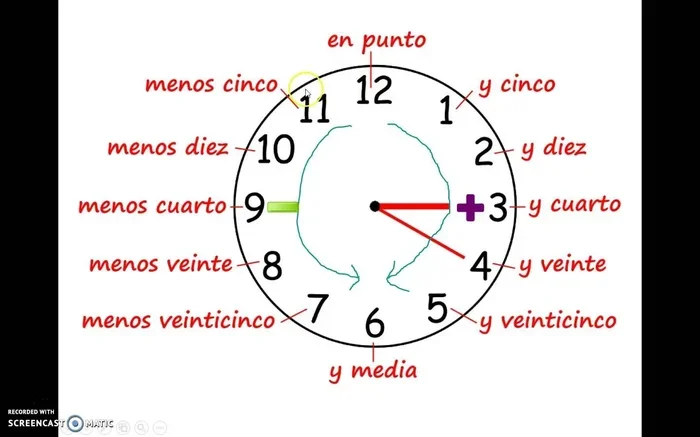

Learning how to say 1:15 in Spanish is a foundational skill for any beginner. In Spanish, 1:15 is expressed as “la una y cuarto,” which translates to “one and a quarter.” This guide covers pronunciation, common phrases, and practical tips to help you confidently tell time in Spanish every day.
Have you ever found yourself staring at a clock in a Spanish-speaking country and completely frozen? You know the time in English, but your brain just goes blank when you need to say it out loud. You are not alone. Learning how to say 1:15 in Spanish is one of the first and most useful steps every beginner takes. It opens the door to telling time, making plans, and navigating daily life with confidence.
Time-telling is a practical skill that comes up constantly. Whether you are catching a bus, meeting a friend, or scheduling a doctor’s appointment, knowing the Spanish way to express time makes everything smoother. This guide breaks it all down in simple, easy-to-follow steps. By the end, you will know exactly how to say 1:15 and many other times in Spanish.
Key Takeaways
- 1:15 in Spanish is “la una y cuarto” — meaning “one and a quarter.”
- Spanish time-telling follows a logical pattern once you learn the basic numbers and key phrases like “y cuarto” and “y media.”
- Pronunciation is straightforward and closely mirrors English in many cases.
- Both analog and digital formats are used in Spanish-speaking countries.
- Practice with real-life scenarios like train schedules and meeting times to build confidence.
- Learning Spanish in context, exploring in situ meaning of phrases helps retention.
- Fun side activities like learning Spanish teddy bear names or Spanish cat names can reinforce your vocabulary while keeping things enjoyable.
📑 Table of Contents
- Understanding How to Say 1:15 in Spanish
- Breaking Down the Numbers Behind Spanish Time
- Common Ways to Say 1:15 in Spanish
- Pronunciation Tips for Spanish Numbers and Time
- Quick Tips for Remembering How to Say 1:15 in Spanish
- Common Mistakes Beginners Make When Telling Time in Spanish
- Why Learning Spanish Time-Telling Matters for Beginners
- Fun Ways to Practice Spanish Time-Telling
- Final Thoughts on How to Say 1:15 in Spanish
Understanding How to Say 1:15 in Spanish
So, what is the answer? In Spanish, 1:15 is “la una y cuarto.” Let us break that down piece by piece so it sticks in your memory.
- “La una” means “one o’clock.”
- “Y cuarto” means “and a quarter.”
- Put them together, and you get “one and a quarter” — which is exactly what 1:15 means.
This format is used across most Spanish-speaking regions. Unlike English, where we say “quarter past one,” Spanish flips the structure slightly. The hour comes first, then the minutes. Once you understand this pattern, telling time becomes much easier.
Why 1:15 Is a Great Starting Point
1:15 is a perfect time to learn first because it uses common building blocks. The word “cuarto” means “quarter,” and it shows up all the time in Spanish. Once you master this, you can apply the same logic to other quarter-hour times like 2:15, 3:15, and beyond. Think of it as a key that unlocks an entire category of time expressions.
Also, 1:15 falls right at the start of the day for many people. You might hear it in the morning when someone asks, “What time is it?” or when a store opens. This makes it a highly relevant time to know. If you want to dive deeper into how context shapes language learning, understanding the in situ meaning of phrases like “la una y cuarto” helps you remember them better in real conversations.
Breaking Down the Numbers Behind Spanish Time
To truly master how to say 1:15 in Spanish, you need a solid grasp of the numbers involved. Let us walk through them.
The Numbers You Need to Know
Here are the essential Spanish numbers for telling time:
- Uno — One
- Dos — Two
- Tres — Three
- Cuarto — Quarter (fifteen minutes)
- Media — Half (thirty minutes)
Notice that “cuarto” and “media” are the two magic words for quarter-hour and half-hour times. Memorizing these five items gives you the power to tell many common times in Spanish.
How the Clock Works in Spanish
In Spanish, the clock starts at the hour and then adds the minutes. This is different from English, where we sometimes say “fifteen past one” or “a quarter after one.” In Spanish, you always say the hour first.
Here is the basic formula:
[Hour] + y + [minutes]
For 1:15, that becomes “la una y cuarto.” For 2:30, it would be “las dos y media.” See the pattern? Once you internalize this structure, you can tell almost any time on the hour.
If you want to make your language learning more fun and personal, you could even practice by naming things around you. For instance, try learning Spanish cat names or Spanish teddy bear names while you study. It adds a playful element that helps reinforce new vocabulary in a memorable way.
Common Ways to Say 1:15 in Spanish
Spanish is rich with variation. While “la una y cuarto” is the standard way to say 1:15, there are other expressions you might hear or use depending on the region and context.
Formal vs. Casual Expressions
In formal settings, you might hear:
- “Es la una y cuarto.” — It is one fifteen.
- “Son las una y cuarto.” — This is less common but still heard.
In casual conversation, people often shorten things:
- “Es la una y cuarto.” — Still the go-to phrase.
- “Una y cuarto.” — Dropping “es la” for a quicker, relaxed version.
Both versions are perfectly correct. The shorter one works great in everyday chat with friends or coworkers.
Regional Variations
Spanish varies from country to country. In Spain, you might hear slightly different phrasing than in Mexico or Argentina. However, “la una y cuarto” is universally understood. Here is a quick look at regional preferences:
- Spain: “La una y cuarto” — very standard.
- Mexico: “La una y cuarto” — same, widely used.
- Argentina: Sometimes uses “las una y cuarto” with a slight pronunciation shift.
The core structure stays the same. You do not need to worry about memorizing different versions for each country. Stick with “la una y cuarto” and you will be understood everywhere.
Pronunciation Tips for Spanish Numbers and Time
Pronouncing Spanish numbers correctly can make a big difference in how natural you sound. Let us go over the key sounds.
How to Say Each Part of “La Una y Cuarto”
- “La” — Pronounced like “lah.” Short and soft. The “a” is open, like in “father.”
- “Una” — Pronounced “OO-nah.” The “u” sounds like the “oo” in “moon.”
- “Y” — Pronounced like the English letter “ee.” It sounds like “ee” in “see.”
- “Cuarto” — Pronounced “KWAHR-toh.” The “cu” makes a “kw” sound, and the “r” is soft.
Put it all together: “lah OO-nah ee KWAHR-toh.” That is how you say 1:15 in Spanish. It sounds smooth and rhythmic.
Quick Pronunciation Tips
- Do not roll the “r” too hard. A soft tap is enough for “cuarto.”
- Keep your vowels pure. Spanish vowels are clear and consistent, unlike English vowels that change sound.
- Practice slowly first. Speed comes naturally once you are comfortable with each word.
- Listen to native speakers. Apps and videos can help you match the rhythm and tone.
Good pronunciation builds confidence. When you say how to say 1:15 in Spanish out loud and sound natural, people respond more positively. They appreciate the effort, and it encourages them to keep the conversation going.
Quick Tips for Remembering How to Say 1:15 in Spanish
Memory tricks can save you a lot of frustration. Here are some tried-and-true methods to lock in “la una y cuarto.”
Use Visual Associations
Picture a clock at 1:15. The minute hand points to the “3” on the clock face. That position represents a quarter of the clock’s full circle. Now say “la una y cuarto” every time you see that image. Over time, your brain will connect the visual with the phrase automatically.
Repeat It in Context
Instead of memorizing the phrase in isolation, use it in a sentence. Try saying:
- “Son las una y cuarto, ¿verdad?” — It is 1:15, right?
- “Nos vemos a la una y cuarto.” — See you at 1:15.
- “El autobús sale a la una y cuarto.” — The bus leaves at 1:15.
Using the phrase in real sentences helps your brain store it as a usable tool, not just a random string of words. This is exactly what learning in situ means — picking up language in its natural context rather than from a list.
Set a Daily Reminder
Pick a time each day to practice saying 1:15 out loud. Maybe it is when you look at your watch in the morning or when you check the time before bed. Repetition is one of the most powerful tools for language retention.
Pair It With Fun Vocabulary
Mix your time-telling practice with something enjoyable. While you review “la una y cuarto,” also try memorizing a few Spanish teddy bear names or cute animal terms. This keeps your study sessions light and entertaining, which boosts retention significantly.
Common Mistakes Beginners Make When Telling Time in Spanish
Even with the best intentions, beginners often stumble on a few common pitfalls. Knowing these mistakes ahead of time helps you avoid them.
Mistake 1: Using “Es” for Plural Hours
In Spanish, “es” is used for singular hours (like 1:00 or 1:15), while “son” is used for plural hours (like 2:00 or 3:15). A common error is saying “son las una y cuarto” instead of “es la una y cuarto.”
Remember this simple rule:
- One o’clock always uses “es” — “Es la una.”
- Two or more o’clock uses “son” — “Son las dos.”
This applies even when you add minutes. So 1:15 stays “es la una y cuarto,” while 2:15 becomes “son las dos y cuarto.”
Mistake 2: Confusing “Cuarto” with “Cuatro”
“Cuarto” means “quarter” (as in fifteen minutes). “Cuatro” means “four.” These words sound similar but mean completely different things. Mixing them up can lead to confusion.
Cuarto = quarter (15 minutes)
Cuatro = four (the number)
Keep this distinction clear in your mind, and you will avoid a very common beginner blunder.
Mistake 3: Forgetting the Article
Spanish uses articles like “la” and “las” before time expressions. English often drops articles in casual speech (“It is one fifteen”), but Spanish requires them. Always include “la” before “una” when telling the time.
Correct: “Es la una y cuarto.”
Incorrect: “Es una y cuarto.”
Small details like articles make a big difference in sounding natural and being understood correctly.
Why Learning Spanish Time-Telling Matters for Beginners
You might wonder why telling time deserves so much attention. The answer is simple: time is part of daily life. Every conversation about schedules, plans, and routines involves some mention of the hour.
Real-Life Situations Where You Need This Skill
- Catching public transportation. Bus and train schedules run on the hour and quarter hours.
- Meeting friends. “Let us meet at 1:15” translates directly to a useful Spanish phrase.
- Work and school. Punctuality is valued in most Spanish-speaking cultures.
- Shopping. Stores have specific opening and closing times you need to know.
- Traveling. Flight and tour times are critical information you cannot afford to misunderstand.
Knowing how to say 1:15 in Spanish is not just a vocabulary exercise. It is a practical life skill that empowers you to navigate real-world situations with ease and confidence.
Building on This Foundation
Once you are comfortable with 1:15, you can expand to other times quickly. Here is a simple progression:
- Quarter hours: 1:15, 2:15, 3:15, and so on.
- Half hours: 1:30, 2:30, 3:30.
- Five-minute intervals: 1:05, 1:10, 1:20, 1:25.
- Random times: 1:07, 2:43, 4:58.
Each step builds on the last. By the time you reach random times, you will have a strong foundation in Spanish numbers and time expressions. The journey starts with something as simple as learning how to say 1:15 in Spanish.
Fun Ways to Practice Spanish Time-Telling
Practice does not have to be boring. There are many enjoyable ways to sharpen your time-telling skills in Spanish.
Set Your Phone to Spanish
Change the language setting on your phone or watch to Spanish. Every time you glance at the time, you will see the numbers in a new language. This passive exposure reinforces your learning without any extra effort.
Watch Spanish-Language Shows
Turn on subtitles in Spanish and watch a show or movie. Pay attention to any time references the characters mention. You will start to recognize patterns and common phrases naturally.
Play Time-Telling Games
There are many free apps and online games designed to help you practice telling time in Spanish. Some even incorporate animal names like Spanish rabbit names or pet-related vocabulary to make the experience more engaging.
Find a Language Partner
Practice with a native speaker or a fellow learner. Ask each other, “What time is it?” and respond with “la una y cuarto” or other times. Real conversation is the fastest path to fluency.
Final Thoughts on How to Say 1:15 in Spanish
Telling time in Spanish is a skill that combines numbers, phrases, and cultural understanding into one practical package. You now know that 1:15 in Spanish is “la una y cuarto,” and you understand why this phrase works the way it does. You have learned the pronunciation, the common variations, and the mistakes to avoid.
The beauty of this knowledge is that it compounds. Every new time you learn builds on the last. Before long, you will find yourself telling time in Spanish without even thinking about it. It becomes second nature.
Keep practicing. Use the phrases in real life whenever you get the chance. And remember that language learning is a journey, not a destination. Every minute you spend practicing brings you closer to fluency. So go ahead, look at your watch, and confidently say “la una y cuarto” — or whatever time it is right now. You have got this.
Whether you are planning a trip, studying Spanish for school, or simply curious about the language, mastering how to say 1:15 in Spanish gives you a solid stepping stone into the broader world of Spanish time-telling. Enjoy the process, celebrate small wins, and keep building your skills every day.
Frequently Asked Questions
What is the most common way to say 1:15 in Spanish?
The most common way is “la una y cuarto,” which literally means “one and a quarter.” This phrase is universally understood across all Spanish-speaking countries and regions.
Is it “es la una” or “son las una” when telling 1:15?
It is always “es la una y cuarto.” The verb “es” is used for singular hours, including when you add minutes like “y cuarto.” The verb “son” is reserved for plural hours like 2:00 or later.
Can I just say “una y cuarto” without “la” or “es”?
Yes, in casual conversation you can drop “es la” and simply say “una y cuarto.” This shortened version is perfectly natural and commonly used among friends and in everyday chat.
How do I say 1:15 PM in Spanish?
In Spanish, you typically do not specify AM or PM in the same way as English. Instead, context tells the listener the time of day. You would still say “la una y cuarto” and clarify with words like “de la mañana” (in the morning) or “de la tarde” (in the afternoon) if needed.
What does “cuarto” mean in Spanish?
“Cuarto” means “quarter” and refers to fifteen minutes. When telling time, “y cuarto” means “and a quarter,” indicating that fifteen minutes have passed after the hour.
How can I practice telling time in Spanish every day?Try setting your phone to Spanish, watching shows with Spanish subtitles, or practicing with a language partner. You can also make it fun by pairing time practice with learning Spanish cat names or other vocabulary topics that interest you. Consistency and repetition are the keys to retention.



