
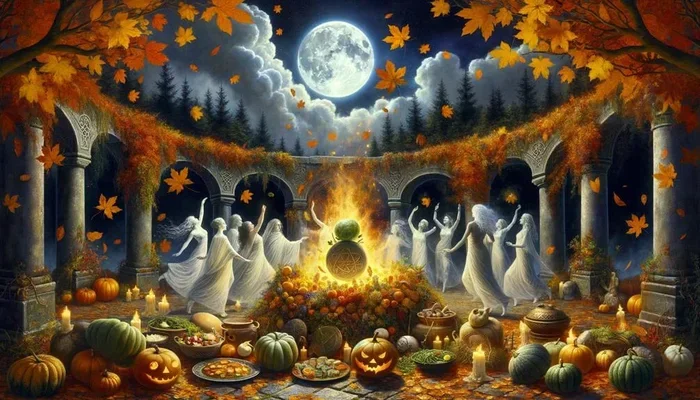

Learning how to say Samhain is easier than you think. This ancient Celtic festival name is pronounced “SAH-win” or “SOW-in,” not the way most people assume. Whether you are a history buff, a pagan practitioner, or just curious about Halloween origins, this guide covers everything you need to know about the correct Samhain pronunciation and its deep cultural roots.
Have you ever heard someone say Samhain and wondered if you were saying it wrong? You are not alone. This ancient Celtic word trips up almost everyone who encounters it for the first time. The good news is that how to say Samhain correctly is simpler than it looks. Once you learn the basics, you will never second-guess yourself again.
Samhain is one of the most important dates in the Celtic calendar. It marks the end of the harvest season and the beginning of the darker half of the year. For many people, it is also the festival that inspired modern Halloween. But knowing the Samhain pronunciation is about more than just sounding smart. It is about honoring a tradition that dates back thousands of years.
In this guide, we will walk you through everything you need to know. From the correct way to say the word to the history behind it, you will find practical tips and clear explanations. Let us dive in and master the Samhain pronunciation together.
Key Takeaways
- Correct pronunciation: Samhain is said as “SAH-win” or “SOW-in,” with a silent “h.”
- Celtic origins: The word comes from Old Irish and means “summer’s end,” marking the end of the harvest season.
- Halloween connection: Samhain is the ancient festival that inspired modern Halloween traditions.
- Common mistakes: Many people incorrectly pronounce the “h” or stress the wrong syllable.
- Practical tips: Breaking the word into syllables and listening to native speakers helps you master the pronunciation fast.
- Cultural respect: Understanding the meaning behind the word shows respect for Celtic and pagan traditions.
📑 Table of Contents
- What Is Samhain and Why Does Its Pronunciation Matter?
- The Correct Way to Say Samhain
- Common Mispronunciations and How to Avoid Them
- The Origins and Meaning of Samhain
- How Samhain Became Halloween
- Tips for Practicing and Remembering the Pronunciation
- Why Respecting the Pronunciation Matters
- Common Questions About Samhain Pronunciation
What Is Samhain and Why Does Its Pronunciation Matter?
The Meaning Behind the Word
Samhain comes from Old Irish. It means “summer’s end.” The festival was a major turning point for the ancient Celts. They celebrated the end of the harvest and prepared for the cold months ahead. The Samhain meaning is deeply tied to the cycles of nature and the changing seasons.
The word itself carries centuries of history. It is not just a random collection of letters. Each syllable holds cultural significance. That is why getting the how to say Samhain part right matters. When you pronounce it correctly, you show respect for the people who created this tradition.
Why People Struggle with the Pronunciation
There are a few reasons why Samhain is so tricky to say. First, the spelling is misleading. The “h” in the middle makes people want to pronounce it. But in this word, the “h” is silent. Second, English speakers are used to certain sound patterns. Samhain breaks all of those rules.
Third, there is no single “correct” way that everyone agrees on. Two main pronunciations exist. This can confuse people who want one clear answer. But both are valid. We will break them down in the next section.
The Correct Way to Say Samhain
Breaking Down the Syllables
So, how do you actually pronounce Samhain? The word has two syllables. You can break it down like this:
- SAH — rhymes with “ha” or “spa”
- WIN — rhymes with “win” or “tin”
Put them together, and you get SAH-win. That is the most common and widely accepted pronunciation. The stress falls on the first syllable, not the second.
Another accepted version is SOW-in. In this version, the first syllable sounds like “sow” as in a female pig. Both versions are correct. The key is to avoid saying the “h” sound at all.
Pronunciation Guide: Two Accepted Variants
Here is a simple side-by-side look at the two ways to say Samhain:
- SAH-win: The first syllable sounds like “saw” without the “w.” The second syllable sounds like “win.” This is the more popular version in modern times.
- SOW-in: The first syllable sounds like “sow.” The second syllable sounds like “in.” This version is closer to the original Irish pronunciation.
Neither way is wrong. If you are attending a Samhain festival or a pagan gathering, both will be understood and accepted. The most important thing is to drop the “h” entirely. Do not say “Sam-hain.” That is the most common mistake.
Phonetic Spelling for Clarity
If you are a visual learner, this phonetic breakdown might help:
- SAH-win = /ˈsɑː wɪn/
- SOW-in = /ˈsaʊ ɪn/
These phonetic symbols show you exactly how your mouth should move. The first sound in both versions is a vowel, not a consonant. Your lips open wide for the “ah” or “ow” sound. Then your lips close gently for the “win” or “in” sound.
Try saying it out loud a few times. SAH-win. SAH-win. Feel how natural it becomes. The more you practice, the easier it gets.
Common Mispronunciations and How to Avoid Them
Mistakes People Make Most Often
Let us talk about the errors you hear most often. Many people say “Sam-hain,” splitting the word at the “h.” This is incorrect. The “h” is silent. It does not create a separate sound.
Another common mistake is saying “SAM-hane.” Some people add an “eh” sound at the end. The word does not end with an “eh” sound. It ends with a crisp “in” sound, like the word “win.”
Some English speakers also put the stress on the wrong syllable. They say “sam-HANE” instead of “SAM-in.” The stress belongs on the first part of the word. Always start strong with the first syllable.
Quick Tips to Fix Your Pronunciation
Here are some fast fixes if you catch yourself making these errors:
- Ignore the “h”: Treat the word as if it is spelled “Samain.” The “h” does not make any sound.
- Use a rhyme: Think of a phrase like “Saw the win.” That gives you the rhythm of SAH-win.
- Listen and repeat: Search for audio clips of native speakers saying how to say Samhain. Repeat after them several times.
- Slow down: Rushing through the word leads to mistakes. Take your time at first.
With a little practice, the correct pronunciation will feel natural. You will wonder why you ever struggled with it.
The Origins and Meaning of Samhain
A Brief History of the Celtic Festival
Samhain is one of the oldest festivals in the Celtic world. The ancient Celts lived across what is now Ireland, Scotland, and the Isle of Man. For them, the year was divided into two halves. The light half ran from spring to autumn. The dark half began with Samhain on November 1st.
On the eve of Samhain, October 31st, the Celts believed the boundary between the living and the spirit world grew thin. They lit great bonfires to ward off harmful spirits. They wore costumes to confuse the entities that wandered the earth. These Samhain traditions are the direct ancestors of Halloween.
The Etymology of the Word
The word Samhain comes from the Old Irish language. It is made of two parts. The first part relates to “summer.” The second part means “end” or “death.” So the literal translation is “summer’s end” or “end of summer.”
This makes perfect sense in the context of the festival. Samhain marked the close of the harvest season. After this date, the days grew shorter and colder. The Celts prepared for the long winter ahead. The Samhain meaning is deeply connected to the agricultural cycle.
How Samhain Is Celebrated Today
Today, Samhain is still celebrated by pagans and Celtic reconstructionists. Many Samhain rituals involve lighting candles, setting up altars, and honoring ancestors. Some people hold feasts with seasonal foods like apples, pumpkins, and root vegetables.
The festival has also influenced popular culture. Movies, books, and games often reference Samhain. Knowing how to say it properly adds authenticity to your conversations. It shows that you understand the depth of the tradition, not just the surface-level Halloween imagery.
How Samhain Became Halloween
The Connection Between Samhain and Halloween
You cannot talk about how to say Samhain without mentioning Halloween. The two are deeply connected. When Christianity spread into Celtic lands, the Church tried to replace pagan festivals with Christian ones. November 1st became All Saints’ Day, also known as All Hallows’ Day.
The evening before All Hallows’ Day was called All Hallows’ Eve. Over time, that phrase was shortened to Halloween. Many of the old Samhain traditions survived the transition. Trick-or-treating, costumes, jack-o-lanterns, and bonfires all have roots in the Celtic festival.
So when you say Samhain correctly, you are also honoring the origins of Halloween itself. That is a powerful connection to make.
Differences Between Samhain and Halloween
While they share roots, Samhain and Halloween are not the same. Samhain is a spiritual and cultural observance. It holds deep meaning for many pagan communities. Halloween, on the other hand, is a commercial and cultural holiday celebrated worldwide.
Understanding this distinction is important. It helps you appreciate the Samhain pronunciation in the right context. When you say the word, you are tapping into a living tradition that has endured for centuries.
Tips for Practicing and Remembering the Pronunciation
Daily Practice Methods
Mastering the how to say Samhain part takes repetition. Here are some easy ways to practice every day:
- Say it in the mirror: Watch your mouth shape as you say SAH-win. Make sure your lips open wide for the first syllable.
- Record yourself: Use your phone to record your pronunciation. Play it back and compare it to native speaker audio.
- Use it in a sentence: Try saying, “I am learning how to say Samhain correctly.” This helps you use the word in context.
- Teach someone else: Explaining the pronunciation to a friend reinforces your own knowledge.
Resources to Help You Get It Right
Several tools can help you nail the Samhain pronunciation:
- YouTube videos: Search for “how to say Samhain” and you will find many audio guides.
- Pronunciation apps: Apps like Forvo or Google Translate have audio clips of native speakers.
- Pagan and Celtic communities online: Many forums and social media groups welcome pronunciation questions.
- Irish language resources: Since Samhain comes from Old Irish, exploring Irish pronunciation rules can be very helpful.
The more you expose yourself to the correct sound, the faster you will internalize it. Within a week of regular practice, saying Samhain will feel effortless.
Why Respecting the Pronunciation Matters
Language is a bridge to culture. When we take the time to learn how to say a word correctly, we honor the people who created it. The ancient Celts did not have a written language for much of their history. Their traditions were passed down through speech and practice.
Saying Samhain the right way is a small but meaningful act of respect. It shows that you care about the roots of the festival. It also helps preserve the Samhain meaning for future generations. When we get the pronunciation wrong, we risk reducing a rich tradition to a simple Halloween reference.
On the other hand, when you say it right, you open a door to deeper understanding. People are often happy to share more about their traditions when they hear the correct pronunciation. It becomes a conversation starter and a way to connect with others who share an interest in Celtic history and pagan festivals.
The Role of Samhain in Modern Pagan Practice
For many modern pagans, Samhain is the most important holiday of the year. It is a time to remember loved ones who have passed. It is a time for reflection, gratitude, and spiritual connection. The Samhain rituals vary from group to group, but they all center on honoring the cycle of life and death.
Being able to pronounce the word correctly shows that you are approaching these traditions with sincerity. Whether you are attending a Samhain festival or simply having a conversation about Celtic history, your pronunciation matters. It is a sign of preparation and respect.
Common Questions About Samhain Pronunciation
Is There Really No “H” Sound?
That is correct. The “h” in Samhain is silent. It does not produce any sound. The word is pronounced either SAH-win or SOW-in. If you are unsure, go with SAH-win. It is the most widely used version today.
Can You Say It With a Different Accent?
Absolutely. People from different regions may pronounce it slightly differently. An Irish speaker might lean toward SOW-in. An American might say SAH-win with a broader “a” sound. The key is to keep the “h” silent and stress the first syllable. As long as you do that, you are saying it correctly.
What If I Have Been Saying It Wrong for Years?
Do not worry. You are in good company. Almost everyone has mispronounced Samhain at some point. The important thing is that you are learning now. Once you know the correct way, it is easy to retrain your mouth. Just practice the new pronunciation a few times a day, and it will soon feel natural.
Does the Pronunciation Change the Meaning?
No. The Samhain meaning stays the same regardless of which accepted pronunciation you use. Whether you say SAH-win or SOW-in, you are referring to the same ancient Celtic festival. The meaning is rooted in the word’s history, not its sound.
Is Samhain Only Celebrated by Pagans?
Not exclusively. While Samhain holds deep significance in pagan and Wiccan communities, its influence extends far beyond. Many people who do not practice paganism celebrate Halloween, which evolved from Samhain. Understanding the Samhain pronunciation and meaning enriches anyone’s appreciation of this time of year, whether they celebrate it as a religious holiday or a cultural one.
Where Can I Learn More About Samhain Traditions?
There are many great resources available. Books on Celtic history, websites dedicated to pagan holidays, and local cultural organizations can all provide valuable information. You can also look for Samhain festivals and events in your area. Attending a live celebration is one of the best ways to deepen your understanding and hear the word used in its proper context.
Learning how to say Samhain is just the first step. From there, you can explore the rich tapestry of Celtic traditions, harvest festivals, and the ancient roots of Halloween. The journey is rewarding, and every bit of knowledge you gain adds depth to your understanding of this timeless celebration.
So the next time you bring up Samhain in conversation, say it with confidence. Say it clearly. Say it with the respect it deserves. SAH-win. You have got this.



