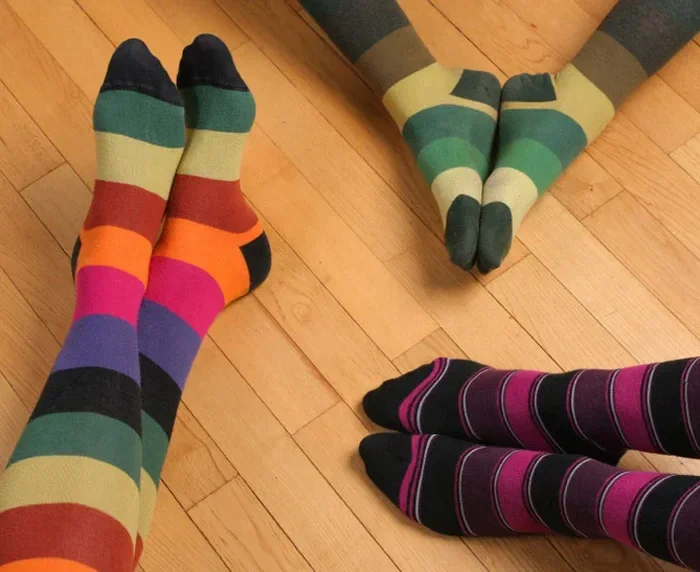

Knowing how to say socks in Spanish is easier than you think — the word is calcetines (kahl-seh-tee-nehs). This guide walks you through pronunciation, grammar rules, and practical examples so you can use this everyday word with confidence in real conversations.
Key Takeaways
- Calcetines is the Spanish word for socks — remember it’s always plural in everyday use.
- The singular form is calcetín, which refers to one single sock.
- Learning Spanish clothing vocabulary like socks helps you in daily life, shopping, and travel.
- Common mistakes include using the wrong article or forgetting to pluralize the word correctly.
- Practice with real sentences and label items at home to build lasting vocabulary retention.
📑 Table of Contents
Introduction
Whether you are packing for a trip to Madrid, helping your kid with Spanish homework, or just curious about the language, you have probably wondered about how to say socks in Spanish. It sounds simple enough. But like many everyday words, there is more to it than just memorizing a translation.
Spanish has its own set of grammar rules. Nouns have gender. Words change depending on whether you mean one or many. Even something as simple as a pair of socks follows these rules. In this guide, you will learn the correct word, how to say it out loud, and how to use it in real sentences. You will also pick up some bonus Spanish clothing vocabulary along the way.
The Basic Answer: How to Say Socks in Spanish
The direct translation for socks in Spanish is calcetines (pronounced: kahl-seh-TEE-nehs). This is the word you will hear and use most often in everyday Spanish. It is the standard term across all Spanish-speaking countries, from Mexico to Argentina to Spain.
But here is something important. In Spanish, the word calcetines is already in its plural form. There is no separate word for “a pair of socks.” When you say calcetines, you are referring to socks in general — both socks in a pair, or multiple pairs. This is very different from English, where “socks” can mean one pair or several.
Saying It Out Loud: Pronunciation Guide
Pronouncing calcetines correctly is key to being understood. Let us break it down syllable by syllable:
- Cal — like the English word “calm” but shorter
- ce — like the “th” in “think” (in most Spanish dialects) or “se”
- ti — like “tee” in English
- nes — like “ness” with a soft ending
The stress falls on the third syllable: ti. Say it slowly a few times: cal-ceh-tee-nes. Once you get the rhythm, it flows naturally. Do not worry about sounding perfect. Native speakers appreciate the effort, even if your accent is not flawless.
Quick Tip
If you want to refer to just one sock, use the singular form: calcetín (kal-seh-TEEN). Notice the accent mark on the “i.” This small detail changes the meaning completely. Saying calcetín means one single sock, while calcetines means socks in general or more than one.
Understanding Calcetines: Singular vs. Plural
One of the trickiest parts of Spanish for English speakers is understanding how plural works. In English, you just add an “s.” In Spanish, the rules are a bit different, and calcetines is a great example.
The Singular Form: Calcetín
The singular calcetín is rarely used on its own. You might hear it in specific situations, like:
- “I lost a sock” — Perdí un calcetín
- “This sock is dirty” — Este calcetín está sucio
Even then, Spanish speakers often say un calcetín casually, but they might also just say un par de calcetines (a pair of socks) to sound more natural.
The Plural Form: Calcetines
Calcetines is what you will use 90 percent of the time. It covers all situations — buying socks, asking someone to bring socks, or talking about your collection. Here are some example sentences:
- “I need new socks” — Necesito calcetines nuevos
- “She bought colorful socks” — Ella compró calcetines de colores
- “The socks are on the table” — Los calcetines están en la mesa
Singular vs. Plural Comparison Table
| Form | Spanish | Pronunciation | When to Use |
|---|---|---|---|
| Singular | Calcetín | kal-seh-TEEN | Referring to one single sock |
| Plural | Calcetines | kal-seh-TEE-nes | Referring to socks in general or multiple |
Grammar Rules You Need to Know
Knowing the word is only half the battle. You also need to use it correctly in a sentence. Spanish has specific grammar rules that apply to calcetines and all other nouns.
Gender: Masculine, Not Feminine
Calcetines is a masculine noun. This means it pairs with the masculine article los (the) in the plural and un (a/an) in the singular. A common mistake is using las calcetines — this is incorrect. Always say los calcetines.
Here is a simple rule to remember: if the noun ends in “-es” and refers to something masculine, use los. There are exceptions in Spanish, but for calcetines, the rule is clear and consistent.
Adjective Agreement
Adjectives that describe calcetines must also match in gender and number. Since calcetines is masculine and plural, the adjective must be masculine and plural too.
- Correct: calcetines blancos (white socks)
- Correct: calcetines largos (long socks)
- Incorrect: calcetines blanca — wrong gender
- Incorrect: calcetines blanco — wrong number
Common Mistakes When Translating Socks to Spanish
Even with a simple word like calcetines, learners make predictable mistakes. Here are the most common ones to avoid:
- Using the wrong article. Remember, it is los calcetines, not las calcetines. The word is masculine.
- Forgetting to pluralize. If you want to talk about socks in general, you need the plural form. Saying just calcetín implies one single sock.
- Using a direct English word. Some beginners try to say “socks” in a Spanish sentence. Always use calcetines instead.
- Mispronouncing the emphasis. The stress is on “ti,” not on “cal.” Saying CAL-ceh-tines can sound confusing to native speakers.
Spanish Clothing Vocabulary You Should Know
Learning how to say socks in Spanish opens the door to a wider world of Spanish clothing words. If you are building a vocabulary for shopping, travel, or daily conversations, these related terms are incredibly useful.
Essential Clothing Words
- Camisa — shirt
- Pantalones — pants
- Zapatos — shoes
- Chaqueta — jacket
- Sombrero — hat
- Cinturón — belt
Words That Go with Socks
When talking about socks specifically, you often need these companion words:
- Medias — stockings or knee-high socks (feminine plural)
- Calcetines de deporte — athletic socks
- Calcetines de algodón — cotton socks
- Calcetines largos — tall or knee-high socks
- Calcetines cortos — ankle or no-show socks
- Ropa interior — underwear
Learning Beyond Socks
Once you feel confident with calcetines, try expanding into other everyday items. For example, if you enjoy learning Spanish pet names, you might find it fun to explore Spanish cat names or browse Spanish rabbit names for your furry friends. Building vocabulary in one area naturally spills over into others. The more you learn, the easier the next word becomes.
Practical Tips for Learning Spanish Clothing Words
Memorizing words like calcetines can feel tedious if you just repeat them on a list. Here are some proven methods that actually work.
Label Items Around Your Home
Stick a small label on your sock drawer that says calcetines. Label your shoes zapatos, your shirts camisas. Every time you open that drawer, you see the word. This simple trick builds passive recognition over time.
Use Flashcards with Real Sentences
Instead of writing “calcetines = socks” on a flashcard, write a full sentence:
- Front: Necesito calcetines nuevos.
- Back: “I need new socks.”
Sentences stick in your memory much better than isolated words. They give you context and show you how the word fits into real life.
Practice with Native Content
Watch Spanish videos, listen to Spanish music, or read simple news articles in Spanish. When you hear calcetines in a real conversation or commercial, it reinforces what you have learned. You can also check the meaning of specific phrases or words you encounter. For instance, if you come across a term like in situ and wonder about its meaning, you can look up in situ meaning to understand how Spanish and English share certain expressions.
Quick Tips for Faster Retention
- Say calcetines out loud three times every morning.
- Write it in a journal at least once a day for one week.
- Use it in a real conversation with a Spanish-speaking friend or language partner.
- Shop in a Spanish-speaking store and ask for calcetines directly.
Why Knowing How to Say Socks in Spanish Matters
You might think socks are too small a detail to worry about. But in real life, knowing words like calcetines makes a bigger difference than you expect.
Travel Situations
Imagine you are in a Spanish-speaking country and need to buy socks at a local store. You could point and gesture, but saying Necesito calcetines, por favor shows respect for the local language. It makes interactions smoother and often leads to friendlier service. People appreciate the effort, and you might even pick up a few bonus tips about local brands or styles.
Everyday Conversations
Even at home, knowing how to say socks in Spanish helps if you have Spanish-speaking friends, neighbors, or coworkers. Simple exchanges like ¿Dónde están mis calcetines? (“Where are my socks?”) build rapport and make daily life more connected.
Language Learning Progress
Learning everyday words like calcetines gives you momentum. Each small victory — knowing the word for socks, then shirts, then shoes — adds up. You build a foundation that makes harder vocabulary feel achievable. Before you know it, you are reading menus, understanding directions, and holding basic conversations in Spanish.
Conclusion
Now you know exactly how to say socks in Spanish. The word is calcetines, it is masculine, and it is almost always used in plural form. You also know how to pronounce it, avoid common mistakes, and use it in practical sentences. Beyond socks, you have a whole set of related clothing vocabulary to explore.
The key to learning Spanish is consistency. Do not just memorize calcetines and move on. Use it, say it, write it, and hear it in real contexts. Every word you learn connects to the next one, and soon you will find yourself speaking with more confidence and natural flow. So go ahead — add calcetines to your vocabulary today, and take the next step on your Spanish learning journey.
Frequently Asked Questions
How do you pronounce “calcetines” in Spanish?
The pronunciation is kal-seh-TEE-nes. Break it into four parts: “cal” (like calm), “ceh” (like the “th” in think), “tee” (like the letter T), and “nes” (like ness). The stress falls on the third syllable, “tee.”
Is “calcetines” masculine or feminine in Spanish?
Calcetines is a masculine noun. Always use the masculine article los before it — say los calcetines, not las calcetines. This is a common mistake that learners should watch out for.
What is the singular form of “calcetines”?
The singular form is calcetín (kal-seh-TEEN). It refers to one single sock. However, Spanish speakers rarely use the singular unless talking about exactly one sock. In most everyday situations, calcetines is the go-to word.
Can I use “medias” instead of “calcetines”?
Not exactly. Medias refers to stockings or knee-high socks and is a feminine noun. Calcetines is the general term for socks. While they overlap in some contexts, they are not perfect substitutes. Use calcetines for everyday socks and medias for longer, thinner hosiery-style socks.
How do I say “a pair of socks” in Spanish?
You would say un par de calcetines. Spanish does not have a separate word specifically meaning “a pair of socks.” Instead, un par de (a pair of) is placed before the noun. For example: Quiero un par de calcetines blancos — “I want a pair of white socks.”
Why is learning Spanish clothing vocabulary important?
Knowing Spanish clothing words like calcetines, zapatos, and camisa helps in daily life, travel, and shopping. It also builds your overall language confidence. Small, practical words are often the easiest to remember and the most useful in real conversations.