
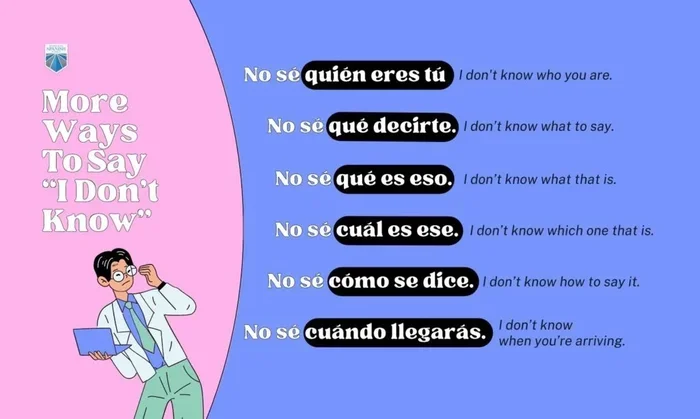

Mastering how to say I don’t know in Spanish is one of the most essential phrases for confident, natural conversations. The classic No sé works in almost any situation, but several variations let you sound more authentic depending on the context. This guide breaks down every option so you can use this key phrase easily and confidently in real-life settings.
How to Say I Dont Know in Spanish Easily and Confidently
How to say I don’t know in Spanish is one of the first things every language learner needs. Whether you are traveling, chatting with friends, or just starting your Spanish journey, knowing the right phrase makes all the difference. Saying I don’t know in Spanish is not just about translation. It is about sounding natural, staying polite, and keeping conversations flowing. In this guide, you will learn every common way to express uncertainty in Spanish. You will also discover cultural tips, common mistakes, and real-life practice scenarios. By the end, you will feel confident using these phrases in any setting.
Learning basic Spanish phrases opens doors. But few phrases matter more than knowing how to admit you do not know something. It keeps conversations honest and helps you learn faster. Spanish conversation phrases like these are essential tools for beginners and intermediate learners alike. Let us dive in and make this easy.
Key Takeaways
- Say “No sé” for “I don’t know” in Spanish — it works in nearly every situation.
- Use “No sé” casually with friends, but switch to “No lo sé” for formal settings.
- Regional accents change pronunciation, so listening to native speakers builds natural fluency fast.
- Try alternatives like “No tengo idea” or “No tengo ni idea” for emphasis.
- Pair “No sé” with shrugging — body language boosts your delivery and confidence.
- Practice saying “No sé” daily to make it feel automatic and natural.
- Knowing when NOT to say “No sé” matters — use it honestly, not as an excuse.
📑 Table of Contents
The Most Common Ways to Say I Don’t Know in Spanish
There are several ways to express not knowing in Spanish. Each one fits a different situation. Some are casual. Some are formal. Let us break them down so you can pick the right one every time.
No Sé — The Simple and Universal Answer
No sé is the most direct translation of I do not know. It works in almost every situation. You can use it with friends, family, coworkers, and even strangers. It is short, clear, and universally understood across all Spanish-speaking countries.
- No sé. — I do not know.
- No sé mucho. — I do not know much.
- No sé la respuesta. — I do not know the answer.
This phrase is the backbone of Spanish vocabulary for beginners. You will hear it everywhere. It is the first thing most teachers teach. And it works perfectly in casual everyday Spanish expressions.
No Lo Sé — Adding Emphasis
When you want to stress that you truly do not know something, use no lo sé. The “lo” adds a direct object pronoun. It makes the phrase slightly more emphatic. Use this when someone asks you a specific question and you want to be clear that you have no clue.
- ¿Dónde está el baño? — Where is the bathroom?
- No lo sé. — I do not know.
This small addition changes the tone. It shows you are paying attention. It also sounds more natural in Spanish language learning conversations.
No Tengo Idea — I Have No Idea
No tengo idea is a popular and expressive way to say you have no idea at all. This phrase is perfect for casual settings. It adds a bit of personality to your response. You will hear native speakers use this all the time.
- ¿Quién ganó el partido? — Who won the game?
- No tengo idea. — I have no idea.
This is one of the most useful common Spanish expressions for beginners. It sounds friendly and honest. People appreciate straightforwardness in conversation.
No Estoy Seguro/a — I Am Not Sure
Sometimes you do not fully know something but you are not completely clueless either. In that case, no estoy seguro (for men) or no estoy segura (for women) is the perfect choice. This phrase shows you are thinking. It is polite and diplomatic.
- No estoy seguro de la respuesta. — I am not sure of the answer.
- No estoy segura, pero creo que sí. — I am not sure, but I think yes.
Using expressing uncertainty in Spanish phrases like this shows maturity in the language. It helps you navigate tricky conversations with grace.
Formal vs Informal: Choosing the Right Phrase
Not all situations call for the same level of informality. Knowing when to use each phrase is a key part of Spanish language basics. Let us look at how context shapes your choice.
When to Use Casual Phrases
Casual phrases like no sé and no tengo idea are perfect for friends, family, and peers. In informal settings, people appreciate directness. You do not need to overthink it. Keep it simple and natural.
Think about how you respond when a friend asks you something you do not know. You probably say I have no idea or I do not know in a relaxed tone. Spanish works the same way. Casual Spanish phrases like these keep conversations light and friendly.
When to Use Formal Phrases
In professional or respectful settings, you might want to soften your response. Phrases like no estoy seguro or no tengo certeza (I am not certain) work well. They show respect for the person asking. They also keep the door open for follow-up.
If you are speaking with a teacher, a boss, or someone older, formality matters. Using the right Spanish phrases for travel and formal settings helps you make a good impression. People notice when you make the effort.
A Quick Comparison Table
| Phrase | Translation | Formality Level | Best Used With |
|---|---|---|---|
| No sé | I do not know | Casual / Universal | Everyone |
| No lo sé | I do not know it | Neutral | Friends, coworkers |
| No tengo idea | I have no idea | Casual | Friends, family |
| No estoy seguro/a | I am not sure | Neutral to Formal | Work, elders, strangers |
| No tengo certeza | I am not certain | Formal | Professional settings |
| Quién sabe | Who knows | Casual | Friends, relaxed settings |
Having this comparison table handy can help you choose the right phrase quickly. Print it out or save it on your phone for easy reference.
Cultural Tips for Using These Phrases Naturally
Language is more than words. It is about culture, tone, and context. Understanding how native speakers use these phrases will help you sound more natural. In situ meaning matters a lot in Spanish. The same phrase can feel different depending on where you are and who you are talking to.
Body Language and Tone Matter
In many Spanish-speaking cultures, tone carries as much weight as words. A simple no sé with a shrug and a friendly smile feels completely natural. But the same phrase said with a flat tone might come across as rude. Pay attention to how native speakers deliver these phrases.
For example, in Spain, people often use expressive hand gestures when they say no tengo idea. In Mexico, a light laugh or a chuckle is common. These small details make a big difference. They show you are engaged and respectful.
Regional Differences in How People Say I Don’t Know
Spanish varies from country to country. Some regions use unique expressions for I do not know. In Argentina, you might hear no tengo la menor idea (I do not have the slightest idea). In Colombia, no sé, hermano (I do not know, brother) is common among friends.
These regional variations add color to the language. They also show how rich and diverse Spanish language learning can be. Embrace the differences. They make conversations more interesting.
How Pet Names in Spanish Culture Connect to Language Learning
One fun way to immerse yourself in Spanish culture is through pet names. Many learners enjoy exploring Spanish cat names or even Spanish teddy bear names as a playful way to build vocabulary. These small cultural touches help you connect with the language on a deeper level. When you learn names for pets and objects, you pick up everyday vocabulary naturally.
Understanding cultural context like this makes your Spanish conversation phrases feel more authentic. You start thinking in Spanish, not just translating from English. That is the real goal of language learning.
Common Mistakes English Speakers Make
Even the best learners make mistakes. The good news is that most of these errors are easy to avoid. Here are the most common slip-ups English speakers make when they try to say I do not know in Spanish.
Saying “No Know” Instead of “No Sé”
This is the number one mistake. English speakers often try to translate directly. They say something like no know. But in Spanish, you must conjugate the verb. The correct form is no sé. There is no shortcut here. Memorize this early and you will avoid embarrassment.
Forgetting Gender Agreement
When you use no estoy seguro, remember to change it based on your gender. If you are a woman, it becomes no estoy segura. This detail matters. Native speakers notice these small things. Getting them right shows you are serious about learning.
Overusing “No Entiendo”
No entiendo means I do not understand. It is not the same as I do not know. Many learners mix these up. If someone asks you a question and you do not know the answer, use no sé. If you do not understand the question itself, use no entiendo. Keeping them straight will improve your Spanish vocabulary for beginners significantly.
Being Too Direct Without Softening
In English, saying I do not know is perfectly fine. In many Spanish-speaking cultures, being too blunt can feel abrupt. That is why adding phrases like perdón (sorry) or disculpa (excuse me) helps. A simple disculpa, no sé sounds much more polite and natural.
Quick Tips to Avoid Common Mistakes
- Always conjugate the verb. Never say no know.
- Match the adjective to your gender: seguro or segura.
- Distinguish between no sé (I do not know) and no entiendo (I do not understand).
- Add polite words like perdón or disculpa when needed.
- Listen to native speakers and imitate their tone and gestures.
Practice Scenarios: Using These Phrases in Real Life
Theory is great. But real practice is what builds confidence. Here are some common scenarios where you can put these phrases to work.
Scenario 1: Ordering Food at a Restaurant
You are at a restaurant in Madrid. The waiter asks what you would like to order. You are not sure what everything on the menu means. You can say:
- Perdón, no sé qué es esto. — Sorry, I do not know what this is.
- No tengo idea. ¿Me puede recomendar algo? — I have no idea. Can you recommend something?
This shows you are trying. Most people will appreciate the effort and help you out.
Scenario 2: Chatting with New Friends
You meet a group of people at a social event in Mexico City. Someone asks you about a local band you have never heard of. A casual response works perfectly here:
- No tengo idea, ¿de quién son? — I have no idea, whose band is this?
- Quién sabe, jaja. — Who knows, ha ha.
Keeping it light and fun helps you connect. It also shows you are comfortable with the language, even when you do not know everything.
Scenario 3: A Professional Meeting
You are in a work meeting in Buenos Aires. Someone asks you a question about a project you are not familiar with. A formal and polite response is best:
- No estoy seguro de poder responder eso con exactitud. — I am not sure I can answer that with exactness.
- Voy a revisarlo y le confirmo después. — I will look it up and confirm with you later.
This approach shows professionalism. It also buys you time to find the right answer. That is a smart communication strategy in any language.
Expert Insights and Key Takeaways
How to say I don’t know in Spanish might seem simple. But mastering it takes practice and cultural awareness. Here is what language experts recommend.
First, start with no sé. It is the foundation. Everything else builds on top of it. Second, pay attention to context. Formal settings call for softer phrases. Casual settings welcome directness. Third, practice with real people. Apps and textbooks are helpful. But real conversations teach you tone, timing, and confidence.
One expert insight from experienced Spanish teachers is this: do not be afraid of making mistakes. Every time you say no sé, you are practicing. You are building confidence. You are getting closer to fluency. Mistakes are not failures. They are steps forward.
Another important tip is to listen actively. When native speakers respond to questions they do not know, pay attention to how they phrase it. Do they add a reason? Do they offer an alternative? These small details will improve your own Spanish conversation phrases over time.
Finally, remember that how to say I don’t know in Spanish is just one piece of the puzzle. It is a starting point. As you grow more comfortable, you will start using these phrases without thinking. They will become second nature. And that is when the real magic of language learning happens.
Keep practicing. Keep listening. Keep talking. Every conversation brings you closer to fluency. Spanish language learning is a journey. And knowing how to say I do not know is one of the most important steps on that path.
Frequently Asked Questions
How to say I don’t know in Spanish?
The most common way is “No sé” (noh say), which works in almost every situation. You can also say “No tengo idea” (noh TOH-goh ee-DEH) for a more casual tone. Both phrases are simple, natural, and widely understood across all Spanish-speaking countries.
What is the formal way to say I don’t know in Spanish?
In formal settings, you can still use “No sé” since it works in both formal and informal conversations. For extra politeness, try saying “No lo sé” (noh loh say), which adds a direct object and sounds slightly more refined. This version is perfect for workplace conversations or when speaking with someone you just met.
Are there other expressions besides “no sé” to say I don’t know in Spanish?
Yes! “No tengo ni idea” means “I don’t have a clue” and adds emphasis to your uncertainty. You can also use “No tienes idea” when talking to someone you know well. These alternatives sound more expressive and help you avoid repeating the same phrase in every conversation.
How do you pronounce “no sé” correctly?
“No sé” is pronounced like “noh say,” with the “sé” sounding like the English word “say.” The “no” is soft and quick, almost like a single syllable. Practice saying it slowly first, then speed up to sound more natural and confident.
When should I use “no sé” versus “no tengo idea”?
Use “no sé” for everyday, quick responses when someone asks you a simple question. Choose “no tengo idea” when you want to show stronger surprise or emphasize that you truly have no clue. Both are correct, but matching your phrase to the situation makes your Spanish sound more fluent.
What are common mistakes when saying I don’t know in Spanish?
One common error is saying “No sé” with the wrong stress — remember the emphasis stays on the second word. Another mistake is overusing “no sé” in formal writing, where “No tengo conocimiento” sounds more professional. Avoid translating word-for-word from English, as direct phrases like “I don’t know” don’t always map neatly into Spanish.



