
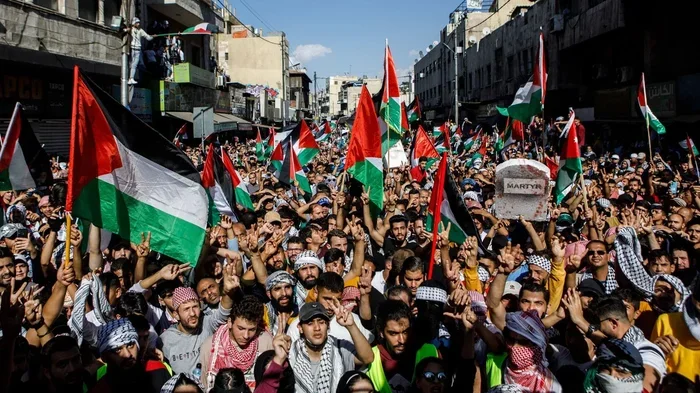

The intifada meaning refers to an Arabic word for “shaking off” or “uprising,” used to describe two major Palestinian revolts against Israeli occupation. The First Intifada (1987–1993) was a grassroots civil resistance movement, while the Second Intifada (2000–2005) involved heavier violence and armed conflict. Understanding the intifada meaning helps readers grasp the complexities of the Israeli-Palestinian conflict and its lasting impact on Middle East peace efforts.
If you have heard the word intifada on the news and wondered what it actually means, you are not alone. This Arabic term carries deep historical weight and shapes how people understand the Israeli-Palestinian conflict. In this article, we will break down the intifada meaning in simple terms. We will explore its origins, the two major uprisings, and why it still matters today.
The word intifada comes from Arabic and translates roughly to “shaking off” or “uprising.” It describes a period of Palestinian resistance against Israeli occupation. But the intifada meaning goes far beyond a simple dictionary definition. It represents decades of struggle, hope, loss, and political change in the Middle East.
Key Takeaways
- Intifada meaning: An Arabic term meaning “shaking off” or “uprising,” referring to Palestinian resistance movements.
- Two major intifadas: The First Intifada (1987–1993) focused on civil disobedience, while the Second Intifada (2000–2005) involved armed conflict.
- Historical roots: The uprisings grew from decades of Israeli occupation and unresolved political tensions.
- Key players: The PLO, Hamas, Yasser Arafat, and various grassroots organizations shaped each intifada differently.
- Lasting impact: The intifadas reshaped Middle East politics, peace processes, and international perspectives on the conflict.
- Why it matters today: The legacy of the intifadas continues to influence current events and peace negotiations.
📑 Table of Contents
- What Does Intifada Mean?
- The First Intifada: The Uprising That Shook the World
- The Second Intifada: A More Violent Chapter
- Why the Intifada Still Matters Today
- Common Misunderstandings About Intifada
- Expert Insights on the Intifada
- Quick Tips for Understanding the Intifada
- Common Mistakes People Make When Discussing Intifada
- Conclusion
What Does Intifada Mean?
The intifada meaning is rooted in the Arabic language. The word comes from the root word “nafada,” which means to shake, toss, or rise up. In everyday Arabic, it can describe shaking off dust or shaking free from something that weighs you down.
When people use the term in politics and history, they refer to Palestinian uprisings. These were organized movements against what Palestinians saw as military occupation and lack of political rights. The word has become a powerful symbol in Middle East politics and international news coverage.
The Language Behind the Word
Arabic is a rich language with words that carry deep cultural meaning. Intifada is one such word. It is not just a label. It carries emotional and political weight for millions of people. The word signals resistance, resilience, and the desire for freedom.
Understanding the intifada meaning also means understanding the context. It is not just about riots or protests. It is about a people’s long-standing struggle for self-determination and dignity. This context is essential for anyone who wants to understand the Israeli-Palestinian conflict more deeply.
The First Intifada: The Uprising That Shook the World
The First Intifada began in December 1987 in the Gaza Strip and quickly spread to the West Bank. It was a mass uprising that caught the world’s attention. The intifada meaning in this context was about ordinary people standing up against decades of military occupation.
Young Palestinians, many of them teenagers, led the charge. They used civil disobedience tactics like strikes, boycotts, and protests. They also threw stones at Israeli soldiers. The movement was largely grassroots, meaning it came from the people, not from a single political party.
What Caused the First Intifada?
Several factors led to the outbreak of the First Intifada:
- Long-term occupation: Israel had controlled the West Bank and Gaza Strip since 1967. Palestinians faced restrictions on movement, work, and daily life.
- Economic hardship: Many Palestinian workers lost jobs or faced low wages. Living conditions in refugee camps were poor.
- Political frustration: The PLO (Palestine Liberation Organization) had limited power. Palestinians felt they had no voice in decisions affecting their lives.
- A triggering event: A truck crash at a Gaza Strip checkpoint killed four Palestinians. This incident sparked widespread anger and protests.
Key Events and Turning Points
The First Intifada lasted from 1987 to 1993. During this time, many important events shaped the outcome:
- Grassroots organizing: Local committees coordinated strikes, boycotts, and protests across the occupied territories.
- International attention: Images of Palestinian youth throwing stones and facing Israeli soldiers appeared on TV screens worldwide.
- The Madrid Conference (1991): This brought Israeli and Palestinian leaders together for the first time in a major international setting.
- The Oslo Accords (1993): Secret negotiations led to the Oslo Accords, a landmark agreement between Israel and the PLO. Yasser Arafat, the PLO leader, signed the agreement alongside Israeli leaders.
The Oslo Accords created the Palestinian Authority and gave Palestinians limited autonomy in parts of the West Bank and Gaza. Many saw this as a step toward peace. However, the intifada meaning was not fully resolved. Tensions remained high.
The Human Cost of the First Intifada
The First Intifada came at a heavy price. According to various sources, more than 1,000 Palestinians and over 100 Israelis lost their lives. Thousands more were injured. The intifada meaning was shaped not just by political goals but by the real suffering of ordinary people on both sides.
Children played a significant role in the uprising. Their images became symbols of the struggle. This also drew international sympathy and criticism of Israeli military actions in the occupied territories.
The Second Intifada: A More Violent Chapter
The Second Intifada erupted in September 2000. It was far more violent than the first. The intifada meaning during this period shifted toward armed resistance and political violence. This uprising lasted until roughly 2005 and left deep scars on both sides.
While the First Intifada was largely a grassroots civil movement, the Second Intifada saw heavy involvement from armed groups. The Hamas movement gained significant power during this period. Hamas is a Palestinian Islamic resistance movement that rejected the Oslo Accords and called for armed resistance against Israel.
What Triggered the Second Intifada?
The immediate trigger was a visit by Ariel Sharon, then leader of the Israeli opposition, to the Al-Aqsa Mosque compound in Jerusalem. This site is sacred to both Jews and Muslims. The visit sparked outrage among Palestinians and led to widespread protests and clashes.
However, the deeper causes were the same as before: unresolved occupation, lack of political progress, and growing frustration. Many Palestinians felt the Oslo Accords had not delivered meaningful change. Settlement expansion continued, and living conditions did not improve.
Key Differences from the First Intifada
The Second Intifada differed from the first in several important ways:
- More violence: Suicide bombings, shootings, and military operations became common. The intifada meaning shifted from civil resistance to armed conflict.
- Hamas involvement: Hamas carried out numerous attacks and gained political support among Palestinians who felt the PLO had failed to achieve their goals.
- Israeli military response: Israel launched major military operations in the West Bank and Gaza Strip, including the construction of the West Bank barrier.
- International involvement: The Middle East peace process became more complex, with the United States, European Union, and other nations trying to mediate.
The death toll during the Second Intifada was much higher. Estimates suggest over 3,000 Palestinians and more than 1,000 Israelis were killed. The intifada meaning during this period was one of pain, loss, and deep division.
Why the Intifada Still Matters Today
The intifada meaning is not just a historical concept. It continues to shape the Israeli-Palestinian conflict and Middle East politics today. The uprisings changed the political landscape in ways that still affect negotiations, public opinion, and international policy.
Understanding the intifada meaning helps people make sense of current events. When tensions rise in the Gaza Strip or the West Bank, the memory of the intifadas is never far from the surface. The word itself carries power and emotion.
The Legacy of the Intifadas
The intifadas left a lasting legacy in several areas:
- Political fragmentation: The Second Intifada deepened the divide between Fatah (the dominant party in the PLO) and Hamas. This split continues to affect Palestinian governance today.
- Settlement expansion: Israel continued building settlements in the West Bank after the uprisings. This remains one of the biggest obstacles to peace.
- Global awareness: The intifada meaning became part of global conversations about occupation, human rights, and self-determination.
- Peace process challenges: The Middle East peace process has struggled to make progress. The Oslo Accords, once seen as a breakthrough, are now widely viewed as stalled.
How the Intifada Shapes Modern Discourse
Today, the word intifada appears in news reports, academic papers, and social media discussions. It is used to describe any form of Palestinian resistance. Some people use it to express solidarity with the Palestinian cause. Others use it in a more political or controversial way.
The intifada meaning has evolved over time. For some, it represents the fight for freedom and justice. For others, it is associated with political violence and instability. This duality makes the term both powerful and controversial.
Common Misunderstandings About Intifada
There are many misconceptions about the intifada meaning. Clearing these up helps readers form a more accurate picture of what the term really means.
Misconception 1: Intifada Means Violence
The intifada meaning is not inherently violent. The word simply means “uprising” or “shaking off.” The First Intifada was largely a nonviolent movement. It used civil disobedience, strikes, and grassroots organizing. Violence escalated more during the Second Intifada, but that was not the original meaning of the word.
Misconception 2: It Is Just About One Side
The intifadas involved real suffering on both sides. Israelis were also killed and injured during the uprisings. The intifada meaning is not about blaming one side. It is about understanding a complex conflict with deep historical roots.
Misconception 3: The Intifada Is Over
While the major uprisings ended, the intifada meaning lives on in ongoing tensions. The Israeli-Palestinian conflict is far from resolved. Issues like occupation, settlements, and the status of Jerusalem continue to fuel anger and frustration.
Expert Insights on the Intifada
Experts on Middle East politics often stress the importance of understanding the intifada meaning in its full context. Dr. Ghassan Khatib, a Palestinian political analyst, has noted that the uprisings reflected a deep desire for dignity and self-rule among Palestinians.
On the Israeli side, analysts point out that the intifadas shaped security policies and public attitudes. Many Israelis view the uprisings as periods of intense threat. This perspective influences how they think about peace and security today.
Both sides agree on one thing: the intifadas changed the course of the Israeli-Palestinian conflict forever. The intifada meaning is a reminder that political movements can rise from everyday frustration and desperation.
Quick Tips for Understanding the Intifada
Here are some quick tips to help you understand the intifada meaning and its significance:
- Read multiple sources: Get perspectives from both Palestinian and Israeli viewpoints to understand the full picture.
- Learn the timeline: Knowing when the First Intifada (1987–1993) and Second Intifada (2000–2005) occurred helps you place events in context.
- Understand key terms: Words like occupation, Oslo Accords, PLO, Hamas, and autonomy are essential to understanding the full story.
- Follow current events: The intifada meaning is still relevant today. Stay informed about developments in the West Bank and Gaza Strip.
- Avoid oversimplification: The Israeli-Palestinian conflict is complex. Avoid reducing it to simple narratives of good and evil.
Common Mistakes People Make When Discussing Intifada
Even well-meaning people sometimes make mistakes when talking about the intifada meaning. Here are a few to avoid:
Treating the Intifada as a Single Event
The intifada meaning covers two distinct uprisings with different causes, methods, and outcomes. The First Intifada was a grassroots civil movement. The Second Intifada was more violent and politically complex. Treating them as the same thing leads to confusion.
Ignoring the Human Stories
Behind every statistic about the intifadas are real people with real stories. Families were displaced. Children grew up in conflict zones. Understanding the intifada meaning means acknowledging these human experiences.
Using the Word Carelessly
The word intifada can be inflammatory depending on how and where it is used. In some contexts, it is used as a call for renewed resistance. In others, it is used to describe historical events. Being thoughtful about how you use the term shows respect for the people affected.
Conclusion
The intifada meaning is much more than a word in the dictionary. It represents two major Palestinian uprisings that reshaped Middle East politics and the Israeli-Palestinian conflict. From the grassroots civil resistance of the First Intifada to the armed conflict of the Second Intifada, these movements left a lasting mark on history.
Understanding the intifada meaning is essential for anyone who wants to follow Middle East peace efforts and make sense of current events. The uprisings grew from decades of occupation and frustration. They involved real people with real hopes and real losses.
The intifada meaning continues to evolve. It appears in news headlines, political debates, and academic discussions. Whether you see it as a symbol of resistance or a period of violence, there is no denying its impact. The uprisings changed the Israeli-Palestinian conflict in ways we are still living with today.
By learning about the intifada meaning, you take an important step toward understanding one of the most complex and enduring conflicts in modern history. Stay curious, keep learning, and seek out diverse perspectives. The more you know, the better equipped you are to engage with this critical topic thoughtfully and respectfully.
Frequently Asked Questions
What is the intifada meaning in simple terms?
The intifada meaning is an Arabic word that translates to “shaking off” or “uprising.” It refers to Palestinian resistance movements against Israeli occupation. The term is most commonly used to describe the First Intifada (1987–1993) and the Second Intifada (2000–2005).
Why is the intifada important to understand?
The intifada meaning is important because these uprisings shaped the modern Israeli-Palestinian conflict. They influenced peace negotiations, international policy, and the daily lives of millions of people in the West Bank and Gaza Strip. Understanding them helps you follow current events more clearly.
What is the difference between the First and Second Intifada?
The First Intifada was a grassroots civil resistance movement focused on civil disobedience and protests. The Second Intifada was more violent and involved armed groups like Hamas. The First Intifada led to the Oslo Accords, while the Second Intifada deepened divisions and distrust.
Is the word intifada still used today?
Yes, the intifada meaning is still used in modern discussions about the Israeli-Palestinian conflict. It appears in news reports and political debates. Some people use it to describe ongoing resistance, while others use it to refer to the historical uprisings of 1987 and 2000.
Who were the main leaders during the intifadas?
During the First Intifada, the PLO and local grassroots committees played key roles. Yasser Arafat was the prominent PLO leader. During the Second Intifada, Hamas gained significant influence alongside the PLO. Ariel Sharon’s visit to the Al-Aqsa Mosque is widely seen as a trigger for the Second Intifada.
How did the intifada affect the Middle East peace process?
The intifada meaning had a major impact on the Middle East peace process. The First Intifada led to the Oslo Accords and the creation of the Palestinian Authority. The Second Intifada set back peace efforts significantly, leading to increased military operations and a breakdown in trust between the two sides.
=== CONCLUSION ===
The intifada meaning is a powerful and complex term that captures the essence of Palestinian resistance and struggle. Whether you are reading the news, studying history, or simply trying to understand the world better, knowing what intifada means gives you valuable context. The two uprisings changed the Israeli-Palestinian conflict in lasting ways. They shaped Middle East politics, influenced peace efforts, and affected millions of lives.
We hope this article has helped you understand the intifada meaning clearly and thoroughly. The key is to approach the topic with curiosity, empathy, and a willingness to see multiple perspectives. The intifada is not just a historical event. It is a living part of an ongoing story that continues to unfold every day.



