
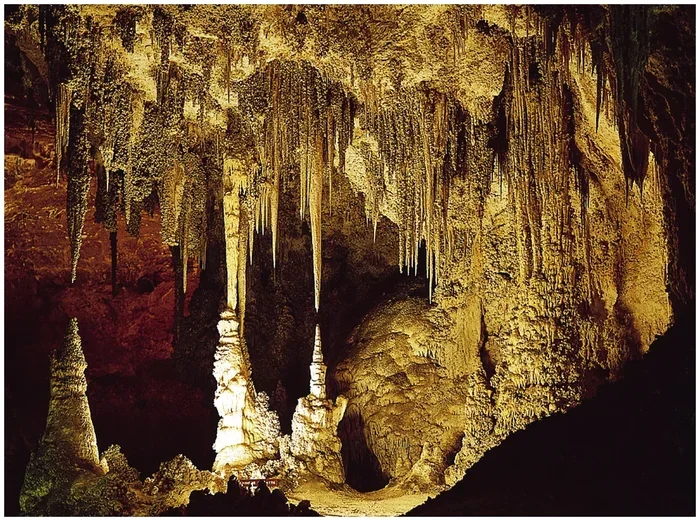

The stalactite meaning refers to icicle-shaped formations that hang from cave ceilings, created by mineral-rich water dripping over thousands of years. These stunning geological features form through a slow process called deposition, where calcium carbonate gradually builds up. Understanding stalactite formation gives you a deeper appreciation for the incredible natural wonders found inside limestone caves around the world.
Have you ever explored a cave and noticed strange, rocky shapes hanging from the ceiling? Those beautiful formations are called stalactites, and they hold a fascinating story inside them. The stalactite meaning goes far beyond just a rock hanging in a dark cave. It represents millions of years of geological processes, mineral-rich water movement, and the slow but powerful forces of nature.
In this complete guide, we will dive deep into everything you need to know about stalactites. We will cover what they are, how they form, how they differ from similar formations, and why they matter to science and nature. Whether you are a curious learner, a student, or a cave enthusiast, this guide has something valuable for you.
The world of cave formations is incredibly diverse. From tiny straw stalactites to massive columns, each formation tells a unique story. Let us start at the very beginning and understand the basic stalactite meaning in simple terms.
Key Takeaways
- Stalactites hang from cave ceilings: They form when mineral-rich water drips and leaves behind deposits over thousands of years.
- Stalactites differ from stalagmites: Stalactites grow downward from the ceiling, while stalagmites grow upward from the floor.
- They are made of calcium carbonate: The primary mineral in stalactites is calcite, a form of calcium carbonate deposited by dripping water.
- Famous stalactites exist worldwide: Caves in places like Carlsbad Caverns and the Waitomo Caves house some of the most impressive examples on Earth.
- Stalactites tell us about Earth’s history: Scientists study them to learn about past climates, water patterns, and geological changes.
- They grow extremely slowly: Most stalactites grow only a few cubic millimeters per year, making them ancient records of time.
- You can find them in karst landscapes: These formations are common in areas with soluble rock like limestone and dolomite.
📑 Table of Contents
What Is the Stalactite Meaning?
The word stalactite comes from the Greek word “stalasso,” which means “to drip.” This makes perfect sense because stalactites form through dripping water. The stalactite meaning in the simplest terms is a mineral formation that hangs from the ceiling of a cave, cavern, or underground space.
These formations are a type of speleothem, which is the scientific term for any mineral deposit found in a cave. Stalactites specifically grow downward from the ceiling, unlike their counterparts that grow upward from the floor. They are made primarily of calcium carbonate, a mineral that dissolves in water and then re-deposits as the water evaporates or loses carbon dioxide.
When we talk about the stalactite meaning, we are really talking about nature’s patience in action. A single stalactite can take tens of thousands of years to form. Some of the oldest ones on Earth are over a million years old. That thought alone is mind-blowing.
Stalactites are found in limestone caves and other karst landscapes around the world. These areas have soluble rock that water can slowly dissolve over time. As water seeps through cracks and pores in the rock, it picks up minerals. When that water drips into a cave, it leaves those minerals behind, layer by layer, year after year.
The Science Behind Stalactite Formation
Understanding how stalactites form is one of the most interesting parts of this topic. The process is called speleogenesis, and it involves a series of chemical reactions. Let us break it down step by step so it is easy to understand.
First, rainwater picks up carbon dioxide from the air and soil. This creates a weak carbonic acid. The acidic water then seeps through the ground and into soluble rock, usually limestone. As it moves through the rock, it dissolves tiny bits of calcite, a mineral made of calcium carbonate.
When this mineral-rich water reaches the cave ceiling, it drips. As each drop hangs from the ceiling, it loses carbon dioxide into the cave air. This causes the dissolved calcite to precipitate, or solidify, and form a tiny ring. Over thousands of years, these rings build up and create the familiar icicle shape we recognize as a stalactite.
Here is what makes this process so remarkable:
- Each drop adds only a tiny amount of mineral.
- The growth rate is incredibly slow — often just a few cubic millimeters per year.
- The shape depends on water flow, mineral content, and cave temperature.
- Some stalactites develop hollow centers called “soda straws.”
- Color variations occur based on the minerals present in the water.
The stalactite formation process is a perfect example of how slow geological forces create breathtaking beauty. It reminds us that nature works on a timescale that is hard for humans to fully grasp.
Stalactite vs Stalagmite: What Is the Difference?
One of the most common questions people ask is about the difference between a stalactite and a stalagmite. The stalactite meaning and the stalagmite meaning are closely related, but they refer to formations that grow in opposite directions.
A stalactite hangs from the ceiling. A stalagmite grows upward from the floor. The easiest way to remember this is with a simple trick: “Stalactites hold tight to the ceiling,” and “stalagmite might reach the ceiling one day.”
When a stalactite and a stalagmite meet, they form a column or pillar called a column or pillar formation. These are some of the most impressive sights inside caves.
| Feature | Stalactite | Stalagmite |
|---|---|---|
| Growth Direction | Downward from ceiling | Upward from floor |
| Starting Point | Cave ceiling drip point | Floor where water lands |
| Primary Material | Calcium carbonate (calcite) | Calcium carbonate (calcite) |
| Growth Rate | Very slow (mm per year) | Very slow (mm per year) |
| Common Shape | Icicle or cone | Rounded mound or cone |
| Famous Example | Karanfils Cave, Turkey | Great Wall of China Cave |
Both formations share the same basic dripstone origin. They are essentially two sides of the same geological coin. The stalactite meaning focuses on the downward-growing formations, while stalagmites represent the upward-growing ones. Together, they create some of the most spectacular cave formations found anywhere on Earth.
Types of Stalactites
Not all stalactites look the same. There are several types, each with unique characteristics. Understanding these types helps deepen your appreciation for the stalactite meaning and the diversity of natural formations in caves.
Soda Straw Stalactites: These are thin, hollow tubes that hang from the ceiling. Water drips through their central channel. They are often the first stage of stalactite formation before other types develop.
Drapery Stalactites: Also called “curtain stalactites,” these are thin, wavy sheets of mineral deposits that hang from the ceiling like curtains. They often show beautiful banding patterns in different colors.
Helictite Stalactites: These are fascinating formations that grow in unusual directions, defying gravity. They twist and branch in all sorts of shapes, making them look almost like underwater coral.
Cone Stalactites: These are thick, cone-shaped formations that grow outward from the ceiling. They are denser than soda straws and form when water flows over the outside of a forming stalactite.
Lava Stalactites: These form in lava tubes rather than limestone caves. They are created by molten rock and are much rarer than their limestone counterparts.
Each type of stalactite tells a story about the conditions inside the cave where it formed. Water temperature, mineral content, airflow, and even the acidity of the water all influence the final shape and size of the formation.
Famous Stalactites and Caves Around the World
The stalactite meaning becomes even more impressive when you see the most famous examples found in caves around the globe. These formations have captured the imagination of scientists, explorers, and tourists for centuries.
Carlsbad Caverns, New Mexico, USA: This national park is home to the famous “Big Room,” which contains enormous stalactites and stalagmites. The formations here are among the most visited cave features in the world. The Big Room alone contains thousands of individual formations, some reaching several meters in length.
Waitomo Caves, New Zealand: Known not just for its stalactites but also for its glowworms, the Waitomo Caves offer a unique underground experience. The limestone caves here feature stunning drapery formations and crystal-clear pools.
Postojna Cave, Slovenia: One of Europe’s most visited caves, Postojna features incredible speleothems including massive stalactites and an underground train that takes visitors deep into the cavern system.
Mammoth Cave, Kentucky, USA: The longest cave system in the world, Mammoth Cave contains a vast network of underground caves with numerous stalactite formations of all types. The sheer scale of this cave system makes it a UNESCO World Heritage Site.
Skocjan Caves, Slovenia: Another UNESCO World Heritage Site, Skocjan Caves features massive underground chambers with impressive mineral deposits and dripstone formations.
These famous caves show just how diverse and widespread stalactite formations can be. Each cave system has its own unique character, shaped by local geology, climate, and water chemistry.
Why Do Stalactites Matter?
Beyond their beauty, stalactites serve important scientific and ecological purposes. The stalactite meaning extends into the world of research and environmental science.
Climate Records: Scientists study the layers inside stalactites to learn about past climate conditions. Each layer of mineral deposit can contain information about rainfall patterns, temperature, and atmospheric composition from thousands or even millions of years ago. This makes stalactites valuable climate archives.
Water Quality Indicators: The mineral content and growth patterns of stalactites can reveal information about the water that formed them. Changes in water chemistry over time can be detected by analyzing the chemical composition of different layers.
Ecosystem Support: Caves with stalactites often support unique ecosystems. Many cave-dwelling species, known as troglobites, depend on the stable environment that these formations help create. The moisture and temperature regulation provided by cave systems is essential for these specialized organisms.
Tourism and Education: Caves with impressive stalactite formations attract millions of visitors each year. They serve as important educational sites where people can learn about geology, earth science, and the natural world.
Karst Landscape Research: Stalactites are key features in karst topography, which covers about 15% of the Earth’s land surface. Studying these formations helps scientists understand how soluble rock landscapes develop and evolve over time.
So the stalactite meaning is not just about rocks hanging in caves. It is about understanding Earth’s history, monitoring environmental changes, and appreciating the incredible patience of natural processes.
Common Myths About Stalactites
There are several misconceptions about stalactites that circulate widely. Let us clear up some of the most common ones.
Myth 1: Stalactites grow quickly. The truth is that stalactites grow extremely slowly. Most grow only a few cubic millimeters per year. Some of the largest formations took hundreds of thousands of years to reach their current size.
Myth 2: Stalactites and stalagmites are the same thing. As we discussed earlier, they grow in opposite directions. Stalactites hang from the ceiling, while stalagmites grow from the floor. Remember the simple mnemonic to keep them straight.
Myth 3: You can only find stalactites in large caves. While the most famous examples are in large cave systems, stalactites can form in small rock overhangs, mines, and even man-made tunnels where water seeps through soluble rock.
Myth 4: Stalactites are always white. Stalactites come in a wide range of colors depending on the minerals present. Iron oxide can give them a reddish or orange hue, while manganese can create black or dark brown streaks. Some even appear green due to algae or moss growing on their surface.
Myth 5: Touching stalactites does not harm them. The oils and salts from human skin can actually damage the surface of stalactites and interfere with their natural growth. This is why many caves restrict access to areas with sensitive formations.
Understanding the facts about stalactites helps us appreciate them more and protect them for future generations. These natural formations are irreplaceable and fragile in their own way.
How to See Stalactites in Person
If you want to experience the stalactite meaning firsthand, there are many caves around the world that welcome visitors. Here are some practical tips for planning your visit.
First, research the cave system before you go. Some caves require guided tours only, while others allow more independent exploration. Check what facilities are available, such as lighting, walkways, and restrooms.
Wear appropriate clothing. Caves are typically cool and humid, so bring a light jacket even if it is warm outside. Sturdy, non-slip footwear is essential since cave floors can be wet and uneven.
Bring a camera with good low-light capabilities. Many caves have limited lighting, and the stalactite formations can be even more stunning in photographs than in person. A tripod can help you capture long-exposure shots of the formations.
Follow all rules and guidelines. Do not touch the formations, stay on marked paths, and never remove rocks or minerals from the cave. These rules exist to protect both you and the delicate cave formations.
Consider visiting during off-peak seasons for a more peaceful experience. Popular caves can get crowded during holidays and summer months, which may limit your ability to fully appreciate the underground formations.
Some caves also offer special experiences like underground boat rides, flashlight tours, or overnight camping inside the cave. These unique opportunities let you connect with the stalactite meaning on a deeper level.
Whether you visit a famous cave or a local rock shelter, seeing stalactites in person is a truly unforgettable experience. The scale, detail, and age of these formations put things into perspective in a way that photographs simply cannot capture.
Stalactites and the Future of Geological Research
The study of stalactites continues to evolve as new technologies emerge. Scientists now use advanced dating techniques, 3D scanning, and chemical analysis to learn more about these formations than ever before.
Paleoclimate Studies: Researchers are using stalactite layers to reconstruct climate histories spanning millions of years. This data helps us understand how Earth’s climate has changed and what might happen in the future.
Cave Conservation: As tourism increases, protecting stalactite formations becomes more important. Scientists are developing better methods for monitoring cave health and managing visitor impact.
New Technologies: Tools like LiDAR and photogrammetry allow researchers to create detailed 3D maps of cave systems and their speleothems. This technology helps preserve the record of formations even if they are damaged or destroyed.
The future of stalactite research is bright, and each new discovery adds to our understanding of these remarkable geological formations. The stalactite meaning continues to expand as science reveals more about their significance.
Conclusion
The stalactite meaning is a rich and fascinating topic that connects geology, history, science, and natural beauty. These mineral formations, created by dripping water over thousands or even millions of years, are among the most awe-inspiring features found in underground caves around the world.
We have explored what stalactites are, how they form, how they differ from stalagmites, and why they matter to science and the environment. We have looked at famous examples, debunked common myths, and considered the future of stalactite research.
The next time you hear the word stalactite, you will know much more than just the basic definition. You will understand the slow, patient process that creates these formations, the science behind their growth, and the important role they play in our understanding of Earth’s history.
Whether you are planning a cave visit, studying geology, or simply curious about the natural world, the stalactite meaning offers a window into the incredible forces that shape our planet. Take the time to explore, learn, and appreciate these ancient cave formations. They are a reminder that the most beautiful things in nature often take the longest to create.
So go ahead, share what you have learned with others, and maybe plan a trip to see some stalactites for yourself. The underground world is waiting to amaze you.
Frequently Asked Questions
What is the simplest definition of a stalactite?
A stalactite is a rock formation that hangs from the ceiling of a cave, formed by the slow buildup of mineral deposits from dripping water. The stalactite meaning centers on these downward-growing icicle-shaped structures made primarily of calcium carbonate.
How long does it take for a stalactite to form?
Most stalactites grow extremely slowly, adding only a few cubic millimeters each year. A small stalactite might take a few hundred years to form, while larger ones can take tens of thousands of years or more. The stalactite formation process is one of the slowest geological processes on Earth.
Can stalactites and stalagmites join together?
Yes, when a stalactite growing from the ceiling and a stalagmite growing from the floor meet, they form a column or pillar. This combined dripstone formation is common in many caves and can create some of the most impressive structures found underground.
Are stalactites found only in caves?
While caves are the most common location, stalactites can also form in any underground space where water drips through soluble rock. This includes mines, tunnels, and rock overhangs. The key requirement is a karst landscape with limestone or other soluble rock.
What are stalactites made of?
Stalactites are primarily made of calcium carbonate, specifically a mineral called calcite. As mineral-rich water drips from the cave ceiling, it deposits tiny amounts of calcite with each drop. Over time, these deposits build up to form the familiar stalactite formations we see in caves.
Why are stalactites important for science?
Stalactites serve as natural climate records. Scientists study the layers and chemical composition of stalactite formations to learn about past rainfall, temperature, and atmospheric conditions. This makes them valuable tools for understanding Earth’s climate history and environmental changes over time.



